Order Charadriiformes, Family Scolopacidae
Bar-tailed Godwit
Limosa lapponica
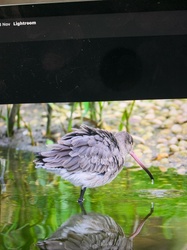
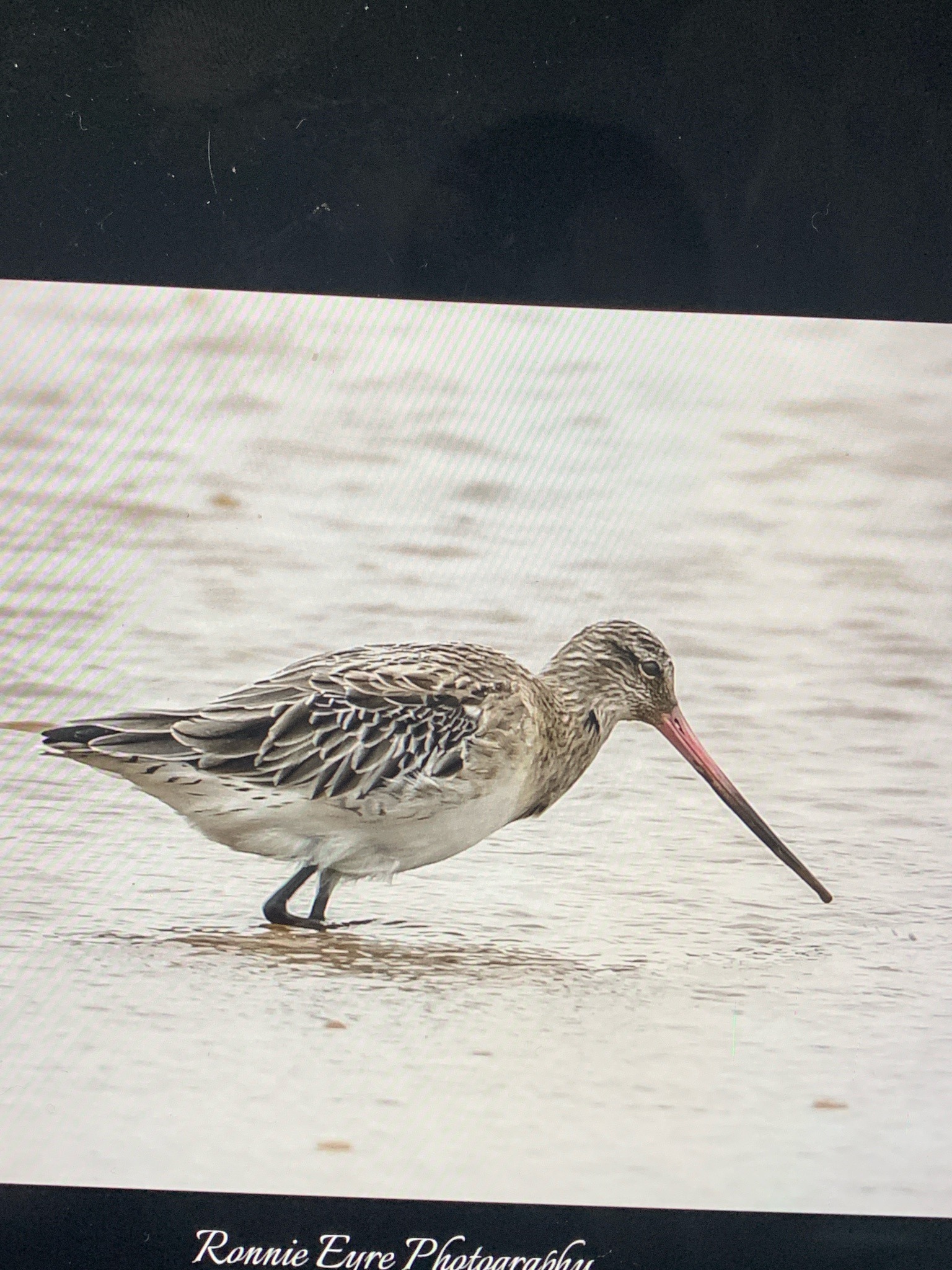
A large, long-legged wader with a very long, slightly upturned bill that is pinkish at the base and dark at the tip. They are gregarious shorebirds often seen probing mudflats in tight flocks.
Explore Bar-tailed Godwit in the encyclopedia →Identify your own birds.
Get a report just like this from any photo or call, free.
Plumage & appearance
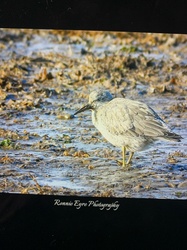
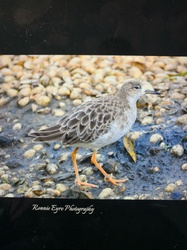
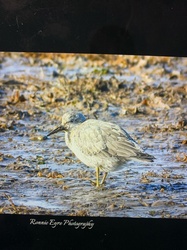
Non-breeding plumage is dull grey-brown above and whitish below with faint streaking. Breeding adults develop rich, deep rufous-red underparts, most intensely colored in males; females are larger and paler. The tail is finely barred with black and white, giving the species its name.
Key field marks
Very long slightly upturned bill with a pinkish base, barred tail and rump (lack of a striking white wedge on the back), and unpatterned grey-brown upperparts in non-breeding plumage.
Size & weight
Length: 37-41 cm (15-16 inches); Wingspan: 70-80 cm (27-31 inches); Weight: 190-450 g (depending on sex and season).
Voice — call & song
A repeated, sharp, rolling whistle or barking 'kek-kek-kek' call, especially vocal on the breeding grounds and when disturbed.
Diet & foraging
Invertebrates such as marine worms, bivalves, crabs, and insects, foraged by probing deep into soft mud or sand with its specialized sensitive bill.
Habitat
Coastal estuaries, intertidal mudflats, sandy beaches, and occasionally wet coastal meadows and tundra during the breeding season.
Migration & movement
Long-distance migrant; famously known for undertaking some of the longest non-stop migratory flights of any bird, traveling thousands of kilometers across the Pacific Ocean between Alaska and New Zealand without stopping.
Nesting & breeding
Breeds on the Arctic tundra. The nest is a shallow depression on the ground lined with lichens and leaves. Clutch size is typically 3-4 eggs, incubated by both parents.
Similar species
Black-tailed Godwit (Limosa limosa), which is longer-legged, has a straighter bill with more extensive orange-pink on the base, and shows a bold black-and-white tail pattern in flight rather than barred.
Ecological significance
Acts as a key predator of intertidal benthic invertebrates, helping to regulate populations of marine worms and mollusks, and serves as an important bioindicator of coastal ecosystem health.
Conservation status
Near Threatened, with populations facing declines primarily due to habitat loss and degradation at critical staging and stopover sites along the East Asian-Australasian Flyway.
Observation tips
Look for them on expansive coastal mudflats, estuaries, and sandy beaches at low tide. Use a spotting scope to scan mixed flocks of shorebirds, and visit during migration peaks for the highest numbers.
Interesting facts
A bar-tailed godwit named '4BBRW' set a world record for non-stop flight by flying 12,850 kilometers (7,985 miles) from Alaska to New Zealand in 11 days without stopping to eat or sleep.