Order: Charadriiformes, Family: Jacanidae
Northern Jacana
Jacana spinosa
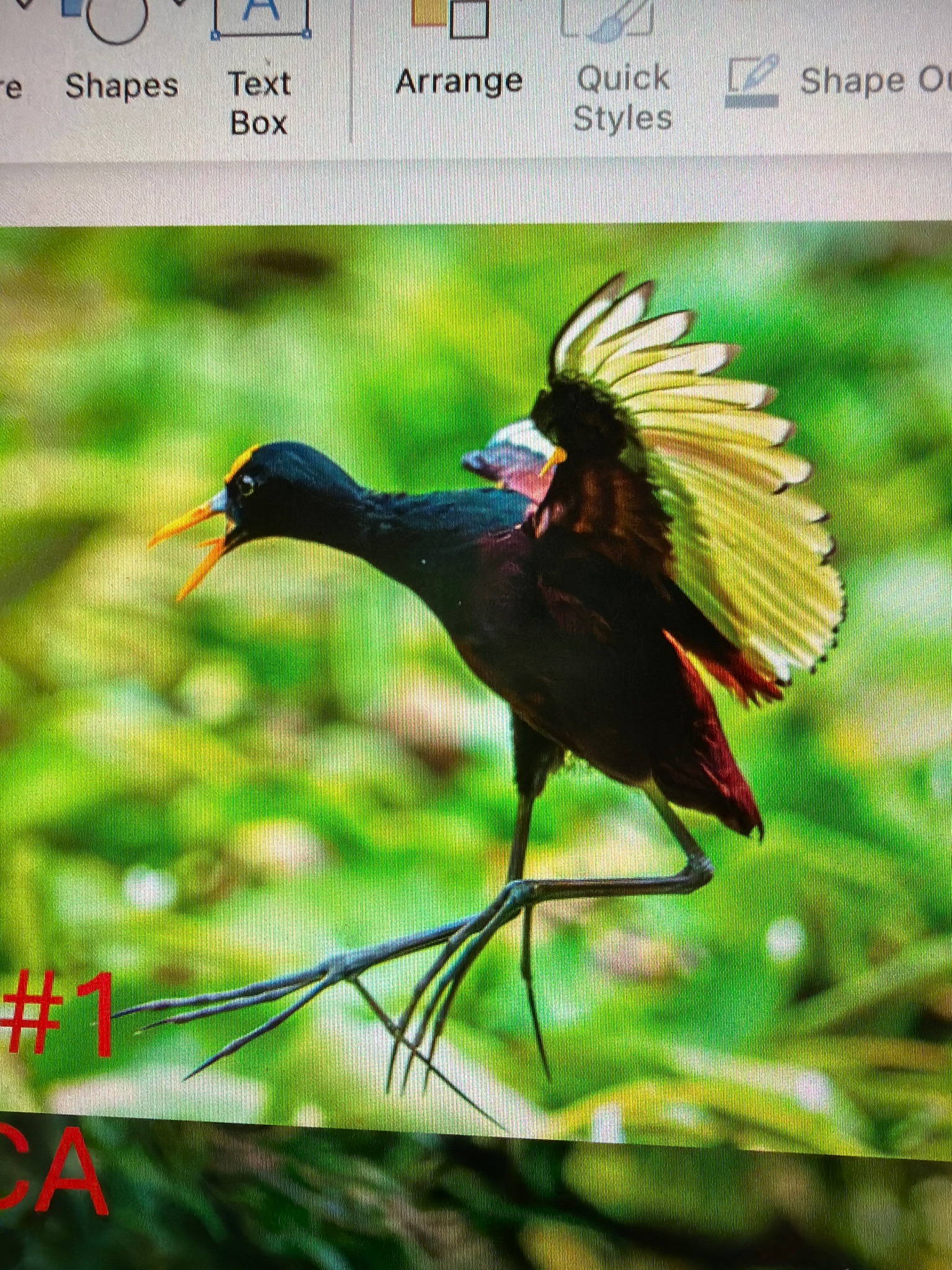
An unmistakable tropical waterbird with dramatically elongated toes and claws adapted for walking on floating aquatic vegetation. Possesses bright yellow wing spurs used in territorial defense and striking yellow-and-black plumage contrasts.
Explore Northern Jacana in the encyclopedia →Identify your own birds.
Get a report just like this from any photo or call, free.
Plumage & appearance
Adults have a glossy black head, neck, and breast, contrasting with rich chestnut-brown upperparts and wings. A bright yellow frontal shield and bill, and distinctive greenish-yellow wing quills are visible in flight. Juveniles are brownish above with a white supercilium and underparts. Females are noticeably larger than males.
Key field marks
Extremely long toes, bright yellow frontal shield and bill, yellow wing spurs, chestnut body, and contrasting black head and neck.
Size & weight
Length: 17 to 23 cm (6.7 to 9.1 inches); Wingspan: 38 to 43 cm (15 to 17 inches); Weight: 85 to 150 g (3.0 to 5.3 oz), with females being heavier.
Voice — call & song
Loud, sharp, shrill chatters and scolding notes, often given in series when disturbed or defending territory.
Diet & foraging
Insects, spiders, small fish, snails, and seeds, picked from floating vegetation or surface water.
Habitat
Freshwater wetlands, marshes, overgrown ponds, flooded agricultural fields, and slow-moving streams with abundant floating vegetation.
Migration & movement
Non-migratory resident throughout most of its range, though some local wandering may occur during extreme dry seasons.
Nesting & breeding
Polyandrous mating system where a single female mates with multiple males. Males build a floating cup nest made of aquatic plants, and the males take sole responsibility for incubating the eggs and rearing the chicks.
Similar species
Wattled Jacana (Jacana jacana), which has a red frontal shield and wattles instead of yellow and is found further south in South America.
Ecological significance
Acts as an indicator species for the health of freshwater wetland ecosystems and helps control insect and small invertebrate populations.
Conservation status
Least Concern, with stable populations though locally threatened by wetland drainage and habitat loss.
Observation tips
Look for them walking gracefully on lily pads and floating vegetation in marshes, swamps, and shallow ponds. They can be quite vocal and bold when defending territory.
Interesting facts
Northern Jacanas exhibit polyandry—a rare mating system in birds where one female defends a territory containing multiple males, each of which tends a separate nest.
More like this