Order: Charadriiformes, Family: Laridae
Silver Gull
Chroicocephalus novaehollandiae
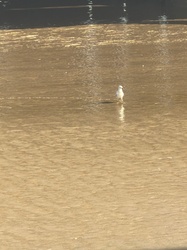
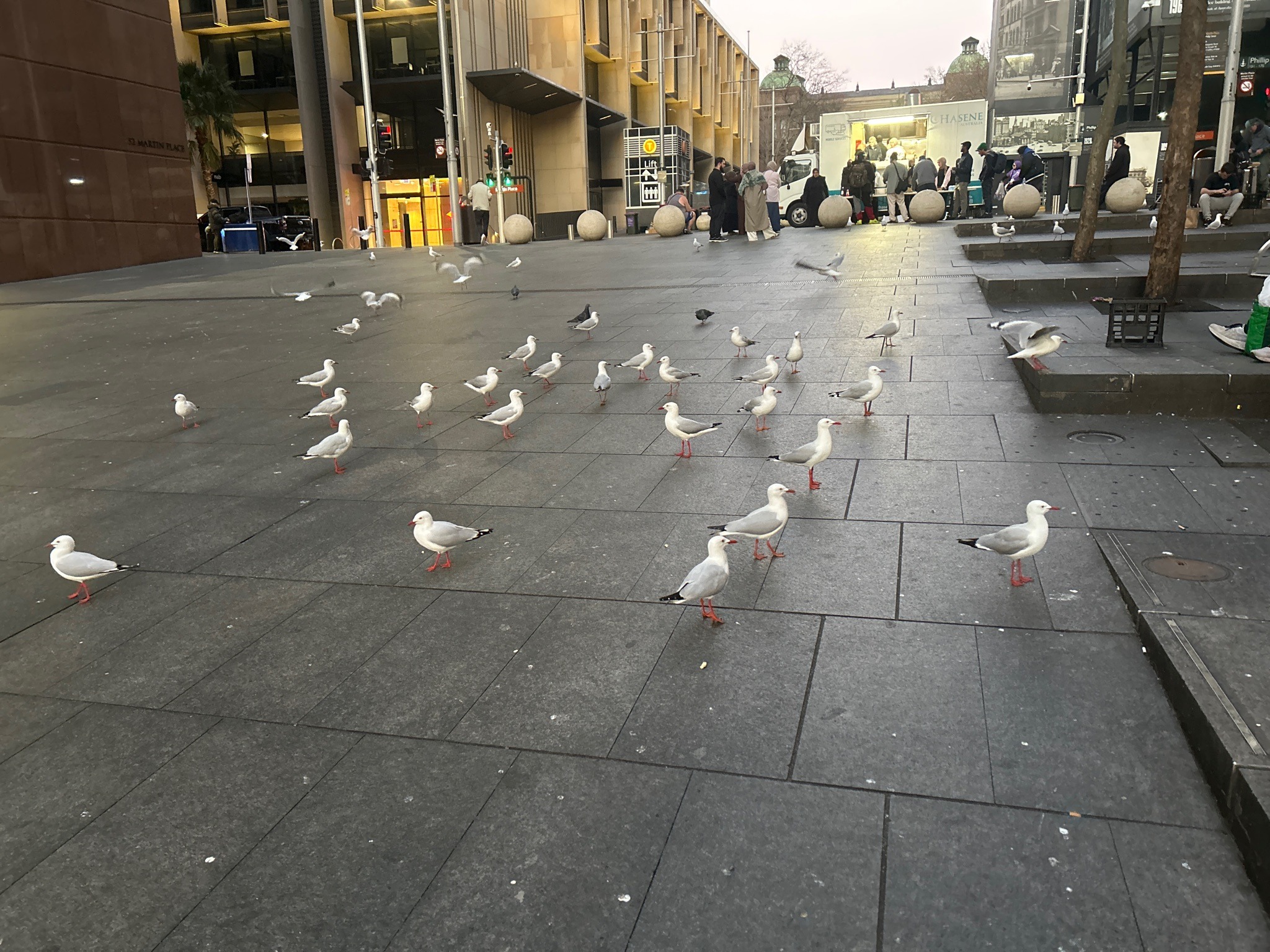
A medium-sized, neat-looking gull with striking white and grey plumage contrasted against bright red bill and legs. Highly adaptable, inquisitive, and often seen flocking in urban plazas, beaches, and rubbish tips.
Explore Silver Gull in the encyclopedia →Identify your own birds.
Get a report just like this from any photo or call, free.
Plumage & appearance
Adults have a white head, neck, and underparts, pale grey back and wings with distinctive white 'windows' and black tips on the primary feathers. The bill, eye ring, and legs are bright red. Juveniles have brown mottling on the wings and back, a brownish-tipped tail, and a dark bill.
Key field marks
White body and head, pale grey upperwings with black and white wingtips, bright red bill, red legs, and white eyes.
Size & weight
Length: 38-42 cm, Wingspan: 91-96 cm, Weight: 220-350 g
Voice — call & song
A loud, raucous, and harsh laughing call, often given in a series ('chok-chok-chok' or a wailing 'kee-ow').
Diet & foraging
Omnivorous and opportunistic. Feeds on fish, crustaceans, insects, worms, human scraps, garbage, and occasionally the eggs or chicks of other birds.
Habitat
Coasts, estuaries, harbors, lakes, rivers, rubbish tips, and increasingly urban environments like city streets, parks, and shopping plazas.
Migration & movement
Mainly resident with some nomadic movements following food sources or inland water availability after heavy rains.
Nesting & breeding
Breeds in colonies on coastal islands, rocky outcrops, or sometimes inland lakes. Constructs a ground scrape lined with vegetation. Lays 2 to 3 olive-brown speckled eggs, incubated by both parents.
Similar species
Pacific Gull (much larger with a massive yellow bill tipped red) and Kelp Gull (larger, stockier, with greenish-yellow bill and darker back).
Ecological significance
Acts as an opportunistic scavenger and coastal predator, helping to clean up organic waste in urban and natural environments, though their overpopulation can sometimes disrupt local ecosystems and smaller native bird colonies.
Conservation status
IUCN Least Concern with a stable or increasing population.
Observation tips
Easily observed in urban areas such as city squares, parks, and coastal beaches. They are very comfortable around humans and will readily approach for food.
Interesting facts
Despite being called a 'seagull', the Silver Gull is just as comfortable living hundreds of miles inland near deserts or in bustling metropolitan centers like Sydney and Melbourne.
More like this