Order Anseriformes, Family Anatidae
Cotton Pygmy Goose
Nettapus coromandelianus
One of the smallest waterfowl in the world, characterized by a rounded head, short bill resembling that of a goose, and contrasting black and white or greenish plumage.
Explore Cotton Pygmy Goose in the encyclopedia →Identify your own birds.
Get a report just like this from any photo or call, free.
Plumage & appearance
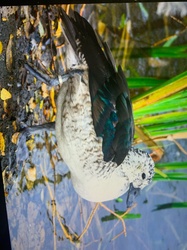
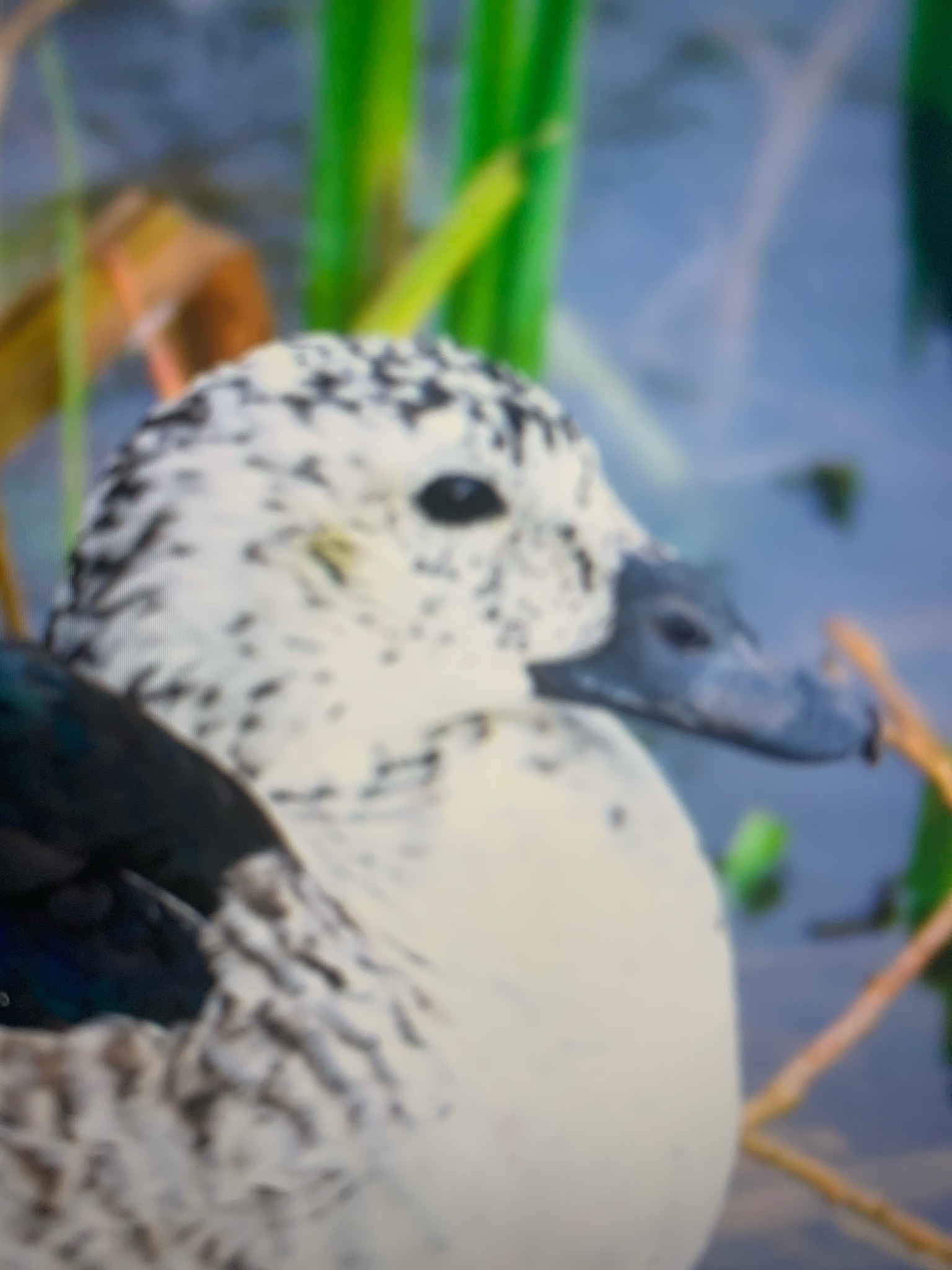
Breeding males have a white head and neck with fine black speckling, a dark green crown, and a distinct black collar around the lower neck. Their back is glossy dark green, and the underparts are whitish with a dark band across the breast. Females and non-breeding males are duller, lacking the black collar and glossy green back, showing more grayish-brown and white patterns.
Key field marks
Extremely small size, short goose-like bill, white head with dark speckling, and dark green back and wings.
Size & weight
Length: 30-37 cm, Wingspan: 56-66 cm, Weight: 250-450 g
Voice — call & song
Soft, high-pitched cackling notes, often given in flight or when disturbed.
Diet & foraging
Primarily feeds on seeds, aquatic plants, and water lilies, supplemented by small insects and crustaceans.
Habitat
Well-vegetated freshwater lakes, ponds, swamps, marshes, and slow-flowing rivers with abundant floating aquatic plants.
Migration & movement
Mainly resident, but undertakes local seasonal dispersal in response to rainfall and water availability.
Nesting & breeding
Nests in tree cavities, hollows in old stumps, or occasionally in artificial nest boxes near water. Clutch size typically ranges from 6 to 12 eggs, incubated solely by the female.
Similar species
Radama and other pygmy geese species within its range, but distinguished easily by its unique black neck collar (in breeding males) and overall pale head with fine speckling.
Ecological significance
Acts as a seed disperser and helps control aquatic invertebrate populations in freshwater wetland ecosystems.
Conservation status
Least Concern, with a generally stable global population trend.
Observation tips
Look for them resting on floating vegetation or perched in trees near water bodies in early morning or late afternoon.
Interesting facts
Despite being called a goose due to its short, goose-like bill, it is actually a perching duck closely related to dabbling ducks and teals.
More like this