Order Anseriformes, Family Anatidae
Red-breasted Goose
Branta ruficollis
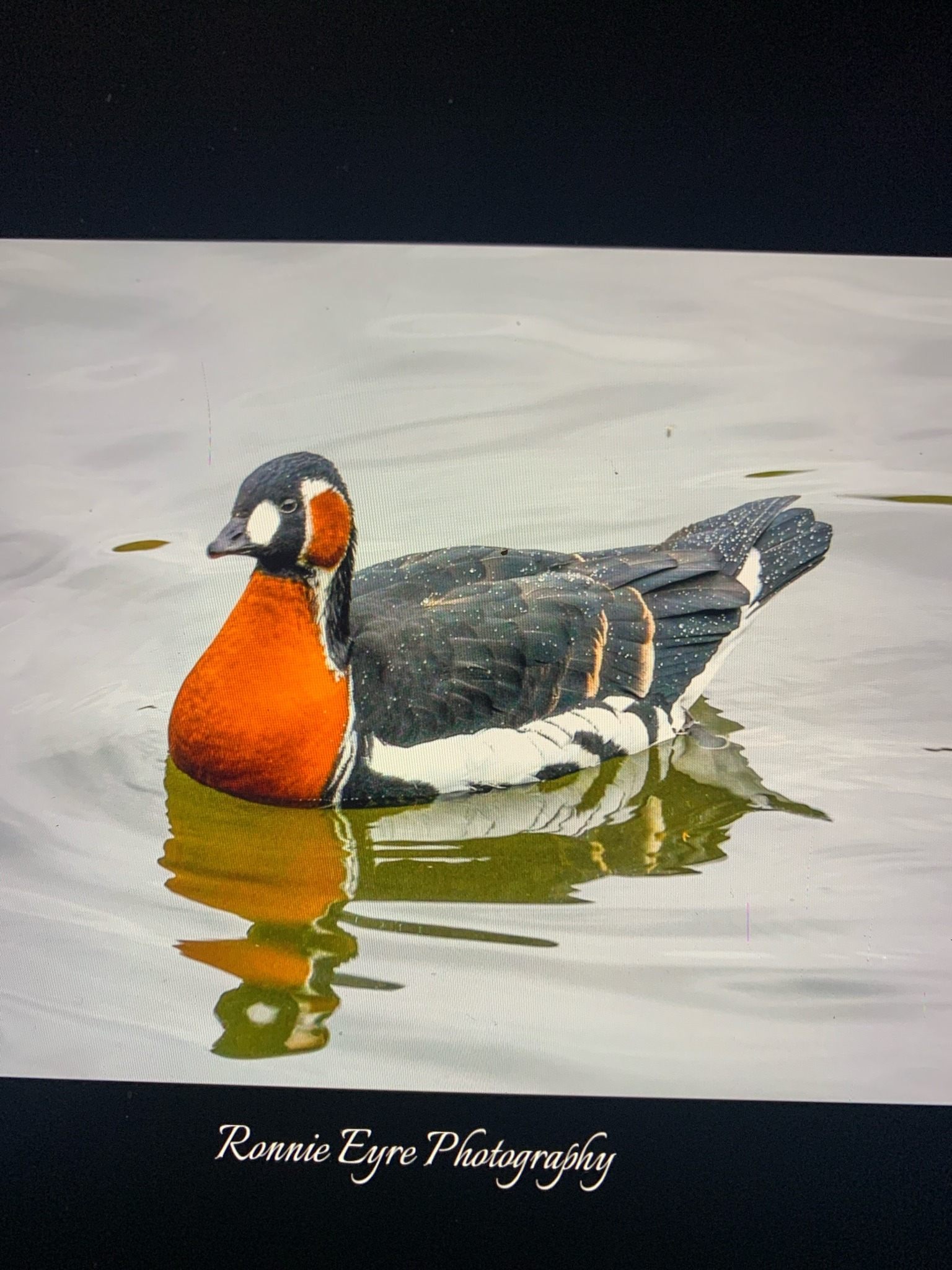
A small, brilliantly patterned goose easily recognized by its vibrant chestnut, black, and white plumage. Highly gregarious and often associates with larger geese species for protection.
Explore Red-breasted Goose in the encyclopedia →Identify your own birds.
Get a report just like this from any photo or call, free.
Plumage & appearance
Adults have striking chestnut-red patches on the face, neck, and breast, bordered with white and black. The crown, hindneck, back, and tail are black, while the flanks feature bold white stripes. Juveniles have similar patterns but are duller with more brownish tones and narrower white face markings.
Key field marks
Small size, black crown and back, striking chestnut-red patches bordered in white on the face and neck, large chestnut breast patch, and contrasting white flank stripes.
Size & weight
Length: 53-66 cm (21-26 inches); Wingspan: 116-135 cm (45-53 inches); Weight: 1.0-1.7 kg (2.2-3.7 lbs).
Voice — call & song
A high-pitched, shrill, and distinctively musical yapping or barking call, often described as 'kik-gik' or 'rusty hinge' sound, much higher-pitched than other geese.
Diet & foraging
Primarily vegetarian, feeding on grasses, leaves, shoots, and agricultural crops like winter wheat. Forages by grazing on land and occasionally dabbling in shallows.
Habitat
Breeds in dry tundra slopes and ravines near water. Winters in agricultural lands, steppes, salt marshes, and coastal lagoons.
Migration & movement
Migratory. Undertakes long-distance journeys between Siberian breeding grounds and wintering areas around the Black and Caspian Seas, though some vagrants occasionally reach Western Europe.
Nesting & breeding
Nests in loose colonies, frequently on steep cliff ledges or riverbanks often near the nests of birds of prey like peregrine falcons or snowy owls for protection from Arctic foxes. Lays 4-8 eggs in a depression lined with down.
Similar species
Brant (Brant bernicla) and Brent Goose, but the Red-breasted Goose is immediately distinguishable by its unique, vibrant red, black, and white head and breast pattern.
Ecological significance
Acts as a consumer of tundra vegetation and wetland plants, helping cycle nutrients. Its breeding success is closely intertwined with snowy owl and peregrine falcon populations, which deter mammalian predators from its nesting sites.
Conservation status
Vulnerable, with a declining population trend due to habitat loss, agricultural development, and illegal hunting.
Observation tips
Look for them in mixed flocks with Greater White-fronted Geese or Greylag Geese in agricultural fields and wetlands within their wintering range. Use a spotting scope to scan large flocks.
Interesting facts
Red-breasted Geese often choose to nest extremely close to active snowy owl or peregrine falcon nests. The raptors aggressively defend their territory from Arctic foxes, thereby inadvertently providing safety for the nesting geese.
More like this