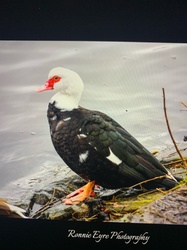
Order: Anseriformes, Family: Anatidae
Common Shelduck
Tadorna tadorna
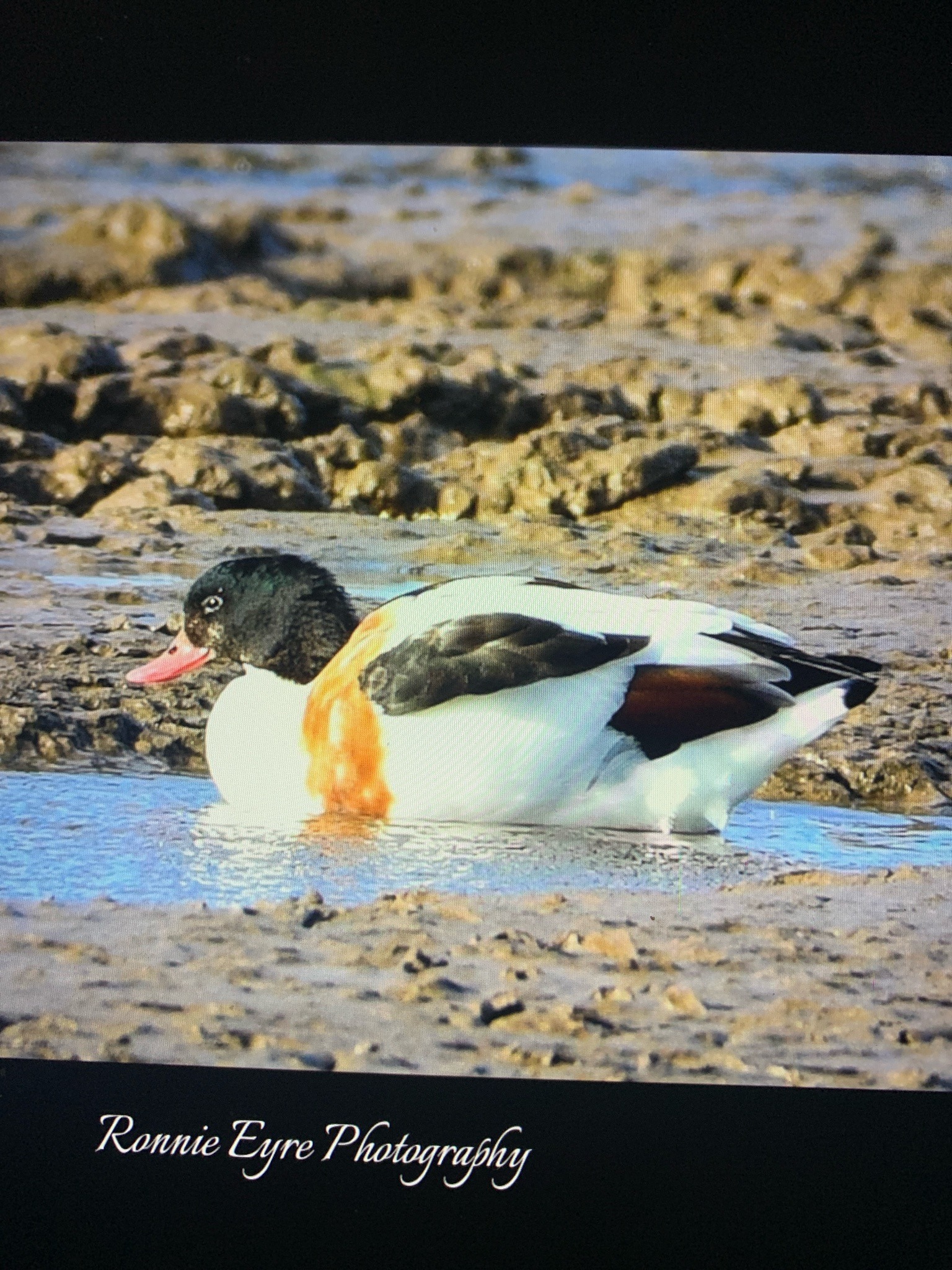
A large, goose-like duck with upright posture, bold contrasting colors, and a striking red bill. They are often found in coastal mudflats and estuaries.
Explore Common Shelduck in the encyclopedia →Identify your own birds.
Get a report just like this from any photo or call, free.
Plumage & appearance
Striking patterned plumage featuring a dark green glossy head and upper neck, a bright red bill with a prominent knob in breeding males, a broad chestnut-brown band across the white breast and mantle, dark green primary feathers, and a black stripe running down the center of the underparts. Females are slightly duller with a smaller bill knob and more white around the bill base. Juveniles have scaly grey-brown upperparts and a white face and underparts.
Key field marks
Large size, upright stance, red bill, dark green head, broad chestnut breast band, and white body with dark patches.
Size & weight
Length: 55-65 cm (22-26 inches), Wingspan: 100-120 cm (39-47 inches), Weight: 800-1,500 g (1.8-3.3 lbs).
Voice — call & song
Noisy birds; females produce a rapid, high-pitched, staccato quacking or chattering call ('ak-ak-ak'), while males emit a softer, whistling or low honking note.
Diet & foraging
Primarily carnivorous, feeding on small mollusks, crustaceans (especially the mud shrimp Hydrobia), insects, worms, and occasionally seeds and algae by dabbling and probing mud.
Habitat
Coastal areas, sheltered estuaries, mudflats, saltmarshes, sandy shores, and occasionally inland saline lakes and reservoirs.
Migration & movement
Partial migrant; northern and eastern populations are migratory, moving south and west for the winter, while western European populations are largely resident.
Nesting & breeding
Nests in hidden cavities such as rabbit burrows, rock crevices, or dense brush, often far from water. Lays a clutch of 8 to 12 creamy-white eggs in April-May. Incubation lasts around 30 days, performed mainly by the female.
Similar species
Ruddy Shelduck (Tadorna ferruginea), which has a more uniform orange-brown body and paler head, though ranges can occasionally overlap.
Ecological significance
Acts as an important predator of intertidal invertebrates like snails, crustaceans, and small mollusks, helping to control local populations and contributing to nutrient cycling in wetland and estuarine ecosystems.
Conservation status
Least Concern, with a generally stable global population trend.
Observation tips
Best observed with binoculars or spotting scopes along wide tidal mudflats, estuaries, and sandy beaches during low tide when they forage actively in groups.
Interesting facts
Common Shelducks undergo a major migration to specialized molting sites, such as the Wadden Sea, in late summer, leaving their young in 'creches' supervised by a few adult ducks.
More like this