Order: Anseriformes, Family: Anatidae
Swan Goose
Anser cygnoides
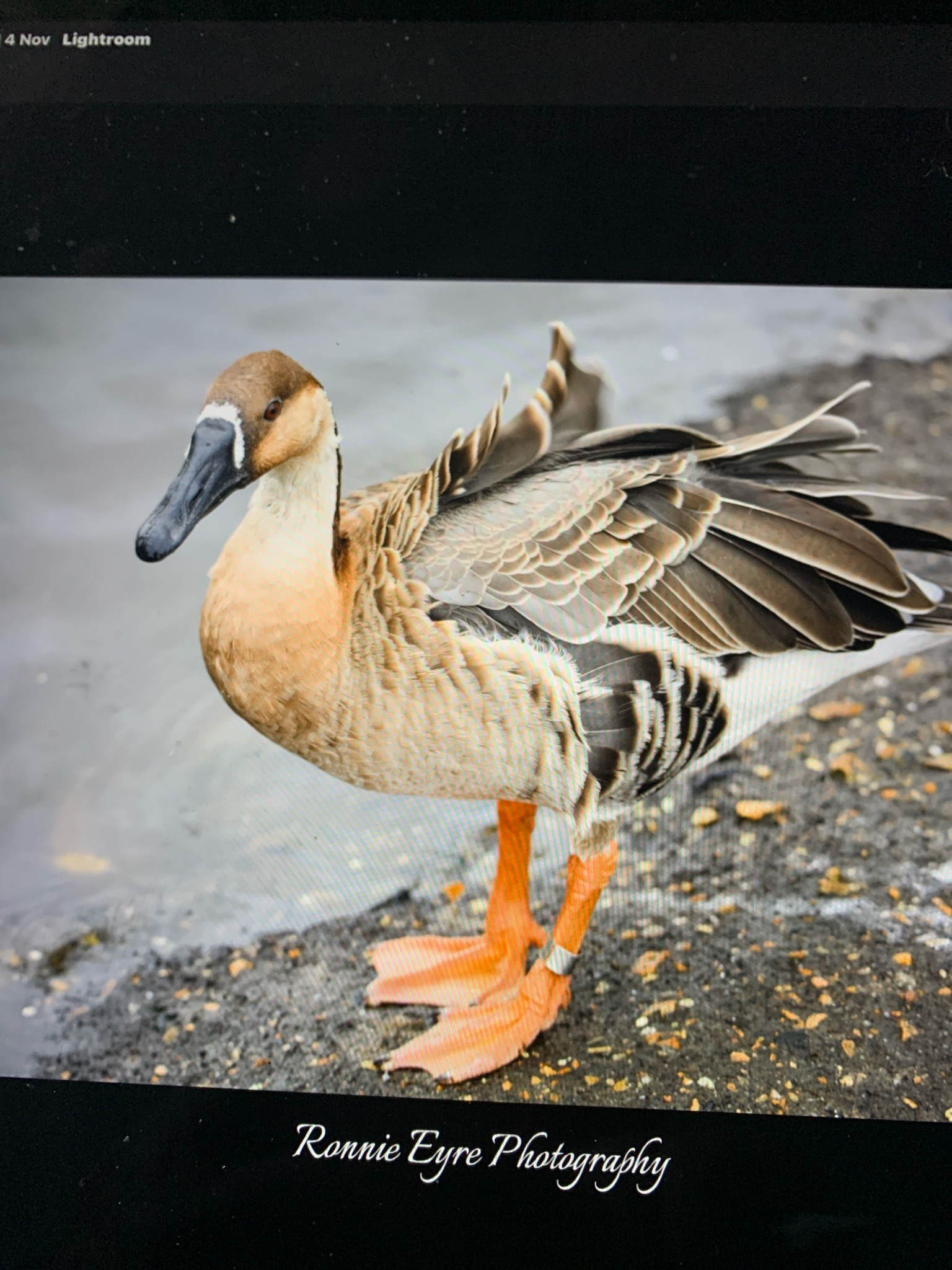
A large goose easily recognized by its very long, heavy, black bill and the distinct white band at the base of the bill. It has an upright posture and a gentle, graceful profile.
Explore Swan Goose in the encyclopedia →Identify your own birds.
Get a report just like this from any photo or call, free.
Plumage & appearance
Adults have a dark brown crown and hindneck contrasting sharply with a pale yellowish-buff face, foreneck, and breast. The upperparts are grayish-brown with pale feather fringes giving a scaled appearance. Underparts are paler, and the flanks are barred. Juveniles look similar to adults but lack the distinctive white base at the bill and have less defined contrast on the head.
Key field marks
Very long, heavy black bill with a white band at the base; dark brown crown and back of neck contrasting with a pale face and foreneck; orange legs and feet.
Size & weight
Length: 81-94 cm (32-37 in), Wingspan: 140-165 cm (55-65 in), Weight: 2.8-3.5 kg (6.2-7.7 lbs).
Voice — call & song
A loud, echoing, nasal honk or bugling call, often described as a resounding 'ah-ung' or a trumpeting series of notes.
Diet & foraging
Primarily vegetarian, feeding on grasses, sedges, aquatic plants, and roots. They graze extensively on land and dabble or feed in shallow water.
Habitat
Inhabits river valleys, wetlands, shallow lakes, reed beds, and adjacent steppe grasslands, often near water bodies.
Migration & movement
Migratory in the wild, traveling south from breeding grounds in Siberia and Mongolia to wintering areas in eastern China, though feral populations in parks and rural areas are resident.
Nesting & breeding
Nests on the ground, usually hidden in tall vegetation or on islands in marshes. Clutch size is typically 5 to 8 creamy-white eggs. Breeding begins in spring, and both parents aggressively defend the nest and young.
Similar species
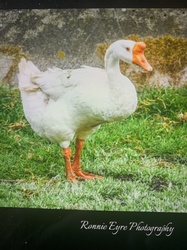
Domestic geese derived from the Swan Goose (like the Chinese Goose) feature a prominent basal knob on the bill. Wild Greylag Geese and Bean Geese lack the starkly contrasting dark crown and long, heavy black bill.
Ecological significance
As herbivores and grazers, Swan Geese help shape wetland and grassland plant communities, and their feeding and droppings redistribute nutrients. They also serve as prey for mammalian and avian carnivores.
Conservation status
Endangered, with a decreasing population trend due to habitat loss, hunting, and overgrazing of breeding and wintering grounds.
Observation tips
Look for them around shallow freshwater lakes, marshes, rivers, and adjacent damp grasslands. In areas where they have been introduced or kept as ornamental waterfowl, they can be quite approachable.
Interesting facts
The Swan Goose is the wild ancestor of several domestic goose breeds, most notably the Chinese and African goose breeds, which retain the characteristic knob at the base of the bill developed through selective breeding.
More like this