Order: Anseriformes, Family: Anatidae
Greylag Goose
Anser anser
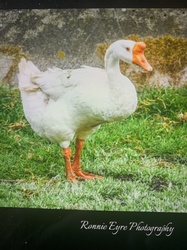
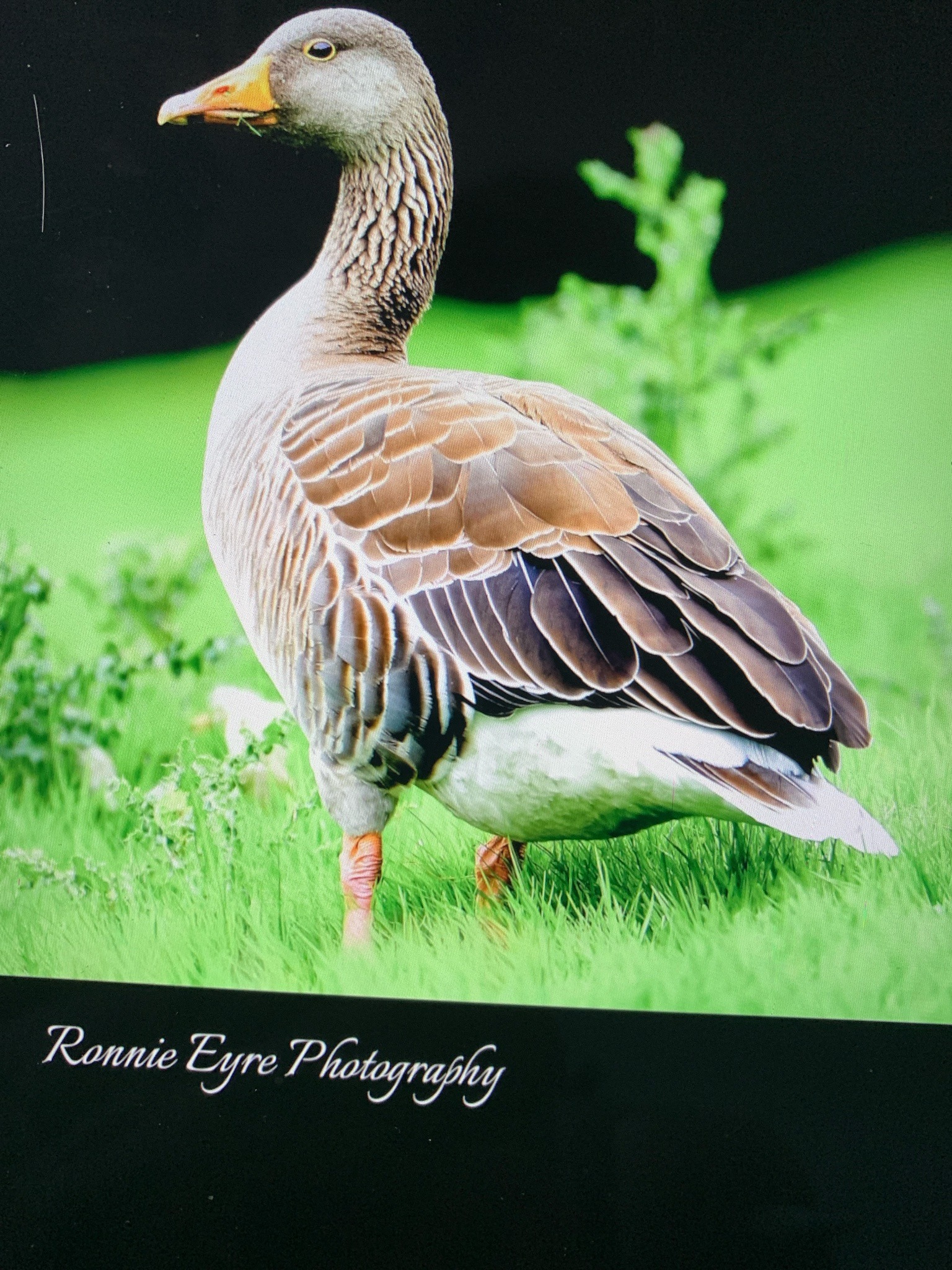
A large, bulky grey goose with a massive orange bill, pinkish-orange legs, and a loud, trumpeting honk. Highly social and ancestral to most domestic goose breeds.
Explore Greylag Goose in the encyclopedia →Identify your own birds.
Get a report just like this from any photo or call, free.
Plumage & appearance
Grey-brown plumage with barred darker brown markings on the back and wings, a pale grey forewing, and a whitish belly with occasional dark blotches. Sexes are visually similar, though males tend to be slightly larger.
Key field marks
Massive orange or pinkish bill, pale grey forewing contrasting with darker flight feathers, and grey-brown neck and head.
Size & weight
Length: 74-91 cm, Wingspan: 147-180 cm, Weight: 2.5-4.1 kg
Voice — call & song
A loud, high-pitched honking call, very similar to a domestic goose.
Diet & foraging
Herbivorous; grazes on grasses, grains, roots, shoots, and agricultural crops.
Habitat
Open wetlands, lakes, marshes, agricultural fields, and coastal estuaries.
Migration & movement
Partial migrant; northern populations migrate south for the winter, while western and central European populations are largely resident.
Nesting & breeding
Nests on the ground near water, often in reed beds or on islets. Lays 4 to 6 creamy-white eggs, incubated mainly by the female.
Similar species
Bean Goose and Greater White-fronted Goose; distinguished by the Greylag's larger pale forewing and massive orange bill.
Ecological significance
Acts as a seed disperser and helps maintain grassland and wetland ecosystems through grazing.
Conservation status
Least Concern, with a stable and large population trend globally.
Observation tips
Look near lakes, rivers, marshes, and agricultural fields. They are quite habituated in many public parks and can be approached closely.
Interesting facts
The Greylag Goose is the ancestor of most domestic goose breeds and was one of the first birds to be domesticated by humans thousands of years ago.
More like this