Order Anseriformes, Family Anatidae
Mallard
Anas platyrhynchos
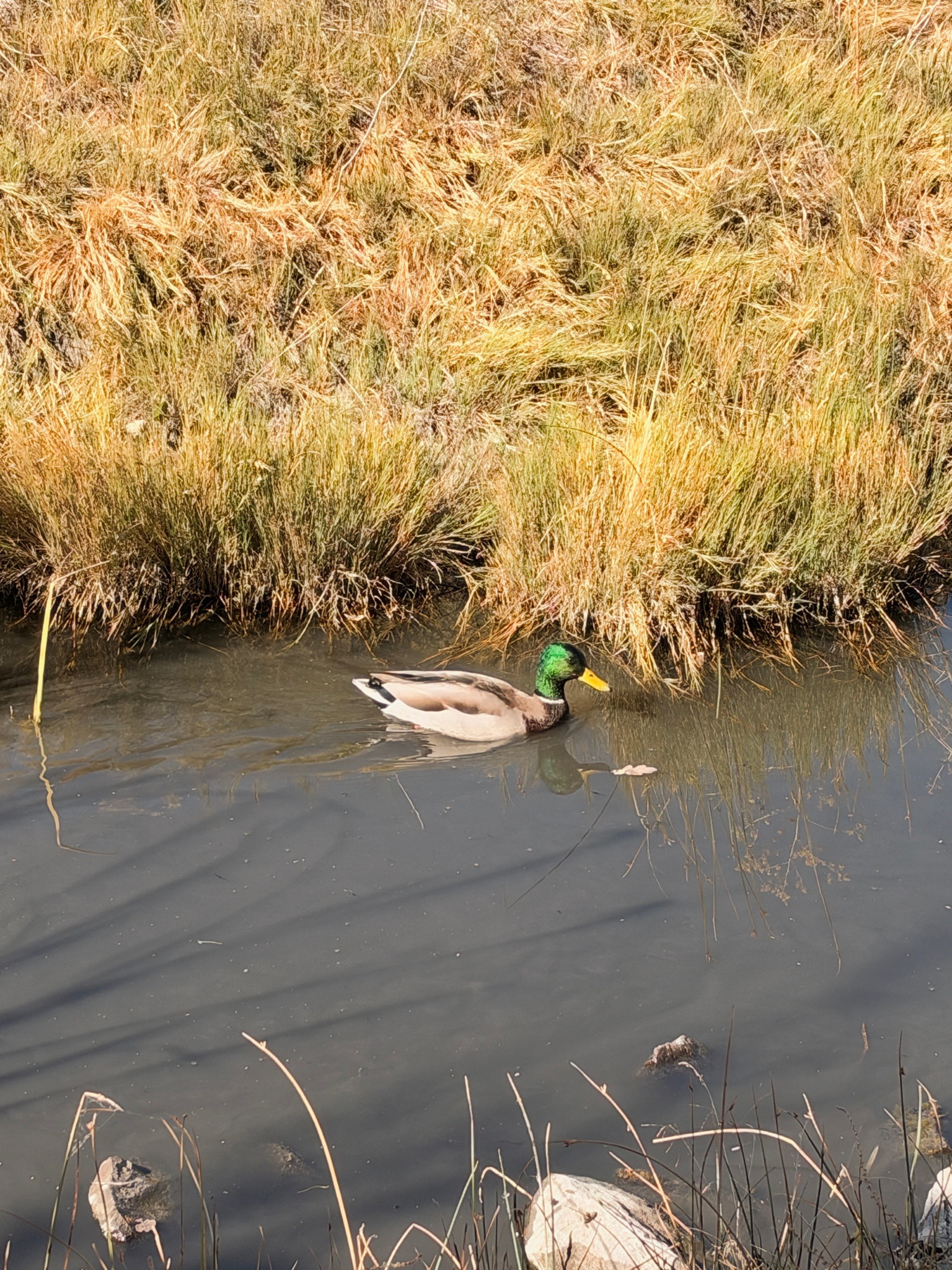
A large dabbling duck with a distinctive yellow bill, well-known for the male's striking green head and brownish-grey body.
Explore Mallard in the encyclopedia →Identify your own birds.
Get a report just like this from any photo or call, free.
Plumage & appearance
Adult males (drakes) feature a glossy bottle-green head, a white neck ring, a chestnut-brown chest, grey flanks, and black tail curl feathers. Females (hens) have mottled brown plumage for camouflage. Eclipse plumage in males resembles the female's coloration during late summer.
Key field marks
Glossy green head (male), white neck ring, brownish-chestnut breast, and blue speculum feathers on the wings bordered with white.
Size & weight
Length: 50-65 cm; Wingspan: 81-98 cm; Weight: 720-1,580 g
Voice — call & song
Females produce a loud, descending quack. Males emit quieter, low-pitched raspy notes and whistles.
Diet & foraging
Omnivorous; feeds on plant matter, seeds, roots, insects, small fish, and amphibians by dabbling or grazing on land.
Habitat
Wetlands, marshes, rivers, lakes, ponds, estuaries, and urban parks with access to water.
Migration & movement
Partial migrant; northern populations migrate south for winter, while temperate populations are mostly resident.
Nesting & breeding
Ground nesters, usually placing nests hidden in vegetation near water. Clutches typically consist of 8-13 greenish-buff eggs incubated solely by the female.
Similar species
American Black Duck and various domestic duck hybrids, distinguished by the mallard's distinctive green head and white neck ring in males.
Ecological significance
Acts as an important seed disperser for aquatic plants and serves as a vital prey base for various predators, while also helping control aquatic insect and plant populations.
Conservation status
Least Concern, with a stable or increasing global population trend.
Observation tips
Easily observed in urban parks, wetlands, lakes, and slow-moving rivers. They are generally habituated to humans and can be approached closely.
Interesting facts
The mallard is the ancestor of nearly all domestic duck breeds. Their specialized feathers trap air to provide exceptional buoyancy and waterproofing.
More like this