Order: Anseriformes, Family: Anatidae
Cayuga Duck
Anas platyrhynchos domesticus
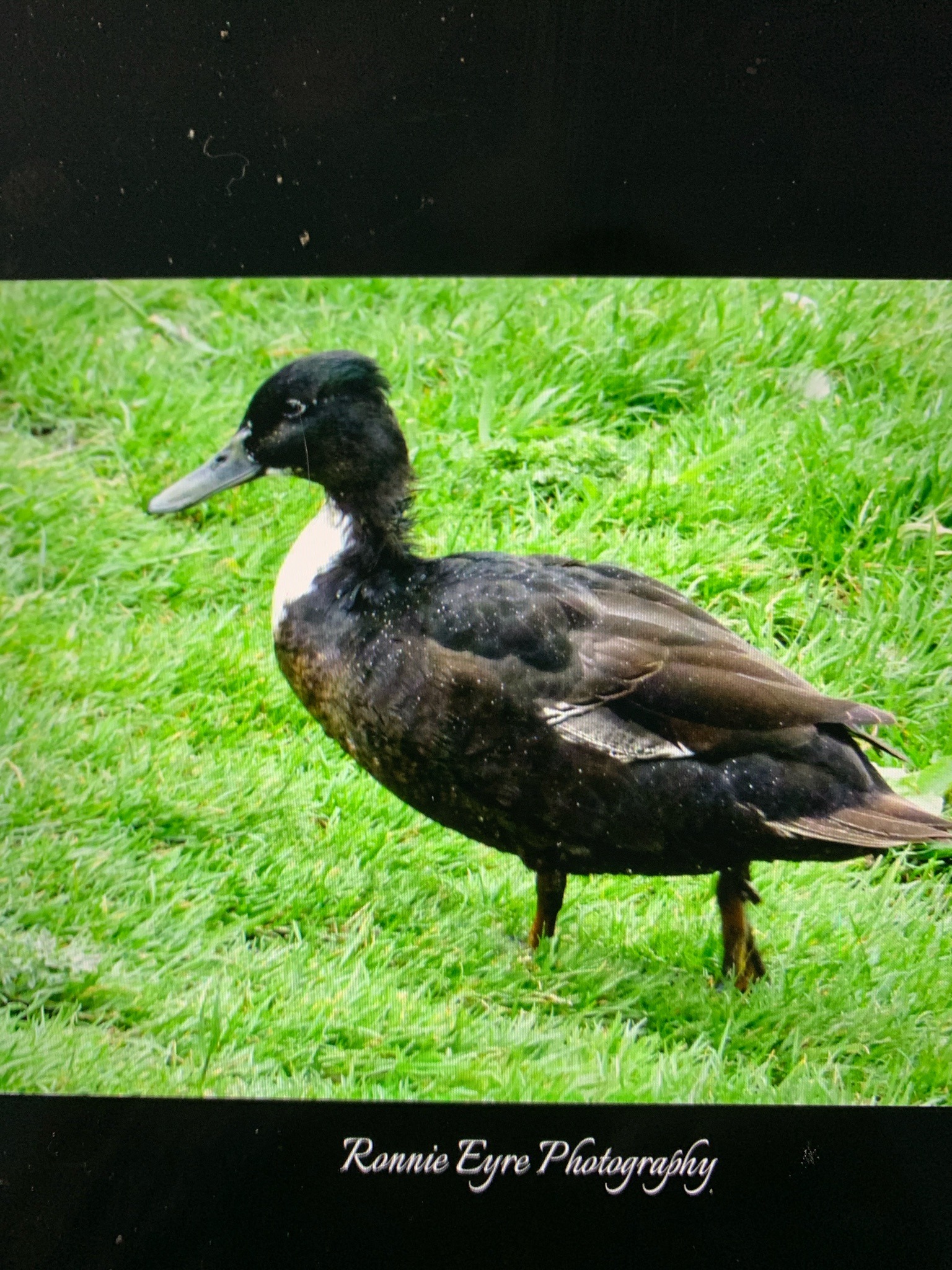
A medium-to-large domestic duck with a sturdy build, upright posture, and distinctive black plumage that shimmers with iridescent green and purple hues under sunlight.
Explore Cayuga Duck in the encyclopedia →Identify your own birds.
Get a report just like this from any photo or call, free.
Plumage & appearance
Adults have striking beetle-green or purple iridescent black feathers that can catch the light, combined with a characteristic white bib on the chest which may sometimes reduce or disappear with age. Females typically have a darker bill that can transition to olive-black.
Key field marks
Brilliant iridescent black plumage, distinct white patch on the breast (bib), dark bill, and dark legs.
Size & weight
Length: 50-60 cm, Wingspan: 80-95 cm, Weight: 2.5 - 3.6 kg
Voice — call & song
Females produce a loud, classic quack; males produce a softer, quieter, raspy sound.
Diet & foraging
Omnivorous; feeds on grains, seeds, aquatic plants, insects, slugs, snails, and small amphibians.
Habitat
Domesticated environments including farmyards, pastures, and artificial ponds or lakes.
Migration & movement
Non-migratory resident, completely dependent on human care or local domestic environments.
Nesting & breeding
Nests on the ground in hidden, sheltered spots using grass and down feathers; lays clutches of 8 to 13 tinted (often dark grey or blackish) eggs, with a 28-day incubation period.
Similar species
Black Swedish duck, which also features a white bib but typically has blue-grey plumage rather than iridescent green-black.
Ecological significance
As domestic livestock and ornamental birds, they play a minor role in localized pest control and organic fertilization in agricultural and backyard settings.
Conservation status
Not Evaluated by the IUCN (Domesticated breed, though listed as 'threatened' by the Livestock Conservancy due to heritage breed status).
Observation tips
Best observed in domestic farmyards, homesteads, or public parks with ponds containing heritage or ornamental waterfowl collections.
Interesting facts
Cayuga duck eggs often start out jet black or dark grey at the beginning of the laying season and gradually lighten to a pale green or white as the laying season progresses.
More like this