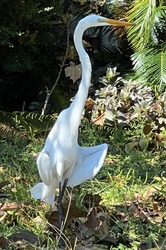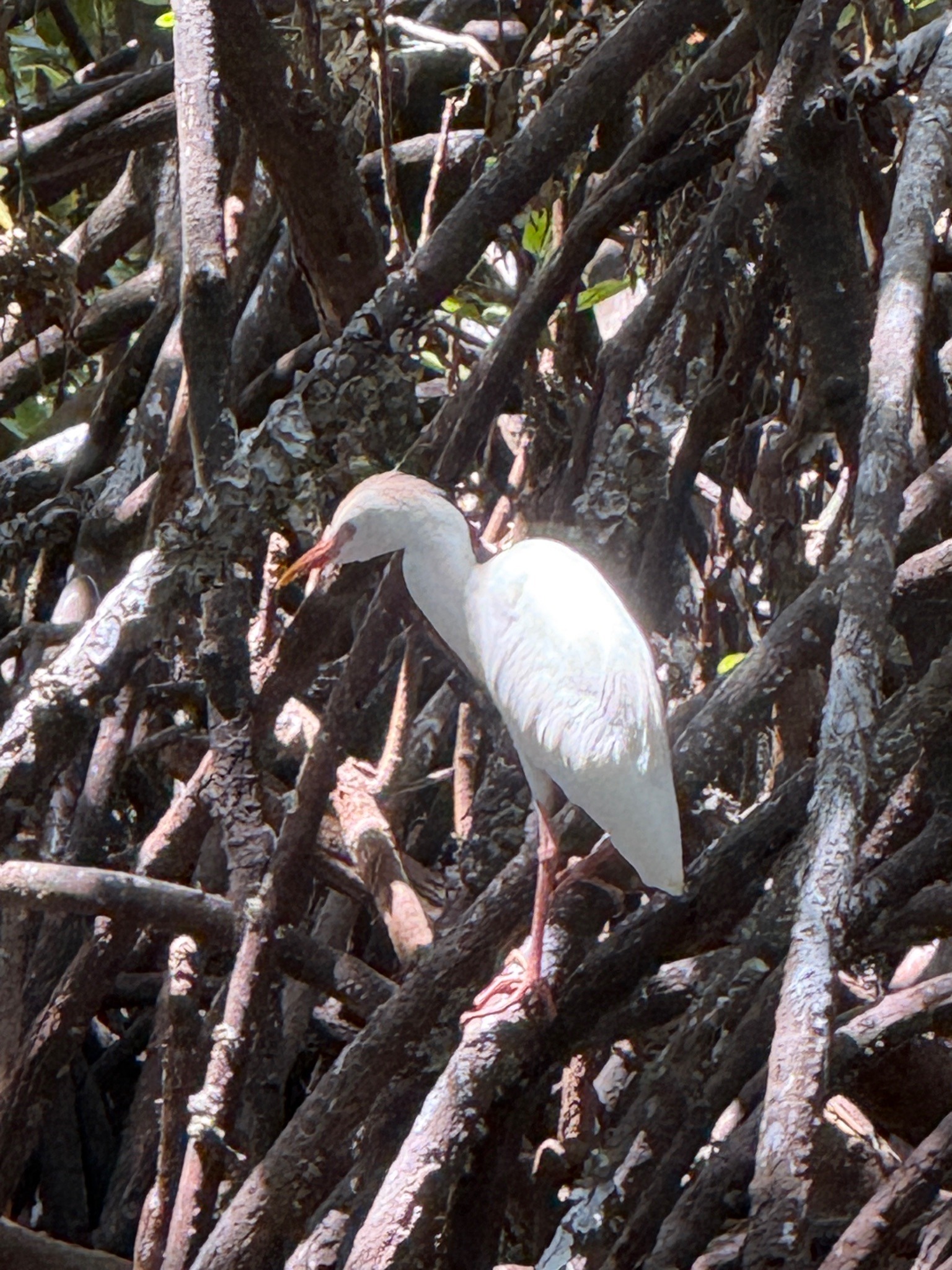
Order: Pelecaniformes, Family: Ardeidae
Cattle Egret
Bubulcus ibis
A stocky, relatively short-billed white heron often found foraging in fields alongside livestock, catching insects flushed by the animals.
Explore Cattle Egret in the encyclopedia →Identify your own birds.
Get a report just like this from any photo or call, free.
Plumage & appearance
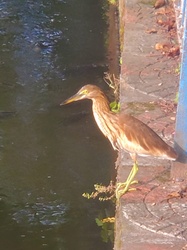
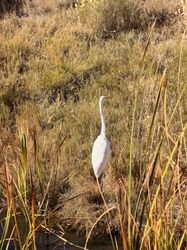
Non-breeding adults and juveniles are entirely white with yellow bills and legs. Breeding adults develop striking golden-orange plumes on the head, breast, and back, along with brighter red or yellowish-orange bills, legs, and irises.
Key field marks
Stocky white body, short thick yellowish bill, shorter neck than other egrets, and shorter legs. Breeding individuals have buff-orange plumes on the crown, chest, and back.
Size & weight
Length: 46-56 cm (18-22 in), Wingspan: 88-96 cm (35-38 in), Weight: 270g - 512g (9.5-18 oz)
Voice — call & song
Generally quiet, but produces raspy, hoarse croaks, grunts, and succession of soft or harsh greeting calls at the nesting colony.
Diet & foraging
Primarily insects (especially grasshoppers, crickets, and flies), spiders, frogs, and lizards. It occasionally eats fish and small rodents, often foraging on land rather than in water.
Habitat
Open habitats, cattle pastures, agricultural fields, grasslands, and wetlands, frequently perched on or near large grazing mammals.
Migration & movement
Resident and highly dispersive. Many populations undertake post-breeding dispersal rather than traditional seasonal migration, spreading into new areas.
Nesting & breeding
Nests in colonies, often alongside other wading birds, in trees or shrubs near water. Builds a bulky platform of twigs. Clutch size is typically 1 to 5 pale blue-white eggs incubated by both parents.
Similar species
Little Egret and Snowy Egret. Cattle Egrets are distinguished by their shorter, thicker yellow or orange-tinged bills, stockier build, preference for dry land and livestock, and lack of black legs and yellow feet.
Ecological significance
Acts as a biological control agent by consuming large quantities of agricultural pests, ticks, and flies from livestock, though it can sometimes compete with native heron species.
Conservation status
Least Concern, with a globally increasing population trend due to its successful expansion into agricultural landscapes worldwide.
Observation tips
Look in pastures, agricultural fields, and grasslands, particularly near cattle, horses, or tractors turning up soil. They are generally tolerant of human presence.
Interesting facts
Unlike most other herons, the Cattle Egret is terrestrial and adapted to feeding in dry fields rather than aquatic environments, which fueled its explosive global expansion as agriculture spread.
More like this