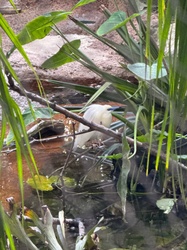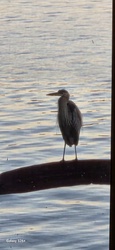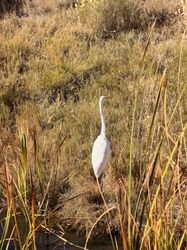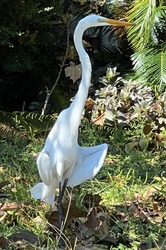
Order: Pelecaniformes, Family: Ardeidae
Green Heron
Butorides virescens
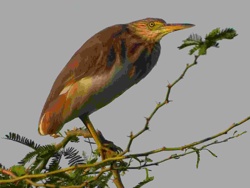
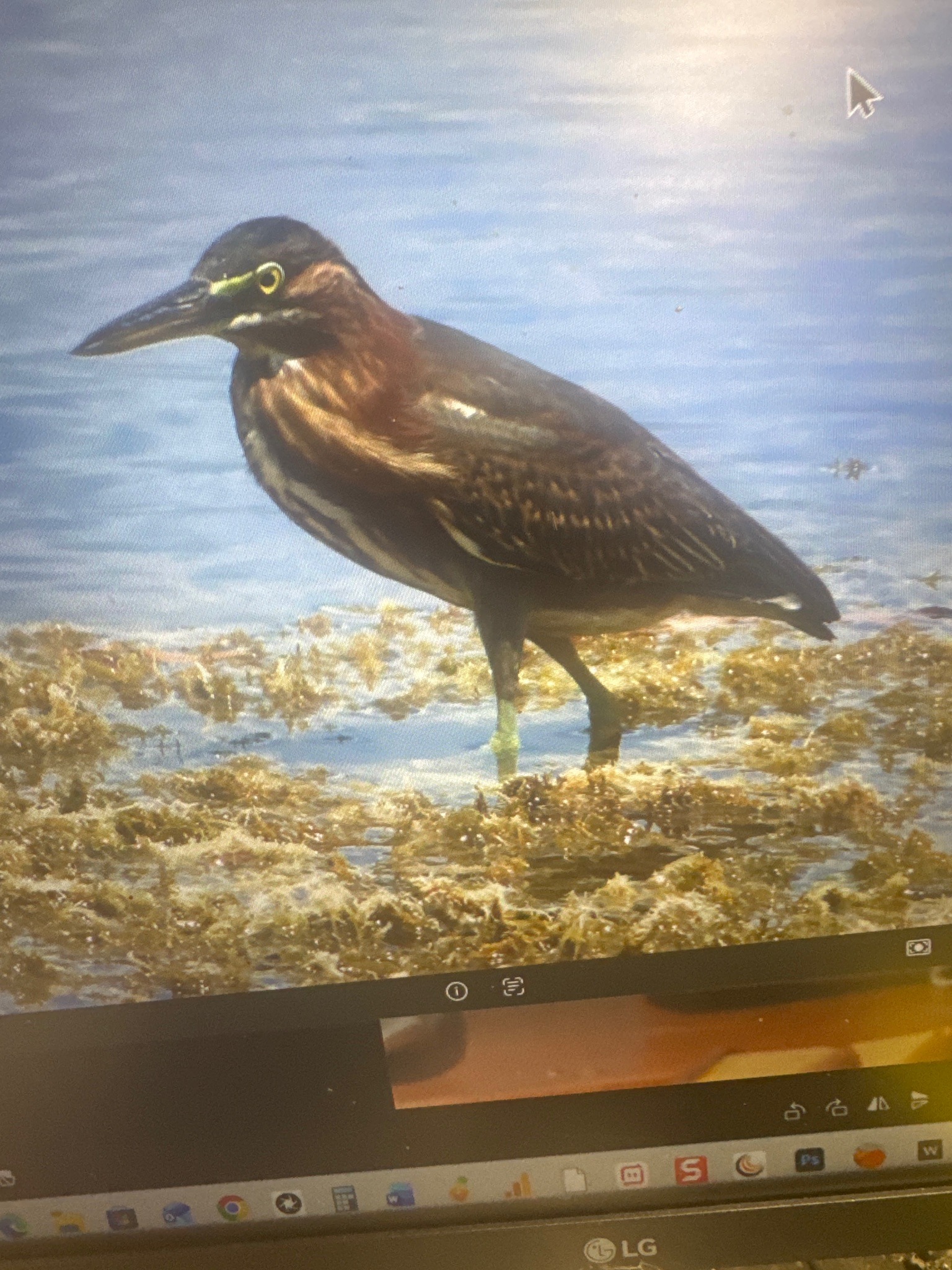
A small, stocky heron with a relatively thick, dark bill, short yellow or orange legs, and a dark cap that it can raise into a ragged crest. Often appears dark at a distance until the rich chestnut and green tones catch the light.
Explore Green Heron in the encyclopedia →Identify your own birds.
Get a report just like this from any photo or call, free.
Plumage & appearance
Adults have a glossy greenish-black cap, chestnut-brown neck, dark greenish-grey back and wings with pale feather edges, and greyish underparts. A white throat and stripe run down the front of the neck. Juveniles are duller and browner, heavily streaked with white on the neck and underparts.
Key field marks
Small size for a heron, dark greenish-black cap, chestnut neck and face, dark back, and relatively short yellow-greenish legs.
Size & weight
Length: 41–48 cm (16–19 in), Wingspan: 64–68 cm (25–27 in), Weight: 130–240 g (4.6–8.5 oz).
Voice — call & song
A sudden, explosive, loud, and raspy 'skeow' or 'kyow' call, usually given when flushed or alarmed.
Diet & foraging
Primarily small fish, frogs, aquatic insects, crustaceans, and occasionally small reptiles or rodents. Known for using tools, such as dropping bait (insects, feathers, or twigs) onto the water's surface to lure fish within striking distance.
Habitat
Shallow wetlands, marshes, swamps, river edges, mangrove swamps, and wooded ponds.
Migration & movement
Short to medium-distance migrant; northern populations migrate south for the winter, while southern populations are year-round residents.
Nesting & breeding
Builds a fragile platform of sticks in trees, shrubs, or reeds, usually near water. Lays a clutch of 3 to 5 pale greenish-blue eggs. Both parents incubate and feed the young.
Similar species
Least Bittern (much smaller and buffy-colored) and Night-Herons (stockier with shorter bills and different proportions).
Ecological significance
Acts as both a predator and prey species in wetland ecosystems, helping regulate aquatic insect and small fish populations.
Conservation status
Least Concern, with stable populations globally.
Observation tips
Look for them standing motionless or stalking prey at the water's edge of ponds, marshes, and wooded streams. They are easily startled, so approach quietly and use binoculars.
Interesting facts
Green Herons are one of the few bird species known to use tools, frequently dropping bread, insects, or berries into the water to attract fish.
More like this