Order: Pelecaniformes, Family: Ardeidae
Great Egret
Ardea alba
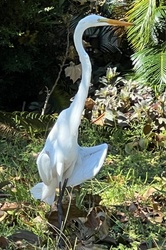
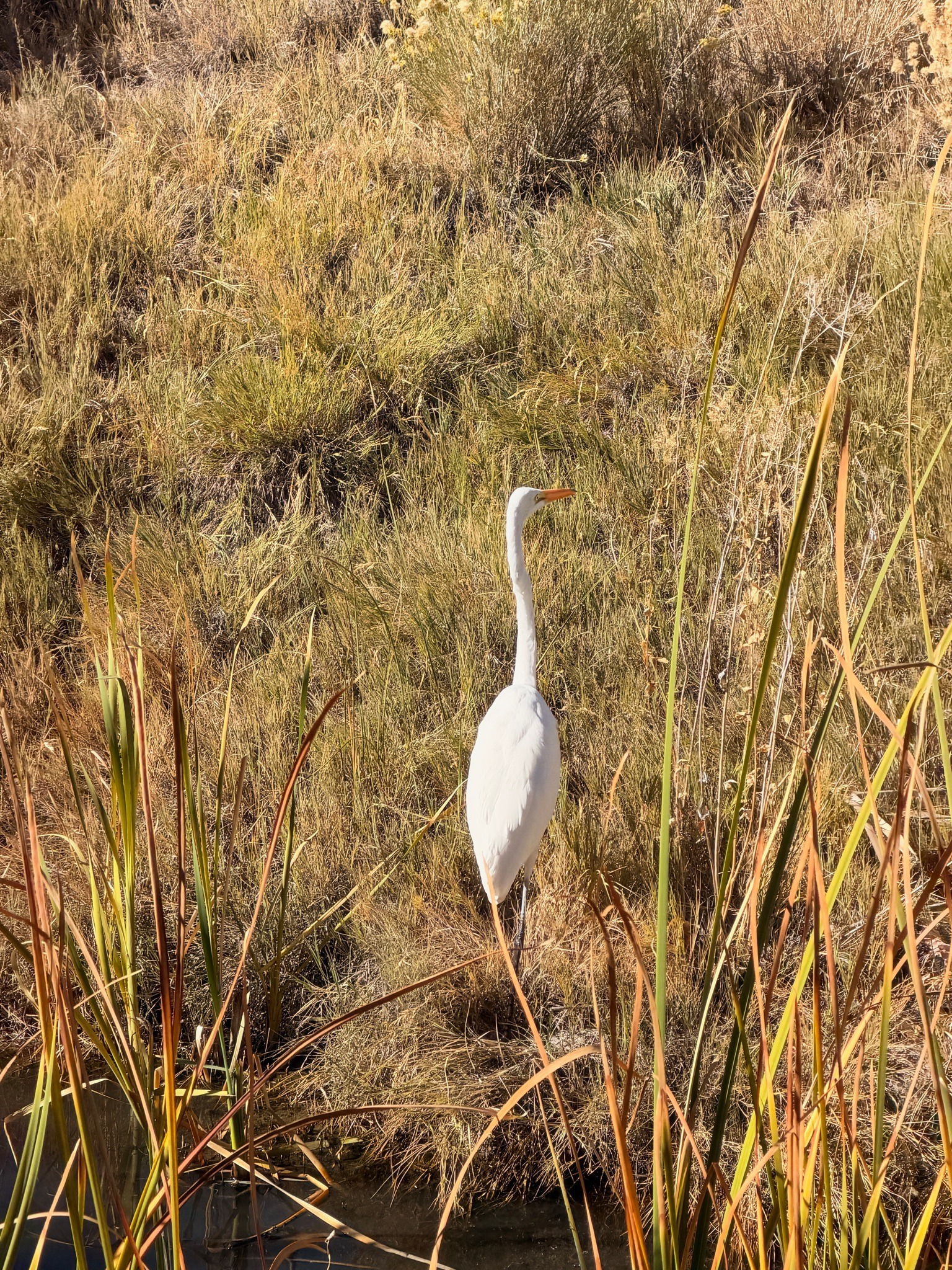
A large, elegant all-white heron with a long, S-curved neck, long blackish legs, and a heavy yellow bill. It stands tall and still when hunting.
Explore Great Egret in the encyclopedia →Identify your own birds.
Get a report just like this from any photo or call, free.
Plumage & appearance
Entirely white plumage year-round. During the breeding season, adults develop long, delicate plumes (aigrettes) on their backs and the bill turns a bright yellowish-orange, with greenish or yellowish facial skin. Non-breeding adults and juveniles have a yellow bill and blackish legs and feet.
Key field marks
Large size, entirely white plumage, very long S-shaped neck, long black legs and feet, and a yellow bill (orange during breeding season).
Size & weight
Length: 32–41 inches (80–104 cm), Wingspan: 51–57 inches (131–145 cm), Weight: 1.5–3.3 lbs (700–1500 g).
Voice — call & song
Generally silent outside the breeding colony. Emits a deep, harsh, low-pitched croak when disturbed or alarmed ('cuk-cuk-cuk').
Diet & foraging
Primarily fish, frogs, snakes, small mammals, and insects. Forages by standing motionless or wading slowly in shallow water, then striking rapidly with its sharp bill.
Habitat
Freshwater and saltwater wetlands, marshes, ponds, mudflats, streams, and flooded agricultural fields.
Migration & movement
Partial migrant. Northern populations migrate south for the winter, while southern populations are permanent residents.
Nesting & breeding
Breeds in colonies, often with other wading birds, in trees or tall shrubs near water. Builds a bulky stick platform nest. Clutch size is typically 3 to 5 pale greenish-blue eggs incubated by both parents.
Similar species
Snowy Egret (much smaller, with a black bill and bright yellow feet), Cattle Egret (smaller, stockier, with a shorter yellow bill and buffy plumes).
Ecological significance
Acts as an apex predator in aquatic food webs, helping to regulate populations of fish, amphibians, and small mammals, serving as an indicator of wetland health.
Conservation status
IUCN Least Concern with generally stable or increasing populations.
Observation tips
Look near the edges of shallow lakes, marshes, and flooded fields. Approach slowly, as they can be wary and fly off with slow, heavy wingbeats if startled.
Interesting facts
The Great Egret is the symbol of the National Audubon Society, which was founded in part to protect egrets from being hunted for their plumes in the late 19th and early 20th centuries.
More like this