Order: Pelecaniformes; Family: Ardeidae
Snowy Egret
Egretta thula
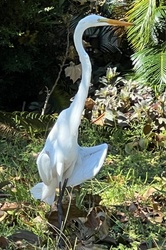
A small, graceful white heron with a thin black bill and characteristic bright yellow feet. It is known for its active foraging style, often running through shallow water.
Explore Snowy Egret in the encyclopedia →Identify your own birds.
Get a report just like this from any photo or call, free.
Plumage & appearance
Entirely white plumage. During the breeding season, adults develop long, delicate 'nuptial' plumes on the back, neck, and head. Lores (area between the bill and eyes) turn bright yellow to reddish-orange during courtship.
Key field marks
Black bill, black legs, bright yellow feet ('golden slippers'), and yellow lores.
Size & weight
Length: 22-26 in (56-66 cm); Wingspan: 39 in (100 cm); Weight: 13.1 oz (370 g)
Voice — call & song
Generally silent, but produces harsh croaks and bubbling sounds at nesting colonies.
Diet & foraging
Small fish, crustaceans, insects, and small reptiles. It uses its feet to stir up the bottom or flickers its wings to startle prey.
Habitat
Salt marshes, mudflats, estuaries, ponds, and freshwater marshes.
Migration & movement
Partial migrant. Northern populations migrate to the southern US and Central America, while southern populations are residents.
Nesting & breeding
Nests in colonies (rookeries), often with other herons. Builds a platform of sticks in trees or shrubs. Lays 3-6 pale greenish-blue eggs.
Similar species
Great Egret (much larger, yellow bill, black feet); Cattle Egret (shorter, thicker yellow bill, stockier build); Little Egret (Old World species, two long head plumes).
Ecological significance
As a mid-level predator, it helps control populations of small fish and crustaceans. They are often indicators of wetland health.
Conservation status
Least Concern (Population increasing)
Observation tips
Look for them in marshes and mudflats. They are easily distinguished from larger egrets by their active 'dancing' movement as they stir up mud with their golden feet.
Interesting facts
In the late 19th and early 20th centuries, this bird was hunted to near extinction for its beautiful plumage used in the fashion industry for ladies' hats.
More like this