Order: Pelecaniformes; Family: Threskiornithidae
Buff-necked Ibis
Theristicus caudatus
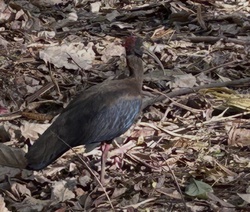
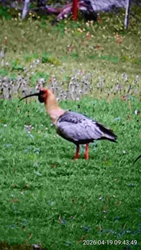
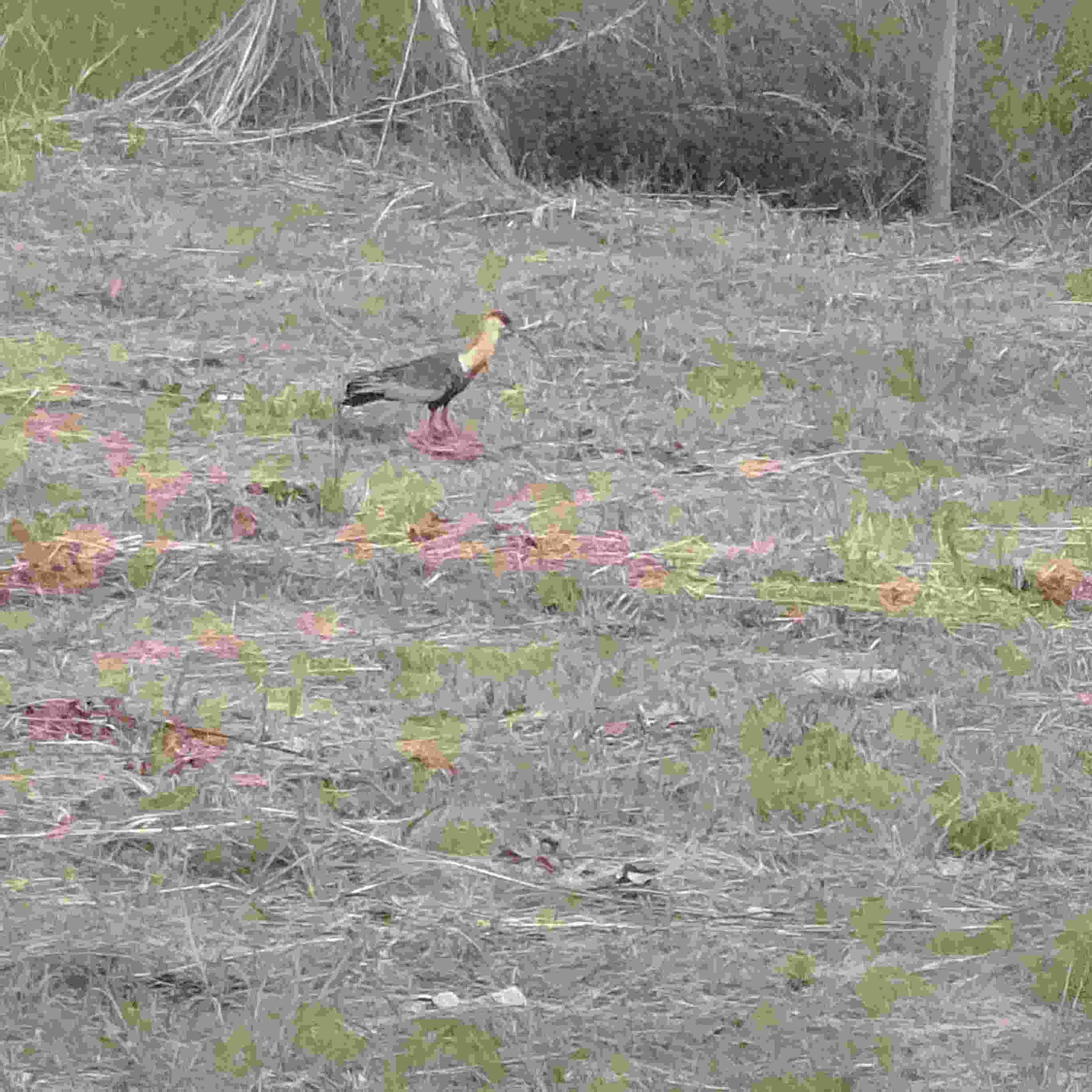
A large, terrestrial ibis with a distinct orange-buff neck, a long downward-curved black bill, and pink legs. It is often seen walking in open fields and wetlands.
Explore Buff-necked Ibis in the encyclopedia →Identify your own birds.
Get a report just like this from any photo or call, free.
Plumage & appearance
Features a buff/cream neck and breast, with dark grey to black wings and underparts. The crown is rufous-brown. It lacks significant sexual dimorphism, though juveniles may appear duller with more streaking on the neck.
Key field marks
Buff-colored neck, rufous crown, large dark wings with white patches visible in flight, long curved bill, and bright pinkish-red legs.
Size & weight
Length: 71-76 cm (28-30 in); Weight: approximately 1.1-1.4 kg.
Voice — call & song
A loud, piercing, metallic series of honks or 'klee-klee-klee' sounds, often delivered in flight or from a perch.
Diet & foraging
Opportunistic carnivore; eats insects, spiders, frogs, lizards, snakes, and occasionally small rodents. It probes the soil or grass with its long bill.
Habitat
Open grasslands, savanna, marshes, pastures, and sometimes agricultural fields or suburban lawns.
Migration & movement
Resident or sedentary; some populations may undertake local movements in response to water availability or rainfall patterns.
Nesting & breeding
Typically nests in colonies. Nests are platforms of sticks built in trees or on cliffs. They seasonal breeders, laying 2-4 eggs per clutch.
Similar species
Black-faced Ibis (Theristicus melanopis) is similar but has a black face, a darker grey body, and is generally found in more southern or high-altitude regions.
Ecological significance
Acts as an important predator of terrestrial invertebrates and small vertebrates, helping to control insect and rodent populations in grassland ecosystems.
Conservation status
Least Concern (IUCN); Population is stable and the species is relatively common in its range.
Observation tips
Look for them in open pastures, grasslands, and marshes. They are often vocal and easily identified by their loud, metallic, trumpeting calls, especially at dawn and dusk.
Interesting facts
Unlike many other ibis species, the Buff-necked Ibis is highly terrestrial and is often found far from standing water. Its genus name, Theristicus, comes from the Greek word for 'harvester'.
More like this