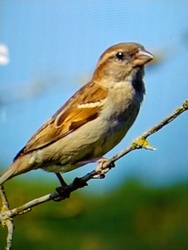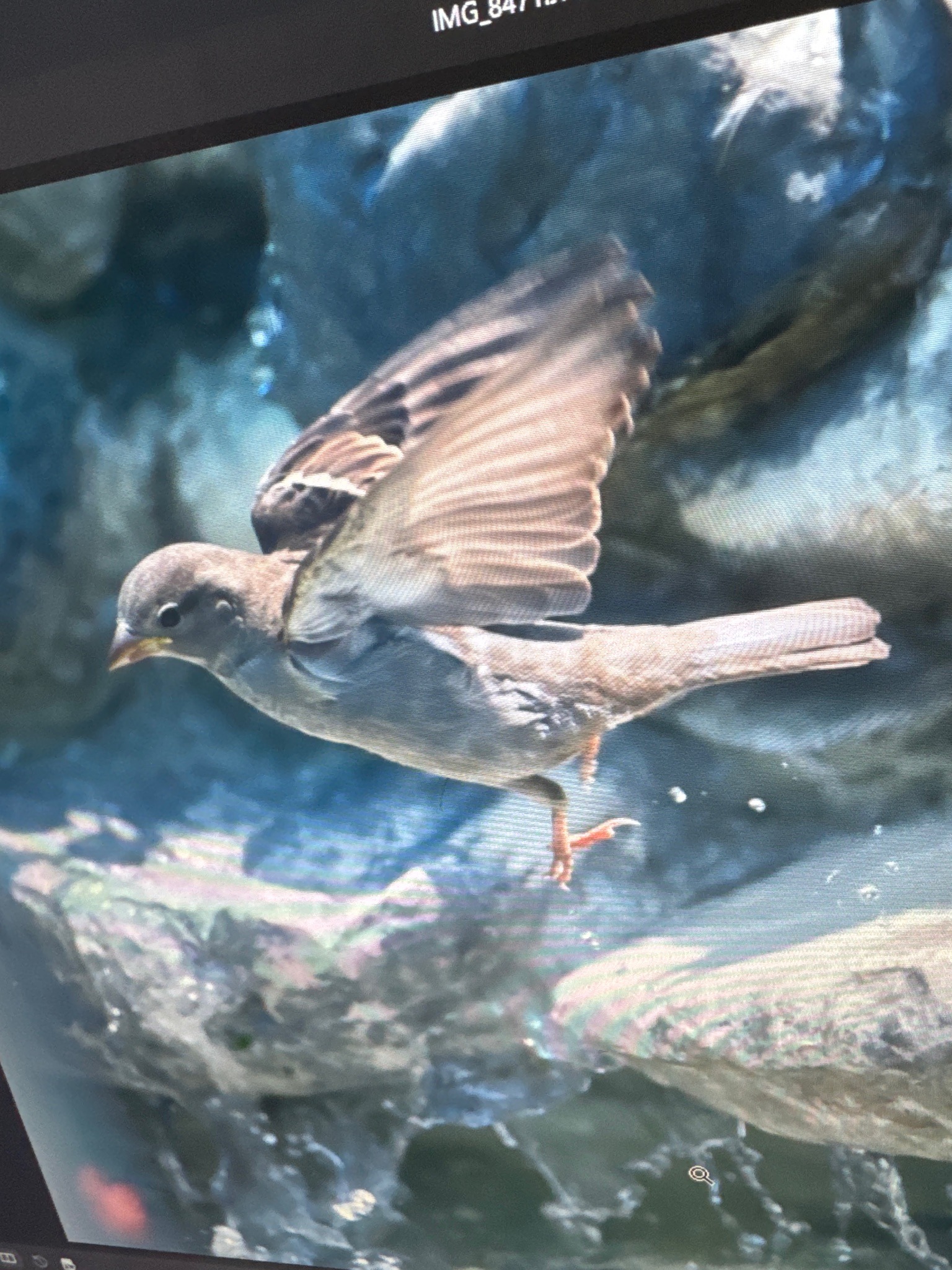
Order: Passeriformes, Family: Passeridae
House Sparrow
Passer domesticus
A compact, stout-bodied granivorous bird with a short, thick, conical bill adapted for seed-eating. Highly gregarious and closely associated with human habitations.
Explore House Sparrow in the encyclopedia →Identify your own birds.
Get a report just like this from any photo or call, free.
Plumage & appearance
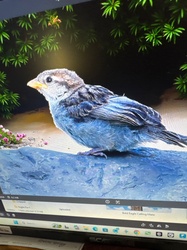
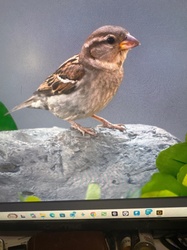
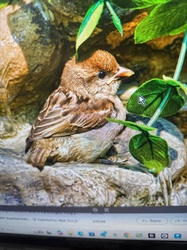
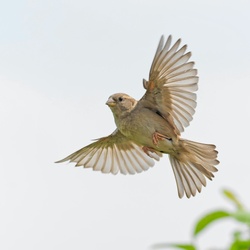
Adult males feature a dark grey crown, black bib, chestnut brown nape, and white cheeks. Females and juveniles are duller, with grayish-brown upperparts featuring buff streaks and a pale eyebrow stripe (supercilium), lacking the distinct head pattern and black bib of the male.
Key field marks
Conical yellow-tinged or black bill (depending on season), stout body, grayish-brown back with black streaks, and lack of bright plumage in females/juveniles; male easily identified by black bib and grey crown.
Size & weight
Length: 14-18 cm (5.5-7.1 in), Wingspan: 19-25 cm (7.5-9.8 in), Weight: 24-39.5 g (0.85-1.39 oz)
Voice — call & song
A repetitive, monotonous series of chirping notes, predominantly 'chirrup' or 'chissick' calls.
Diet & foraging
Primarily seeds of grains and weeds, but also eats scraps of human food, flower buds, nectar, and insects (especially during breeding season).
Habitat
Urban and agricultural areas, towns, cities, farmyards, and villages; rarely found far from human settlements or cultivation.
Migration & movement
Non-migratory resident bird, though juveniles may disperse short distances to find new territories.
Nesting & breeding
Constructs a messy, dome-shaped nest of dry grass, feathers, and string in building crevices, tree cavities, or nest boxes. Clutch size is typically 3-7 white to bluish-white eggs speckled with brown, raised by both parents across multiple broods per year.
Similar species
Tree Sparrow (Passer montanus), which has a chestnut crown and a black cheek spot lacking in the House Sparrow; and various American sparrows (Passerellidae), which are generally slimmer and less tied to human structures.
Ecological significance
Acts as an important seed predator and prey species for urban raptors and cats; also helps control insect populations during the breeding season when feeding nestlings.
Conservation status
IUCN Least Concern; population trend is generally stable or decreasing slightly in some urban European areas due to habitat changes.
Observation tips
Look around urban parks, farms, cities, and suburban backyards near human structures and bird feeders.
Interesting facts
House Sparrows dust-bathe frequently in dry soil or loose sand to help maintain their feathers and eliminate parasites. They were intentionally introduced to Central Park in New York City in 1850 to combat insect pests.
More like this