Order: Passeriformes, Family: Passeridae
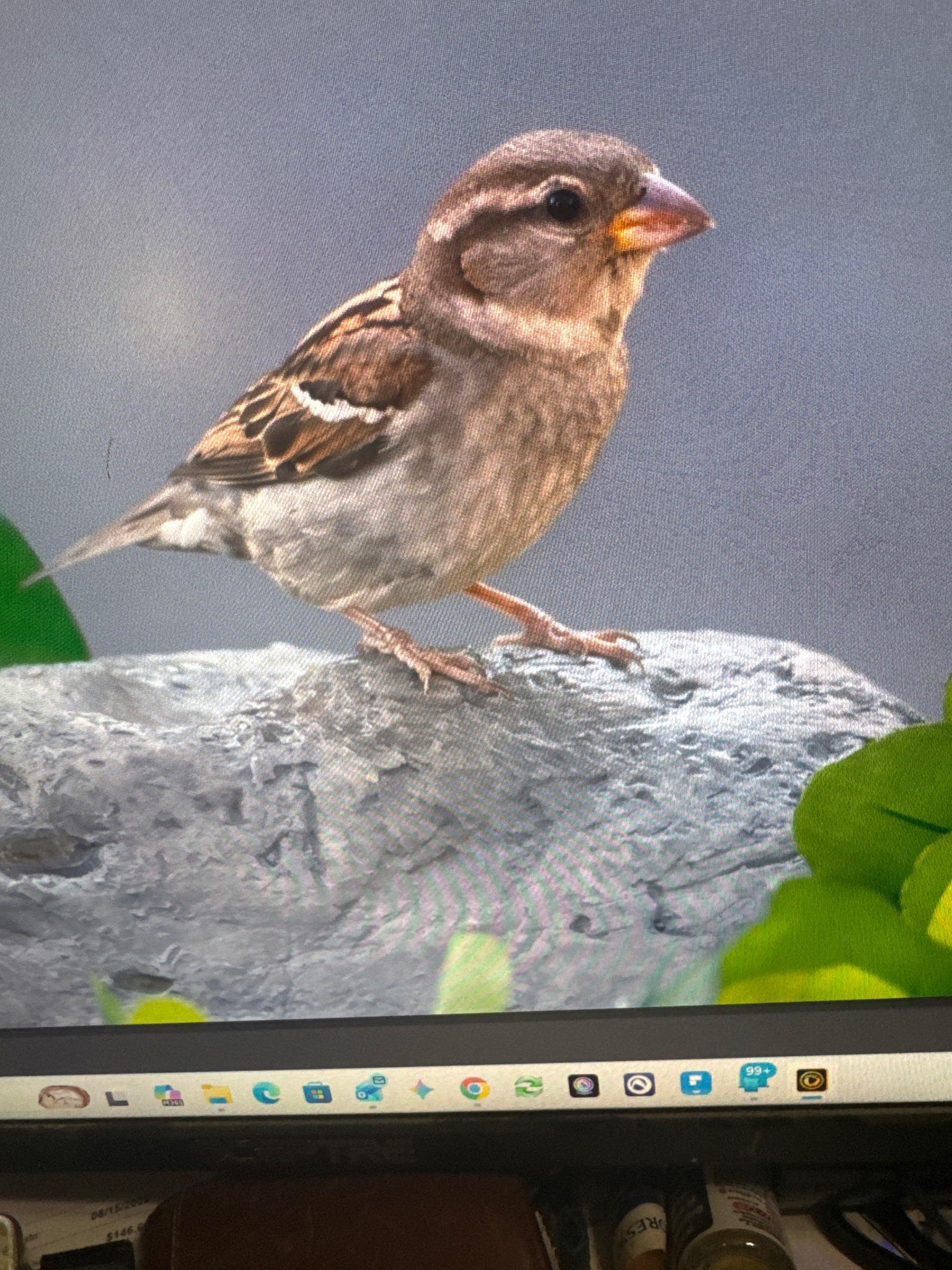
House Sparrow
Passer domesticus
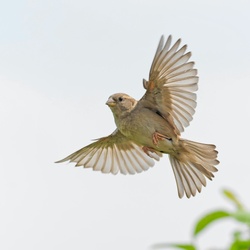
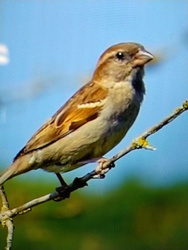
A small, robust bird with a stout conical bill adapted for seed-eating. It is highly social, frequently found hopping on the ground in groups around human settlements, farms, and urban parks.
Explore House Sparrow in the encyclopedia →Identify your own birds.
Get a report just like this from any photo or call, free.
Plumage & appearance
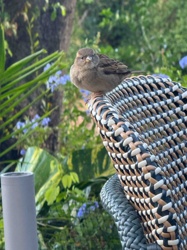
Adult males have a dark grey crown, black bib, chestnut brown nape, and grey cheeks. Females and juveniles are much plainer, featuring grayish-brown upperparts with buff streaks and a pale eyebrow stripe (supercilium), lacking the distinct black bib and grey crown of the male.
Key field marks
Stout bill, brownish-grey streaked back, plain whitish-grey underparts, and the absence of striking facial patterns on females or the distinctive black bib and grey cap on males.
Size & weight
Length: 14–16 cm (5.5–6.3 in); Wingspan: 21–25 cm (8.3–9.8 in); Weight: 24–39.5 g (0.85–1.39 oz)
Voice — call & song
A repetitive, monotonous series of chirps and cheeps ('chirrup'), lacking a complex melodic song.
Diet & foraging
Primarily grains, seeds, and weed seeds, but supplemented with insects during the breeding season and scraps from human food in urban areas.
Habitat
Strongly tied to human habitation, thriving in cities, towns, agricultural fields, and rural farmyards, but largely absent from deep forests and extensive grasslands.
Migration & movement
Non-migratory resident; populations stay in the same general area year-round, though juveniles may disperse short distances.
Nesting & breeding
Builds a messy, dome-shaped nest of dried grasses, feathers, and string in cavities such as building crevices, holes in trees, or nest boxes. Lays clutches of 3 to 7 eggs, raising multiple broods per year.
Similar species
Tree Sparrow (Passer montanus), which can be distinguished by its distinct black cheek patch and chestnut brown crown. Various female New World sparrows also look similar, but lack the stout bill and pale eyebrow combination of female House Sparrows.
Ecological significance
Serves as an important prey species for various urban raptors and cats. While largely beneficial for consuming weed seeds, they can also compete with native cavity-nesting birds.
Conservation status
IUCN Least Concern; populations are globally stable or locally declining in some urban European areas.
Observation tips
Look around buildings, urban parks, farmyards, and outdoor dining areas. They are bold and easily approached, making them excellent subjects for beginner bird photography.
Interesting facts
House Sparrows dust-bathe frequently in dry soil or sand, which helps rid their feathers of parasites. They were intentionally introduced to North America in Brooklyn, New York, in 1851 to control pest caterpillars.
More like this