Order: Passeriformes, Family: Passeridae
House Sparrow
Passer domesticus
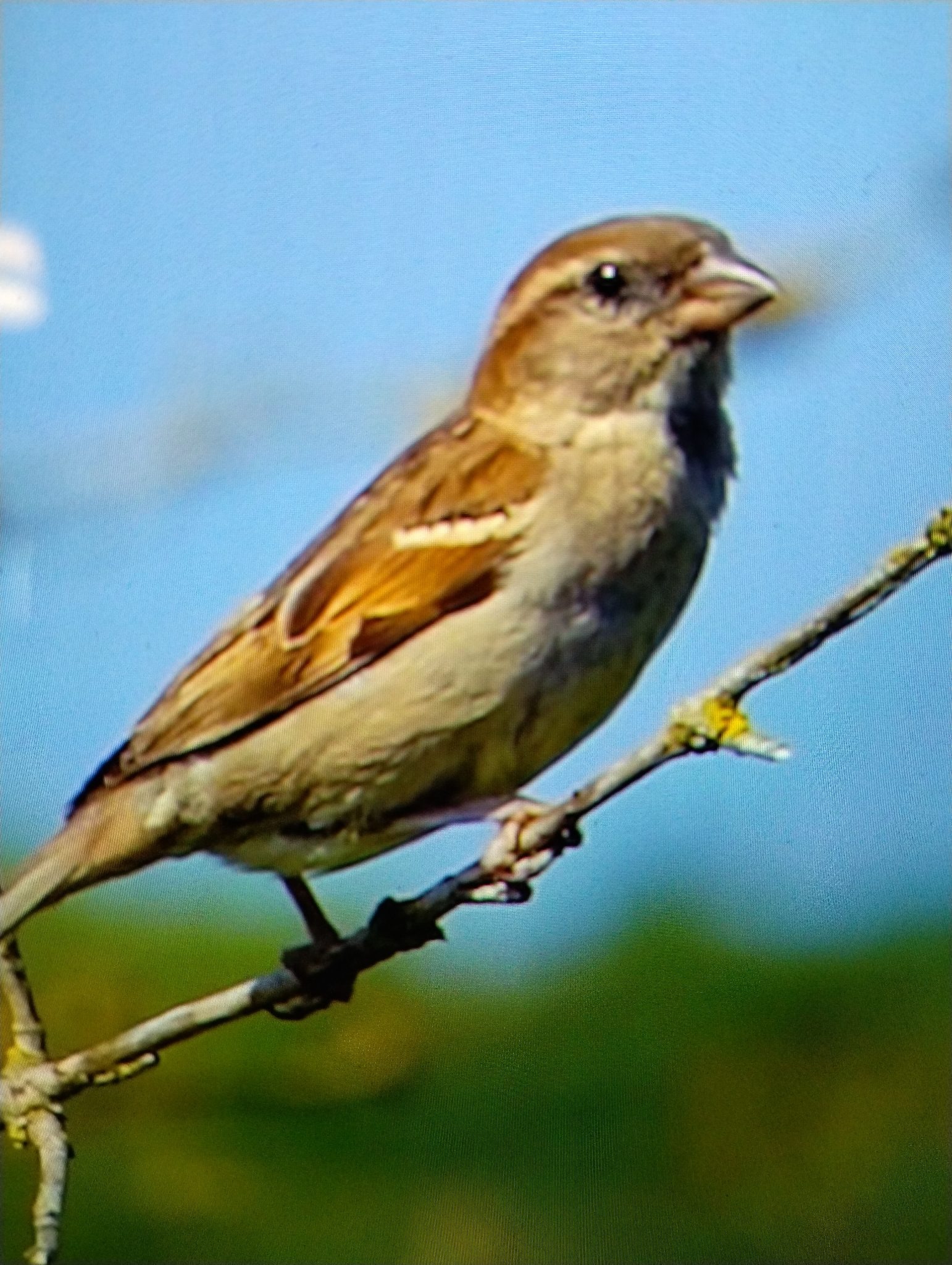
A robust, stocky seed-eating bird with a stout bill and short tail, highly adapted to human habitations and urban environments.
Explore House Sparrow in the encyclopedia →Identify your own birds.
Get a report just like this from any photo or call, free.
Plumage & appearance
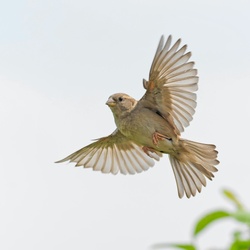
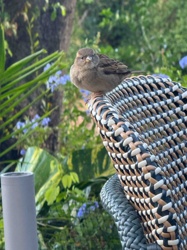
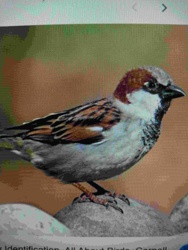
Males have a distinctive grey crown, black bib, white cheeks, and chestnut-brown nape and back. Females and juveniles are duller, with plain grayish-brown underparts, a buffy eyebrow stripe, and a striped brown back.
Key field marks
Stocky body, conical grey/black bill, grey crown and black throat on male; plain buffy-brown supercilium and streaked back on female.
Size & weight
Length: 14-18 cm (5.5-7 inches), Wingspan: 21-25 cm (8.3-9.8 inches), Weight: 24-39.5 g
Voice — call & song
A repetitive, monotonous series of loud, metallic chips and chirps ('chup' or 'chirrup').
Diet & foraging
Primarily grains and seeds, but also insects and scraps of human food, especially during the breeding season.
Habitat
Strongly associated with human habitation, including cities, towns, farms, and agricultural land, rarely found far from human structures.
Migration & movement
Non-migratory permanent resident, though local movements may occur.
Nesting & breeding
Builds a messy dome-shaped nest of grass, feathers, and trash in cavities, crevices of buildings, or trees. Lays 3-7 eggs per clutch and can have multiple broods a year.
Similar species
Tree Sparrow (distinguished by chestnut cap, black cheek spot, and smaller size), and various New World sparrows which generally have different facial patterns and prefer less urban habitats.
Ecological significance
Acts as an important consumer of weed seeds and insects, though can also compete with native cavity-nesting birds in non-native regions.
Conservation status
IUCN Least Concern, though populations have experienced declines in some urban European areas.
Observation tips
Look around farms, suburban neighborhoods, parks, and city centers, particularly near bird feeders, outdoor cafes, and agricultural fields.
Interesting facts
House Sparrows dust-bathe frequently in dry soil or sand to clean their feathers and deter parasites, and they were intentionally introduced to North America in New York City in the 19th century to control insect pests.
More like this