Order: Passeriformes, Family: Passeridae
House Sparrow
Passer domesticus
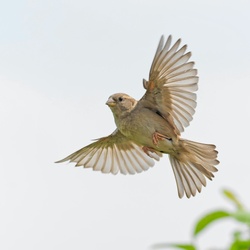
A small, plump, robust passerine with a stout, conical seed-eating bill and a short tail. It is highly adaptable and closely associated with human habitation.
Explore House Sparrow in the encyclopedia →Identify your own birds.
Get a report just like this from any photo or call, free.
Plumage & appearance
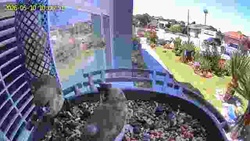
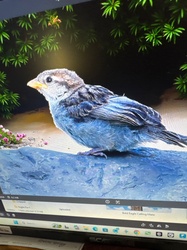
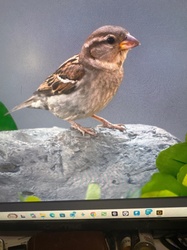
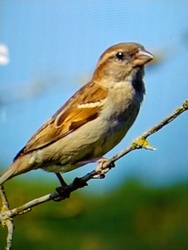
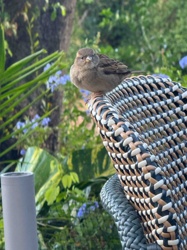
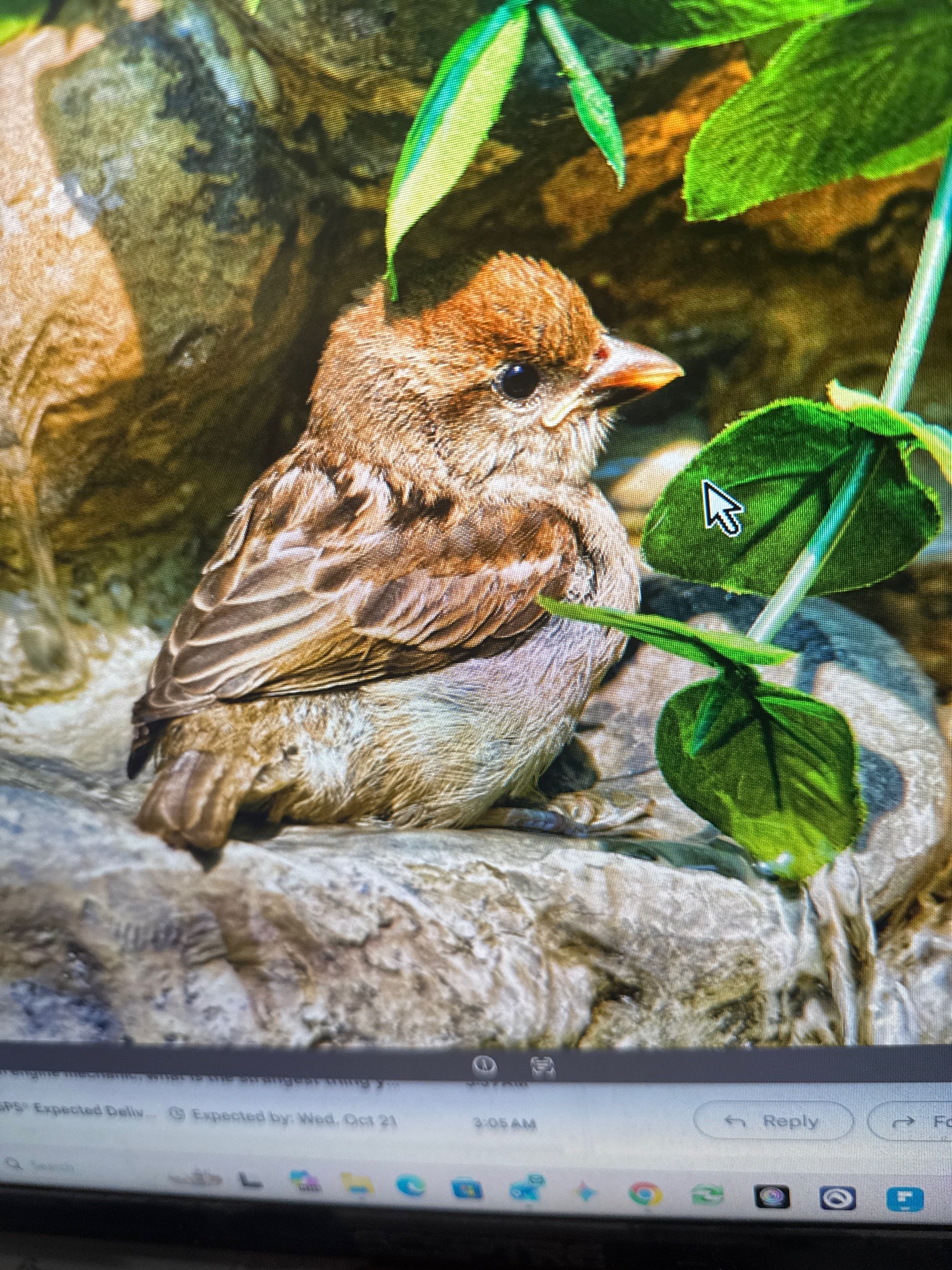
Adult males have a dark grey crown, black bib, chestnut nape, and white cheeks. Females and juveniles (like the one pictured) are duller brownish-grey with buffy underparts and a broad, pale buff eyebrow stripe; juveniles often show a distinct yellowish gape at the corners of the bill.
Key field marks
Stout bill, brown-streaked back, plain greyish-white underparts, and lack of bright colors. Juveniles show a pale bill with yellow gape flanges.
Size & weight
Length: 14–18 cm (5.5–7.1 in), Wingspan: 21–25 cm (8.3–9.8 in), Weight: 24–39.5 g (0.85–1.39 oz)
Voice — call & song
A monotonous series of chirping and chattering notes, usually sounding like 'chhip' or 'chirrup'.
Diet & foraging
Primarily grains, seeds, and weed seeds, but also feeds insects and table scraps, especially when feeding nestlings.
Habitat
Urban areas, cities, towns, farms, and agricultural land. It is strictly tied to human-altered environments and rarely found in deep forests or remote deserts.
Migration & movement
Non-migratory resident; populations rarely move more than a few kilometers from their birth site.
Nesting & breeding
Builds a messy, dome-shaped nest of dried grass, feathers, and trash in cavities, crevices of buildings, or tree holes. Lays clutches of 4 to 6 eggs, breeding multiple times per year.
Similar species
Tree Sparrow (Passer montanus), which has a chestnut-brown crown and a distinct black patch on each white cheek; various female sparrows or finches.
Ecological significance
Acts as an important seed disperser and insect controller in urban and agricultural environments, though it can sometimes outcompete native cavity-nesting birds.
Conservation status
Least Concern (LC), though populations have experienced declines in parts of its native European range due to modern agricultural practices and loss of nesting sites.
Observation tips
Look around human-made structures, urban parks, farmyards, and suburban gardens. They are usually very approachable and often gather in noisy flocks.
Interesting facts
House Sparrows dust-bathe frequently in dry soil or loose sand to help maintain their feathers and eliminate parasites. They were introduced to North America in Brooklyn, New York, in 1851 to control pest insects.
More like this