Order: Psittaciformes, Family: Psittacidae
Orange-fronted Parakeet
Eupsittula canicularis
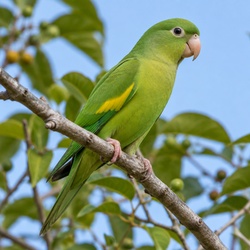
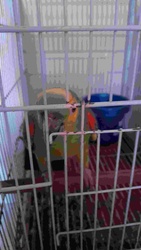
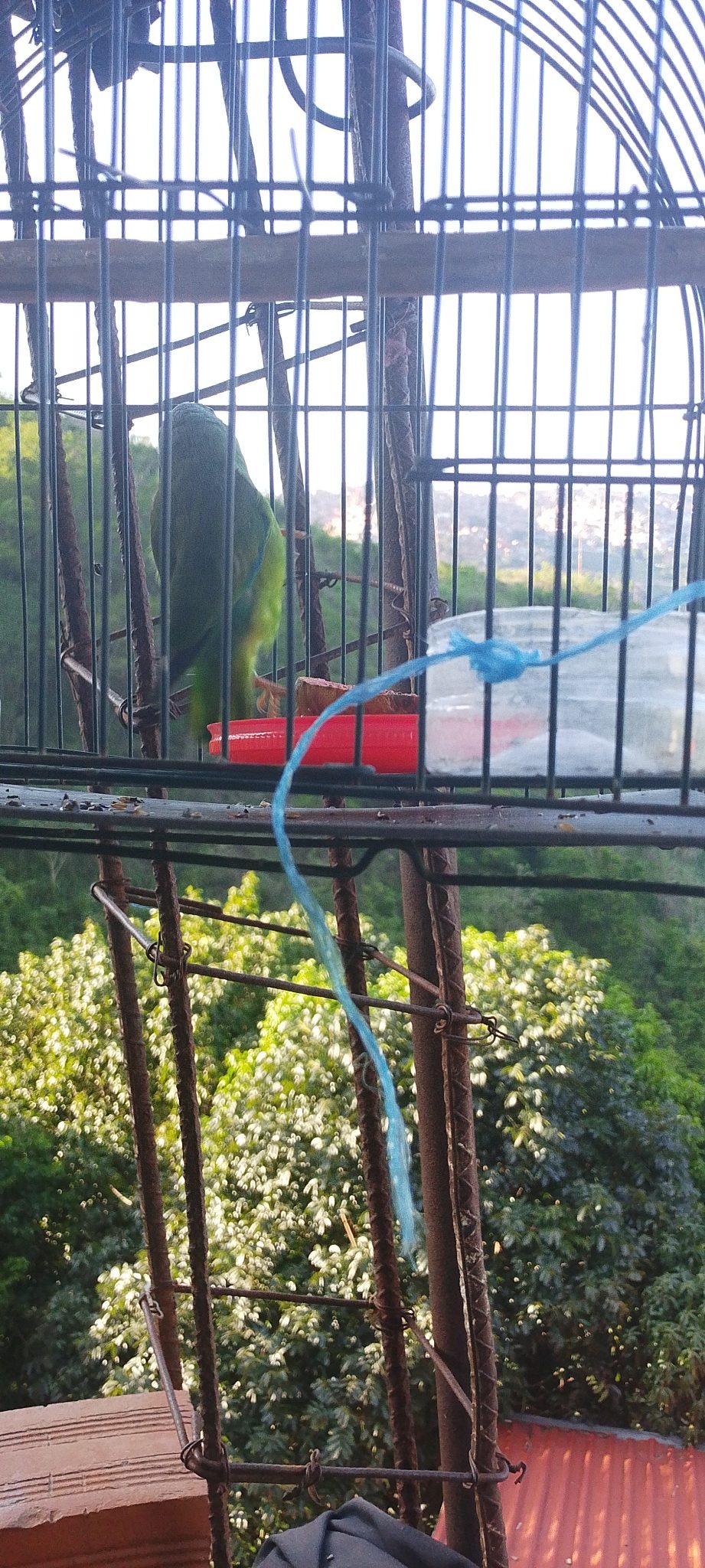
A small, gregarious parakeet with bright green feathers, an orange forehead, and a long tail. Often seen in noisy flocks flying rapidly overhead or foraging in the canopy.
Explore Orange-fronted Parakeet in the encyclopedia →Identify your own birds.
Get a report just like this from any photo or call, free.
Plumage & appearance
Predominantly green plumage with a yellowish belly. Adults feature an orange-yellow forehead patch (sometimes extending over the crown) and a blue band behind it. The eye ring is bare and white, and the bill is pale horn-colored. Juveniles have less orange on the forehead and darker eyes.
Key field marks
Bright green body, long gradient tail, and diagnostic orange forehead patch bordered by blue.
Size & weight
Length: 22-24 cm (8.6-9.4 inches); Weight: around 60-80 grams.
Voice — call & song
High-pitched, rapid, rolling chatters and shrill screeches given constantly while in flight or when disturbed.
Diet & foraging
Primarily feeds on seeds, fruits, flowers, and nectar from various trees and cacti. Forages actively in the canopy and sometimes in agricultural fields.
Habitat
Dry forests, arid scrublands, wooded savannas, and edge habitats, generally at lower elevations up to 1,500 meters.
Migration & movement
Non-migratory resident, though some populations show local nomadic movements following seasonal food availability.
Nesting & breeding
Nests typically in arboreal termite nests or occasionally in natural tree cavities. Lays 3 to 5 white eggs. Both parents participate in incubation and chick-rearing.
Similar species
Pacific Parakeet (Eupsittula nana/strenua), which is very similar but lacks the distinct orange forehead of the Orange-fronted Parakeet.
Ecological significance
Acts as a seed disperser and occasional pollinator. As cavity nesters, abandoned nests may provide shelter for other secondary cavity-using species.
Conservation status
Least Concern (IUCN), though populations are facing localized declines due to habitat loss and the pet trade.
Observation tips
Look and listen for active, noisy flocks in dry forests, scrublands, and agricultural areas. They are quite vocal in flight and often allow close approaches when feeding.
Interesting facts
Orange-fronted parakeets are known for their strong social bonds, often roosting and flying in tight, synchronized flocks of a dozen or more individuals.
More like this