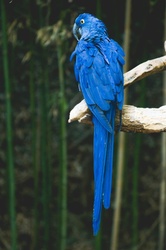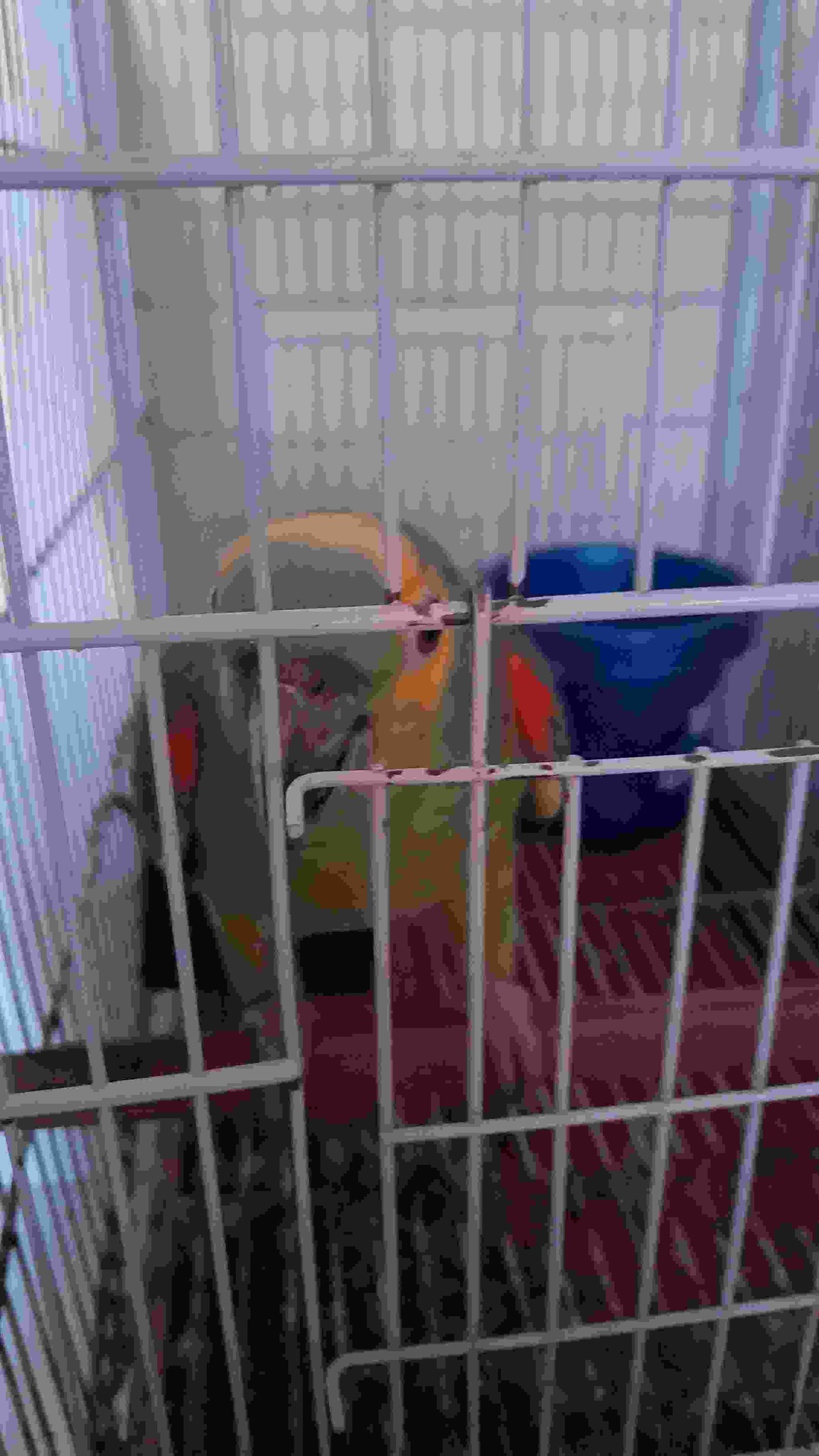
Order: Psittaciformes, Family: Psittacidae
Sun Conure
Aratinga solstitialis
A medium-sized, vibrantly colored parrot known for its loud vocalizations and social nature. It is highly gregarious and often travels in noisy flocks.
Explore Sun Conure in the encyclopedia →Identify your own birds.
Get a report just like this from any photo or call, free.
Plumage & appearance
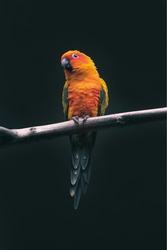
Adults are bright golden-yellow with orange on the face and belly. Wings are green with blue tips. Juveniles are predominantly green, gradually molting into adult colors over 6-12 months.
Key field marks
Brilliant yellow body, orange face/underside, green wings with blue primary coverts, and a white eye-ring.
Size & weight
Length: 30 cm (12 in); Wingspan: 146-162 mm; Weight: 100-120 g.
Voice — call & song
High-pitched, shrill, and repetitive 'scree-ah' or 'kree-ee' sounds.
Diet & foraging
Primarily fruits, seeds, nuts, berries, and occasionally insects and flowers. Forages in the canopy and on the ground.
Habitat
Northeastern Amazonian forests, scrubland, and wooded savannas.
Migration & movement
Non-migratory resident, though they may move locally in response to food availability.
Nesting & breeding
Nests in tree cavities, often in palm trees. Lays 3-4 eggs; both parents participate in defending the nest, though only the female incubates.
Similar species
Jandaya Parakeet (less yellow on wings) and Sulphur-breasted Parakeet (very similar, often considered the same species complex).
Ecological significance
Acts as a seed disperser for various tropical fruits and plants within its native rainforest and savanna ecosystems.
Conservation status
Endangered (IUCN); population is decreasing due to habitat loss and the illegal pet trade.
Observation tips
Listen for their piercing, high-pitched calls. They are easiest to spot in flight or at clay licks and fruiting trees in the early morning.
Interesting facts
They are one of the most popular companion parrots due to their beauty, but their natural population has been decimated by trapping for the trade.
More like this