Order: Psittaciformes, Family: Psittacidae
Plain Parakeet
Brotogeris tirica
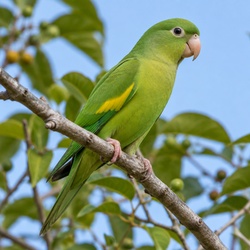
A small, predominantly green parrot with a relatively long, graduated tail and a pale bill. Highly social, active, and often vocal, typically seen in small flocks.
Explore Plain Parakeet in the encyclopedia →Identify your own birds.
Get a report just like this from any photo or call, free.
Plumage & appearance
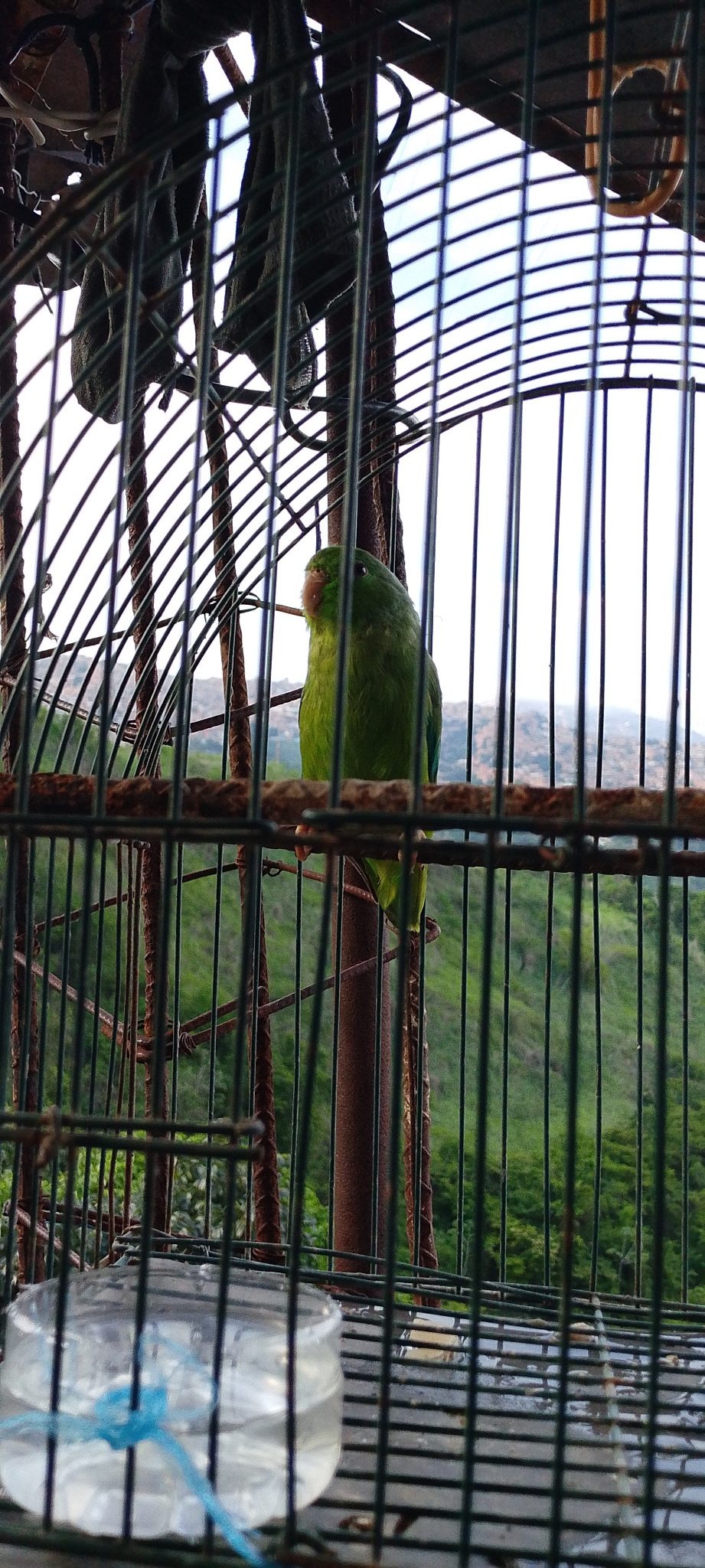
Predominantly green plumage, slightly paler on the underparts. It features a brownish-grey bill, pale yellowish-white eye rings, and subtle yellowish or bluish tinges on the wings depending on light and subspecies variation. Sexes are generally similar (monomorphic).
Key field marks
Small green parrot size, lack of prominent bright wing patches, pale bill, and relatively long graduated tail.
Size & weight
Length: Around 23 to 25 cm (9 to 10 inches). Weight: Approximately 60 to 70 grams.
Voice — call & song
High-pitched, rapid, rolling chatters and shrill screeches, typically given in flight or when disturbed.
Diet & foraging
Primarily feeds on seeds, fruits, flowers, nectar, and occasionally small insects.
Habitat
Found in Atlantic Forest, forest edges, secondary growth, wooded savannas, and urban parks and gardens.
Migration & movement
Non-migratory resident, though some local nomadic movements may occur in search of seasonal food sources.
Nesting & breeding
Nests in tree cavities, arboreal termite nests, or occasionally building crevices. Clutches usually consist of 3 to 5 eggs.
Similar species
Other Brotogeris parakeets such as the Yellow-chevroned Parakeet (Brotogeris chiriri), which can be distinguished by bright yellow wing patches.
Ecological significance
Acts as a seed predator and potential disperser; can influence local plant populations through its foraging habits.
Conservation status
Least Concern (LC) with a stable population trend.
Observation tips
Look and listen for high-pitched chattering in forest edges, parks, and suburban areas within eastern Brazil. They can be quite active in the canopy.
Interesting facts
Also known locally as the Tiriço, this species adapts remarkably well to human-modified landscapes and can frequently be observed visiting urban birdfeeders and city parks in Brazil.
More like this