Order: Psittaciformes; Family: Psittacidae
Sun Conure (Sun Parakeet)
Aratinga solstitialis
A medium-sized, vibrantly colored parrot known for its high-pitched screams and social nature. They are highly intelligent, active birds that live in large, noisy flocks.
Explore Sun Conure (Sun Parakeet) in the encyclopedia →Identify your own birds.
Get a report just like this from any photo or call, free.
Plumage & appearance
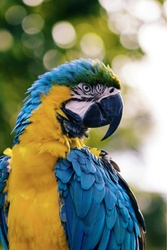
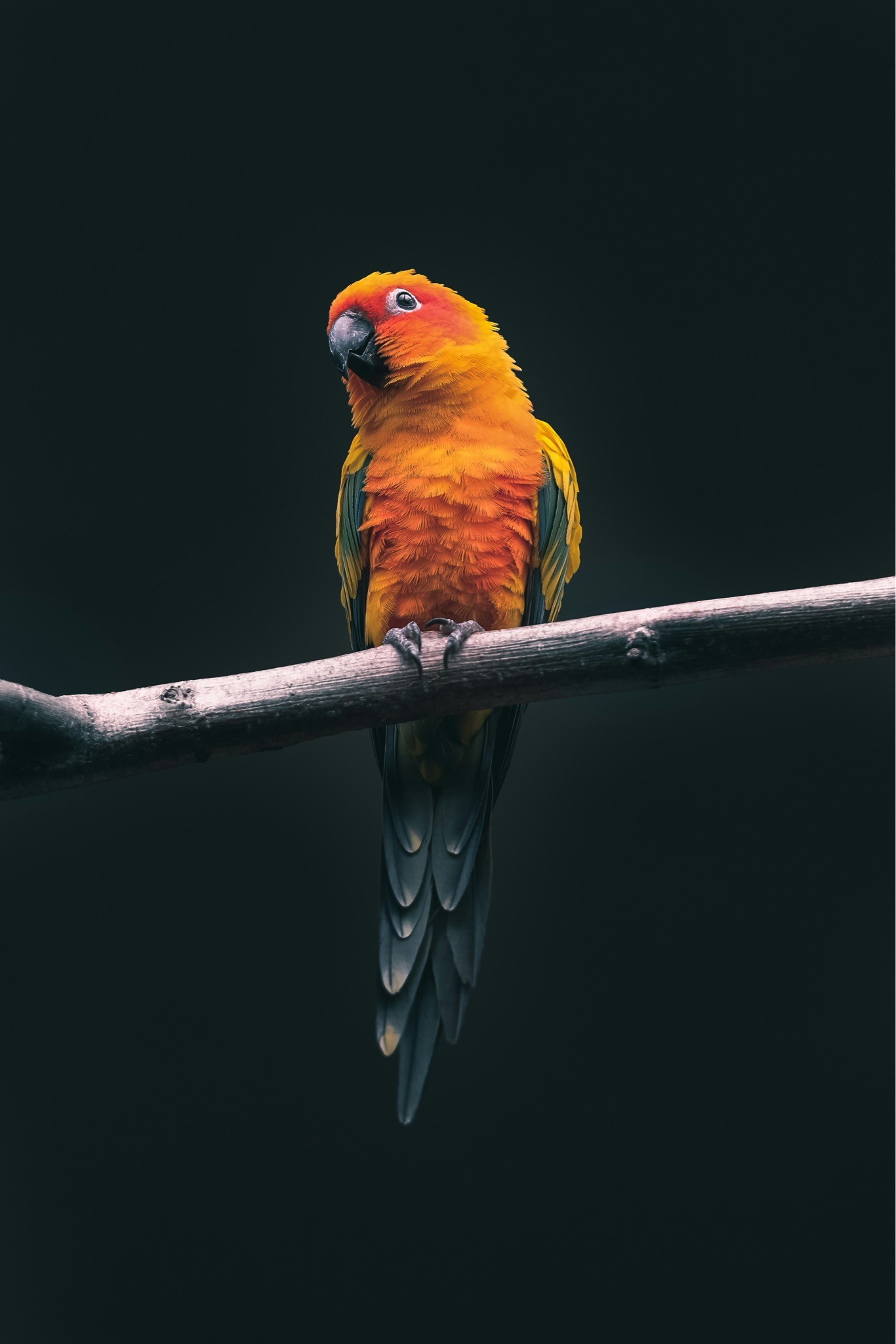
Adults are strikingly bright with golden-yellow heads, chests, and mantles, and orange flushing on the belly and face. Wings are green with blue tips; tails are olive-green with blue. Juveniles are predominantly green to provide camouflage, gradually gaining yellow and orange feathers over 6-12 months.
Key field marks
Golden-yellow body, orange face/belly, green and blue wings, long olive-green tail, white bare skin ring around the eye, and black beak.
Size & weight
Length: 30 cm (12 in); Wingspan: approx 15 cm per wing; Weight: 100-120 grams.
Voice — call & song
A very loud, high-pitched, multi-syllabic 'screeching' or 'shrieking'. They are extremely vocal, especially in flight.
Diet & foraging
Fruits, seeds, nuts, berries, blossoms, and occasionally insects. They forage in treetops and scrubland.
Habitat
Tropical habitats including open savannas, palm groves, and seasonally flooded forests.
Migration & movement
Non-migratory; they are resident birds, though they may move locally based on food availability.
Nesting & breeding
They nest in cavities, usually in palm trees. They lay 3-4 eggs which are incubated for about 23-27 days. Both parents participate in protecting the nest.
Similar species
Jenday Conure (Aratinga jandaya) - distinguished by having entirely green mantles and wings, whereas the Sun Conure has a yellow mantle.
Ecological significance
As fruit and seed eaters, they play a vital role in seed dispersal within their tropical forest ecosystems.
Conservation status
Endangered (IUCN) due to severe habitat loss and the illegal pet trade trap-out.
Observation tips
In the wild, they are best located by their loud, repetitive shrieks while flying. They are most active in the early morning and late afternoon.
Interesting facts
Sun Conures are mono-morphic, meaning males and females look identical. In captivity, they are famous for their ability to learn tricks and their intense loyalty to their owners, though they are one of the loudest parrot species.
More like this