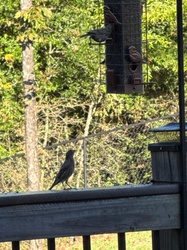
Order: Passeriformes, Family: Fringillidae
Lesser Goldfinch
Spinus psaltria
A tiny, energetic finch with a conical bill and a bouncy, undulating flight pattern. Often found in small flocks actively foraging on weeds and trees.
Explore Lesser Goldfinch in the encyclopedia →Identify your own birds.
Get a report just like this from any photo or call, free.
Plumage & appearance
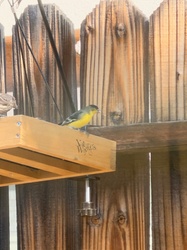
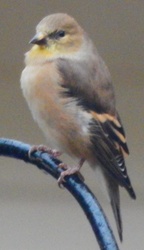
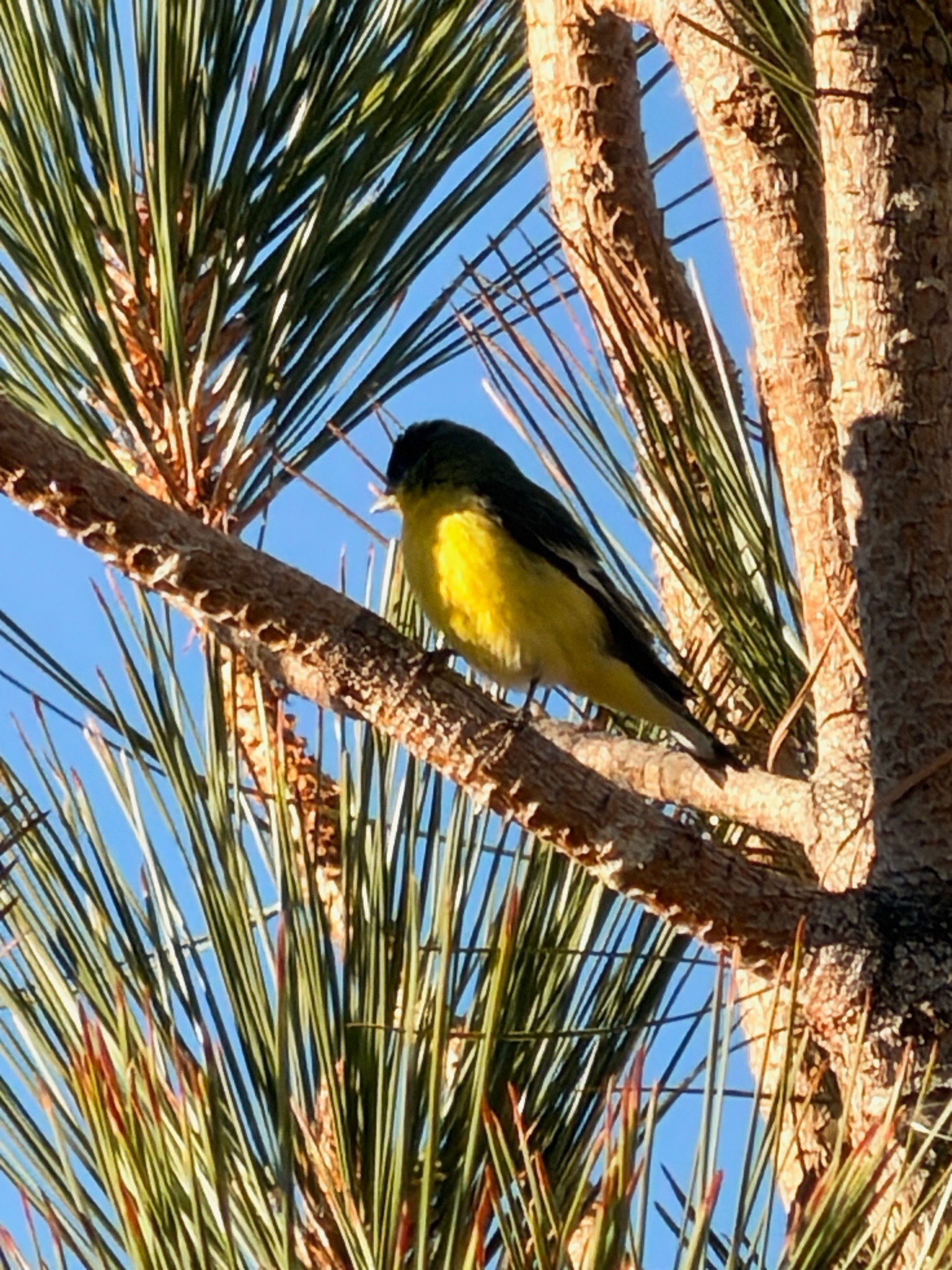
Adult males in the western US have a glossy black cap, bright yellow underparts, a dark olive-green to black back, and distinct white patches on the wings and tail. Females and juveniles lack the black cap, showing a duller olive-green upper body, yellowish underparts, and less pronounced white wing markings. Males from the eastern part of its range (often formerly known as the "Arkansas Goldfinch") have a completely black back.
Key field marks
Small size, bright yellow underparts, black cap (males), and notable white patches on the wings and outer tail feathers.
Size & weight
Length: 9.5-12 cm (3.7-4.7 in), Wingspan: 15-20 cm (5.9-7.9 in), Weight: 8-12 g (0.3-0.4 oz)
Voice — call & song
Song is a complex, musical warbled series of chirps, tweets, and slurs, often mimicking other species. Calls include a distinct, high-pitched, downward-slurred "tee-yee" or "teeur".
Diet & foraging
Primarily granivorous, feeding on seeds of composites such as sunflowers, thistles, dandelions, and ragweed. Also consumes buds, flowers, and occasionally insects.
Habitat
Open country, scrub, brushy areas, weedy fields, oak woodlands, riparian corridors, and residential gardens and parks.
Migration & movement
Mostly permanent resident, but engages in nomadic movements and partial migration, shifting to lower elevations or slightly south during the non-breeding season.
Nesting & breeding
Builds a neat, open cup nest made of plant fibers, down, and spiderwebs, placed in a fork of a tree or shrub. Clutch size is typically 3-5 pale bluish-white eggs. Incubation lasts about 12-13 days, performed by the female.
Similar species
American Goldfinch (Spinus tristis) and Lawrence's Goldfinch (Spinus lawrencei). Lesser Goldfinches can be distinguished from American Goldfinches by their black or dark green backs (males) and darker wings, and from Lawrence's by the lack of gray coloration and yellow breast.
Ecological significance
Acts as an important seed disperser for various weed and wildflower species, and serves as a prey base for small raptors and shrikes.
Conservation status
IUCN Red List: Least Concern. Population trend appears stable.
Observation tips
Look for them in open scrublands, suburban parks, and semi-desert areas, especially near water sources. Listen for their chatter in the tops of trees or weeds like thistles and dandelions.
Interesting facts
Unlike many other songbirds, the Lesser Goldfinch often nests relatively late in the summer, coinciding with the peak seeding time of thistles and other composite plants.
More like this