Order: Passeriformes, Family: Fringillidae
American Goldfinch
Spinus tristis
A small, active seed-eating finch with a short, conical bill and a notched tail. Known for its bouncing, undulating flight pattern and acrobatic feeding habits on seed heads.
Explore American Goldfinch in the encyclopedia →Identify your own birds.
Get a report just like this from any photo or call, free.
Plumage & appearance
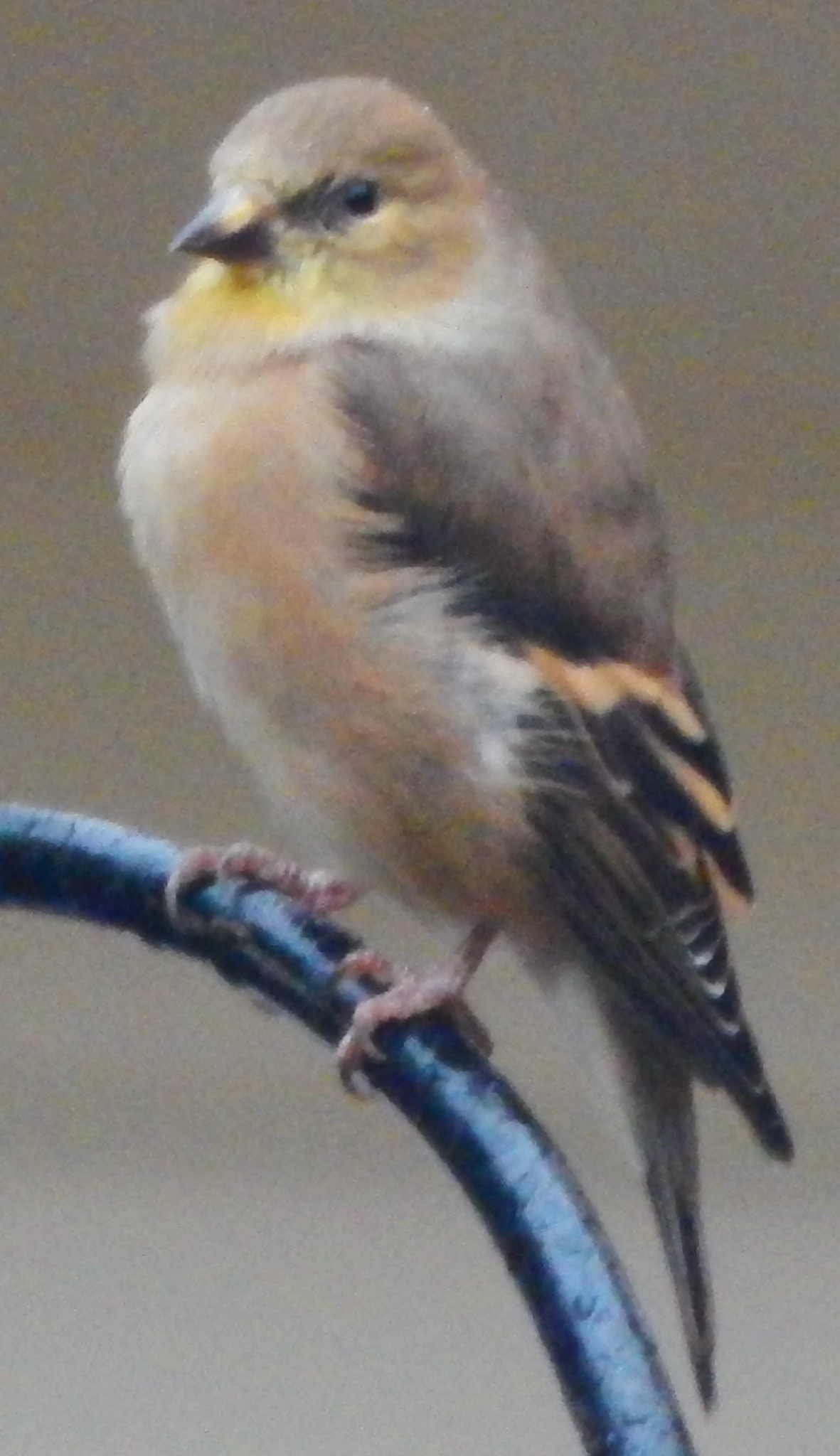
Adult males in summer have brilliant yellow plumage with a black forehead, black wings with white wingbars, and a white rump. In winter, both sexes molt into a duller, brownish-olive color with dark wings and buffy wingbars. Females are generally duller yellow-olive year-round with yellowish underparts and lack the black cap.
Key field marks
Conical orange-yellow bill (in summer), black wings with distinct white wingbars, notched tail, and characteristic undulating flight.
Size & weight
Length: 11-14 cm (4.3-5.5 in), Wingspan: 19-22 cm (7.5-8.7 in), Weight: 11-20 g (0.4-0.7 oz)
Voice — call & song
Call is a distinctive, undulating flight note often described as 'per-chick-o-ree' or 'po-ta-to-chip'. Song is a long, cheerful series of warbles, trills, and twitters.
Diet & foraging
Strictly granivorous, feeding almost exclusively on seeds from weeds, grasses, trees (such as alder, birch, and cedar), and flowers. They also feed insects to their young.
Habitat
Found in weedy fields, cultivated lands, floodplain forests, suburban areas, and overgrown orchards where seed-producing plants are abundant.
Migration & movement
Short-distance migrant; northern populations move south for the winter, while southern populations are largely year-round residents.
Nesting & breeding
Breeds much later in the season than most North American songbirds (usually July or August) to coincide with the peak availability of thistle down and weed seeds. Builds a tightly woven cup nest in a vertical fork of a deciduous shrub or tree, laying 2 to 7 pale bluish-white eggs.
Similar species
Lesser Goldfinch and Lawrence's Goldfinch in western North America. Female and winter American Goldfinches can also be confused with Pine Siskins, but lack the heavy streaking of siskins.
Ecological significance
Acts as an important seed disperser and helps control weed populations by consuming large quantities of weed seeds, particularly from thistles and dandelions.
Conservation status
Least Concern, with stable populations.
Observation tips
Look for them visiting backyard bird feeders offering Nyjer (thistle) seed or sunflower seeds, or listen for their distinctive flight calls in open fields, weedy meadows, and along forest edges.
Interesting facts
American Goldfinches are one of the strictest vegetarians in the bird world, feeding almost exclusively on seeds and even delaying nesting until late summer when plant fibers and seeds are most abundant for raising young.
More like this