Order: Passeriformes; Family: Fringillidae
House Finch
Haemorhous mexicanus
A small-bodied finch with a large beak and long tail. Often found in social groups, they are common visitors to backyard feeders and are known for their cheerful, warbling songs.
Explore House Finch in the encyclopedia →Identify your own birds.
Get a report just like this from any photo or call, free.
Plumage & appearance
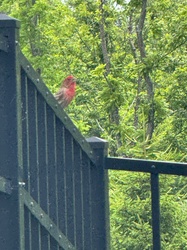
Adult males feature a bright red or orange breast, forehead, and rump with brown streaking on the belly. Females are plain grayish-brown with thick, blurry streaking throughout the underparts and no red coloration.
Key field marks
Conical 'seed-eater' beak, square-tipped tail, blurry brown streaks on flanks, and male's red 'headlight' coloration on the brow.
Size & weight
Length: 5.1-6 inches, Wingspan: 8-10 inches, Weight: 16-27 grams
Voice — call & song
A lively, high-pitched warbling song ending in a harsh downward 'veeeer'. Calls include a sharp 'queet'.
Diet & foraging
Almost exclusively vegetarian; consumes seeds, buds, and berries. Frequently visits bird feeders for sunflower seeds.
Habitat
Found in urban and suburban areas, farms, forest edges, and grasslands with scattered trees.
Migration & movement
Mostly resident, though some northern populations may move slightly south or to lower elevations in winter.
Nesting & breeding
Builds cup nests in trees, cacti, or on human structures like ledges and ivy. Lays 3-6 bluish-green eggs with fine dark spots.
Similar species
Purple Finch (males have red on wings/back, females have stronger face patterns) and Cassin's Finch (males have brighter red crowns and distinct white eye rings).
Ecological significance
As primary granivores, they play a role in seed dispersal. They also serve as a prey source for urban raptors like Cooper's Hawks.
Conservation status
Least Concern (Population stable/increasing)
Observation tips
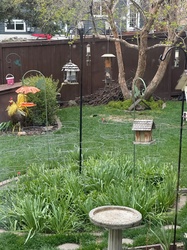
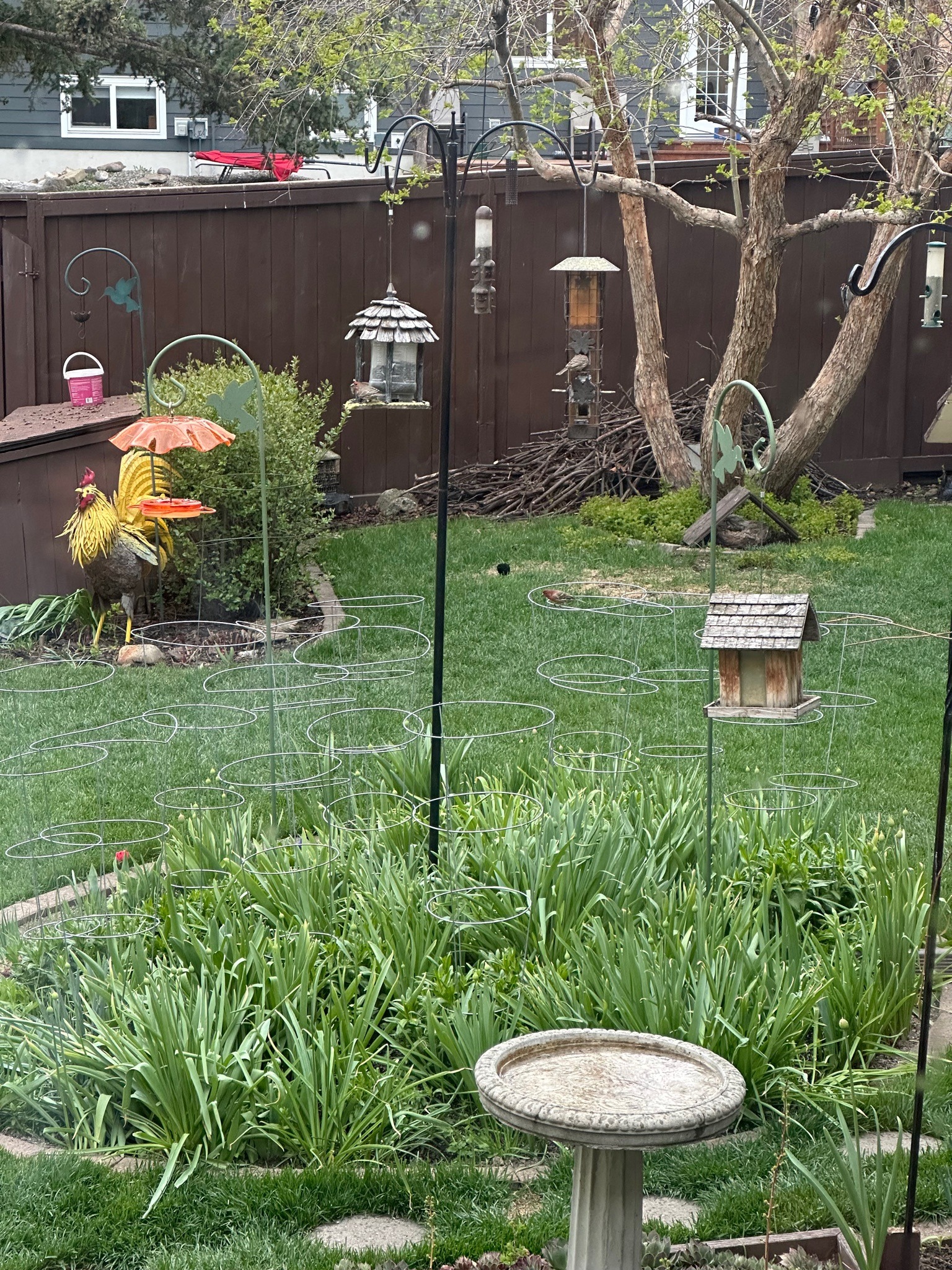
Very easy to attract to backyards using black oil sunflower seeds or nyjer. They are social and usually found in small flocks rather than alone.
Interesting facts
The intensity of the male's red plumage is derived strictly from pigments in the fruit and seeds it eats; females prefer to mate with the reddest males.
More like this