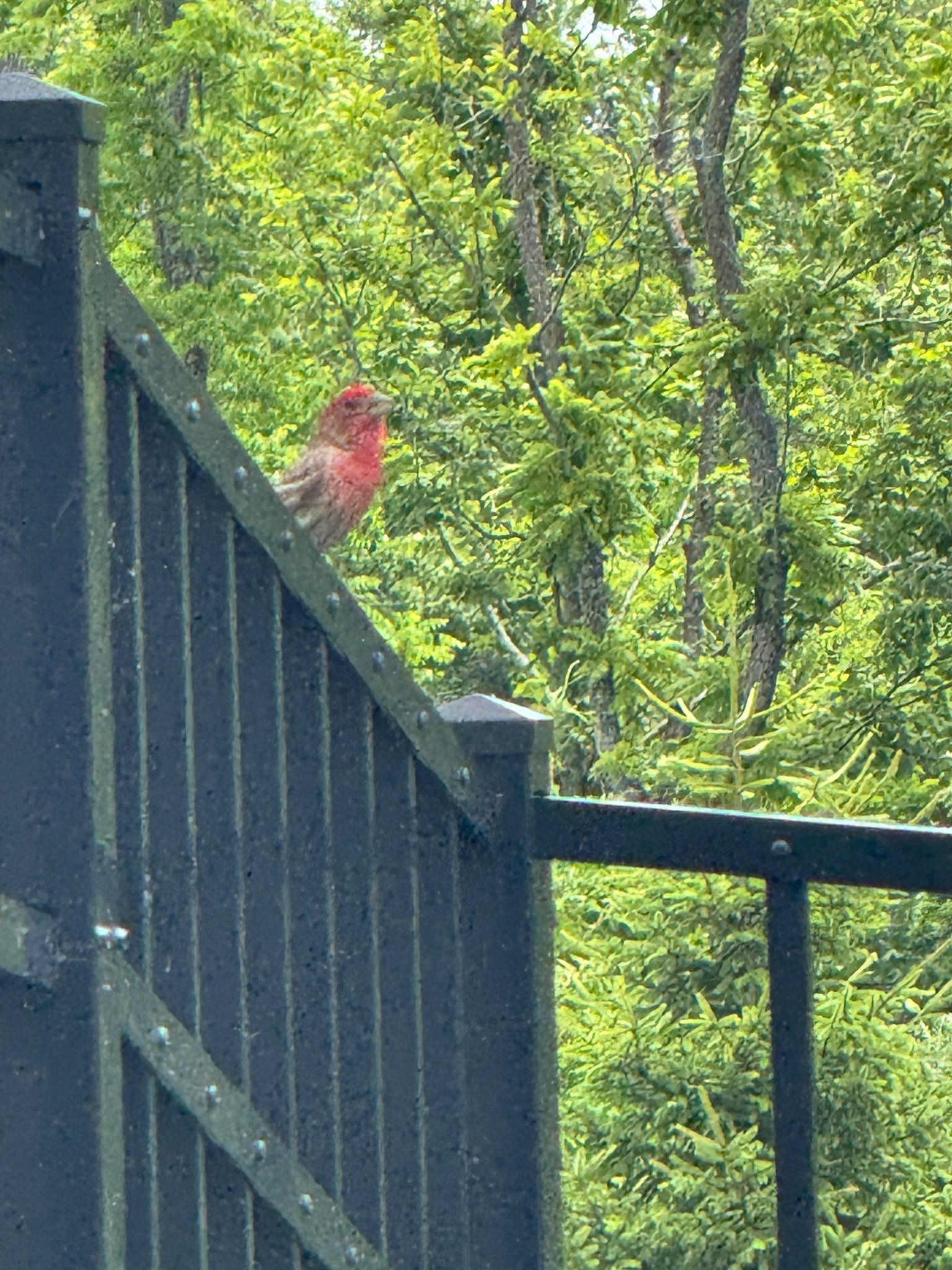
Order: Passeriformes; Family: Fringillidae
House Finch
Haemorhous mexicanus
A medium-sized finch with a thick bill, long tail, and somewhat flat head. They are social birds often found in noisy flocks and are highly adapted to human environments.
Explore House Finch in the encyclopedia →Identify your own birds.
Get a report just like this from any photo or call, free.
Plumage & appearance
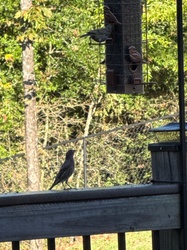
Adult males have a bright red to orange-red forehead, throat, and breast, with brown streaking on the belly. Females and juveniles are overall grayish-brown with blurry, heavy streaking throughout the underparts. Plumage color in males varies based on diet (carotenoids).
Key field marks
Square-tipped tail with a slight notch; heavy brown streaks on the flanks and belly; male's red coloration restricted to face, throat, and rump; thick, curved beak.
Size & weight
Length: 5.1–5.9 in (13–15 cm); Wingspan: 7.9–9.8 in (20–25 cm); Weight: 0.6–0.9 oz (16–27 g)
Voice — call & song
A long, jumbled, twittering warble that usually ends with a sharp upward or downward slur. Calls include a distinct 'cheep'.
Diet & foraging
Almost exclusively vegetarian, eating seeds, buds, and fruits. They forage on the ground or in weed patches and trees.
Habitat
City parks, urban centers, residential backyards, farms, forest edges, and desert grasslands.
Migration & movement
Mostly resident (non-migratory), though some individuals in the northernmost parts of the range may move south during harsh winters.
Nesting & breeding
Builds cup-shaped nests in trees, ivy, or on ledges of buildings/porch lights. Lays 2-6 bluish-green spotted eggs. Multiple broods per season are common.
Similar species
Purple Finch (males are more 'raspberry' tinted and lack heavy belly streaking) and Cassin's Finch (males have a brighter red cap and cleaner bellies).
Ecological significance
They are primarily seed-eaters that assist in seed dispersal. They also serve as a prey source for larger birds of prey and domestic cats.
Conservation status
Least Concern (IUCN); population is stable and very large.
Observation tips
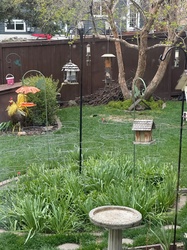
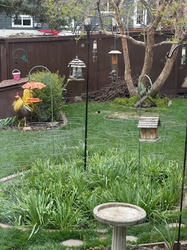
Look for them at backyard bird feeders, especially those containing black oil sunflower seeds or nyjer. They are often perched high on trees or utility lines singing loudly.
Interesting facts
The eastern population began when a few birds were released from a pet shop in Long Island, NY, where they were being sold illegally as 'Hollywood Finches.'
More like this