Order Passeriformes, Family Fringillidae
House Finch
Haemorhous mexicanus
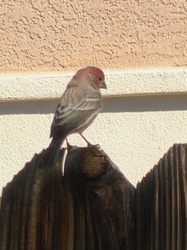
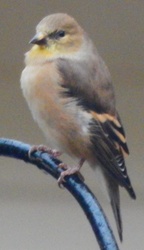
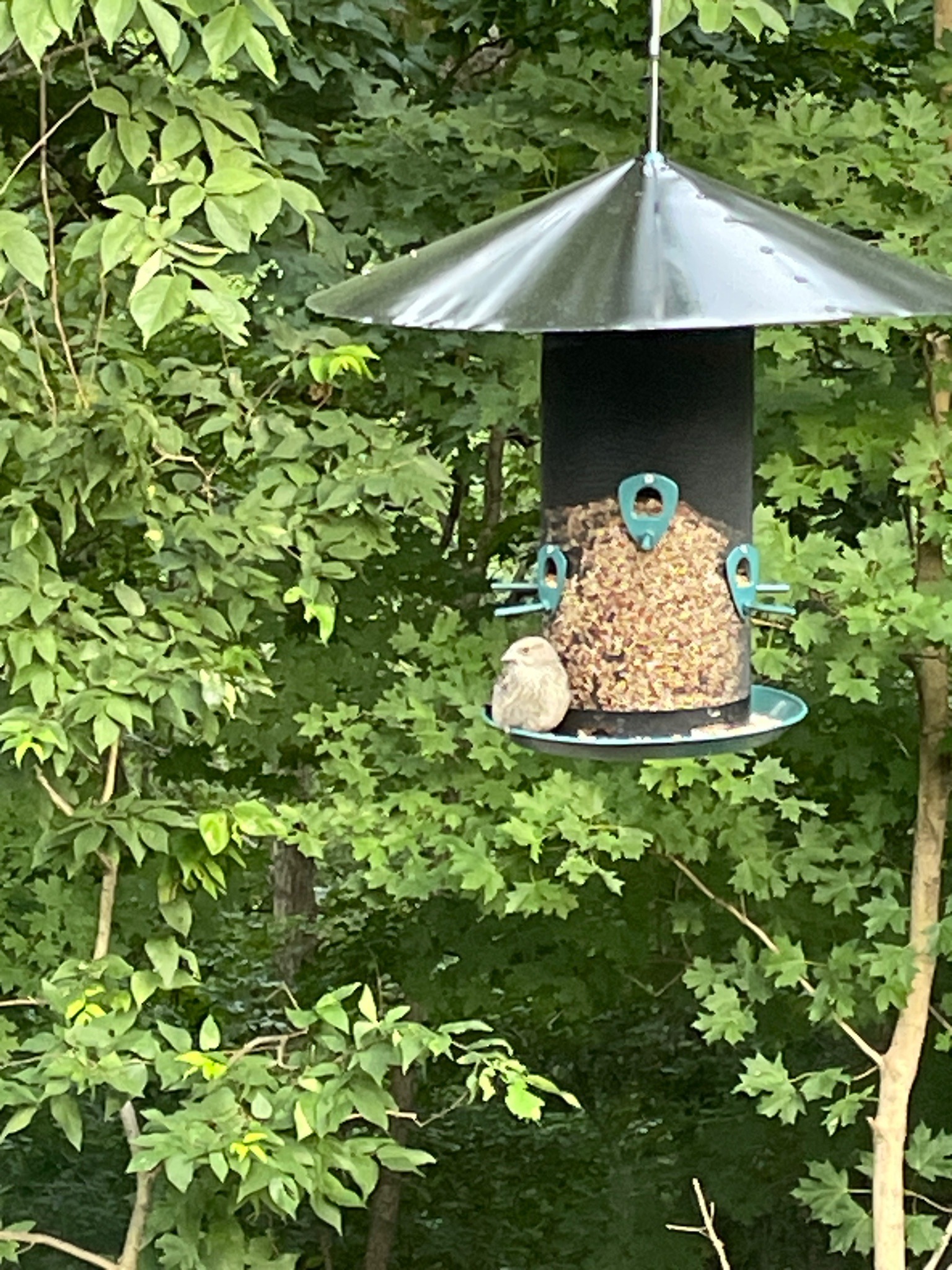
A small, social finch with a thick conical bill and a relatively long notch-tipped tail. Females are streaky brown, while males show rosy red coloration on the head and chest. Often seen in small flocks visiting backyard bird feeders.
Explore House Finch in the encyclopedia →Identify your own birds.
Get a report just like this from any photo or call, free.
Plumage & appearance
Adult females and juveniles are overall grayish-brown with distinct streaking on the breast and belly, and a plain, patternless head. Adult males feature vibrant reddish-pink to orange highlights on the crown, forehead, throat, breast, and rump.
Key field marks
Conical bill, plain facial pattern without strong eye-stripes (in females/juveniles), heavily streaked underparts, notched tail.
Size & weight
Length: 13-16 cm (5.1-6.3 in), Wingspan: 20-25 cm (7.9-9.8 in), Weight: 16-27 g (0.6-0.9 oz)
Voice — call & song
Song is a bright, cheerful, warbling series of clear notes ending in a harsh, rising 'zreee' chirp. Calls include a sharp 'cheep' or 'tweet'.
Diet & foraging
Strictly vegetarian diet consists almost entirely of seeds, buds, grains, and fruits, occasionally foraging on weed seeds on the ground or directly from seed-bearing plants.
Habitat
Urban and suburban areas, parks, yards, agricultural lands, canyon bottoms, and open woodlands.
Migration & movement
Mostly resident; northern and eastern populations may undergo short-distance seasonal migrations or nomadic movements during harsh winters.
Nesting & breeding
Builds a cup nest made of grasses, twigs, and leaves in trees, shrubs, street lamps, or human structures (vases, ledges). Lays 2 to 6 pale blue spotted eggs per clutch.
Similar species
Purple Finch (males are more raspberry-red with less streaked flanks; females have a strong white eyebrow/facial pattern) and Cassin's Finch (males have a bright red cap contrasting with a pinkish back; females have sharper streaking).
Ecological significance
Acts as an important seed disperser for various native and ornamental plants, while serving as a food source for small raptors and domestic cats.
Conservation status
Least Concern (IUCN), with a large, stable to increasing population overall.
Observation tips
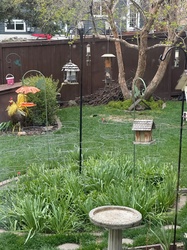
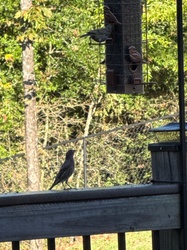
Look for them around tube feeders with sunflower seeds, mixed seed blends, or nyjer. They are bold, gregarious, and easily observed in suburban yards and gardens.
Interesting facts
House Finches were introduced to Long Island, NY in 1940 after illegally caged 'Hollywood Finches' were released, quickly colonizing the entire eastern United States.
More like this