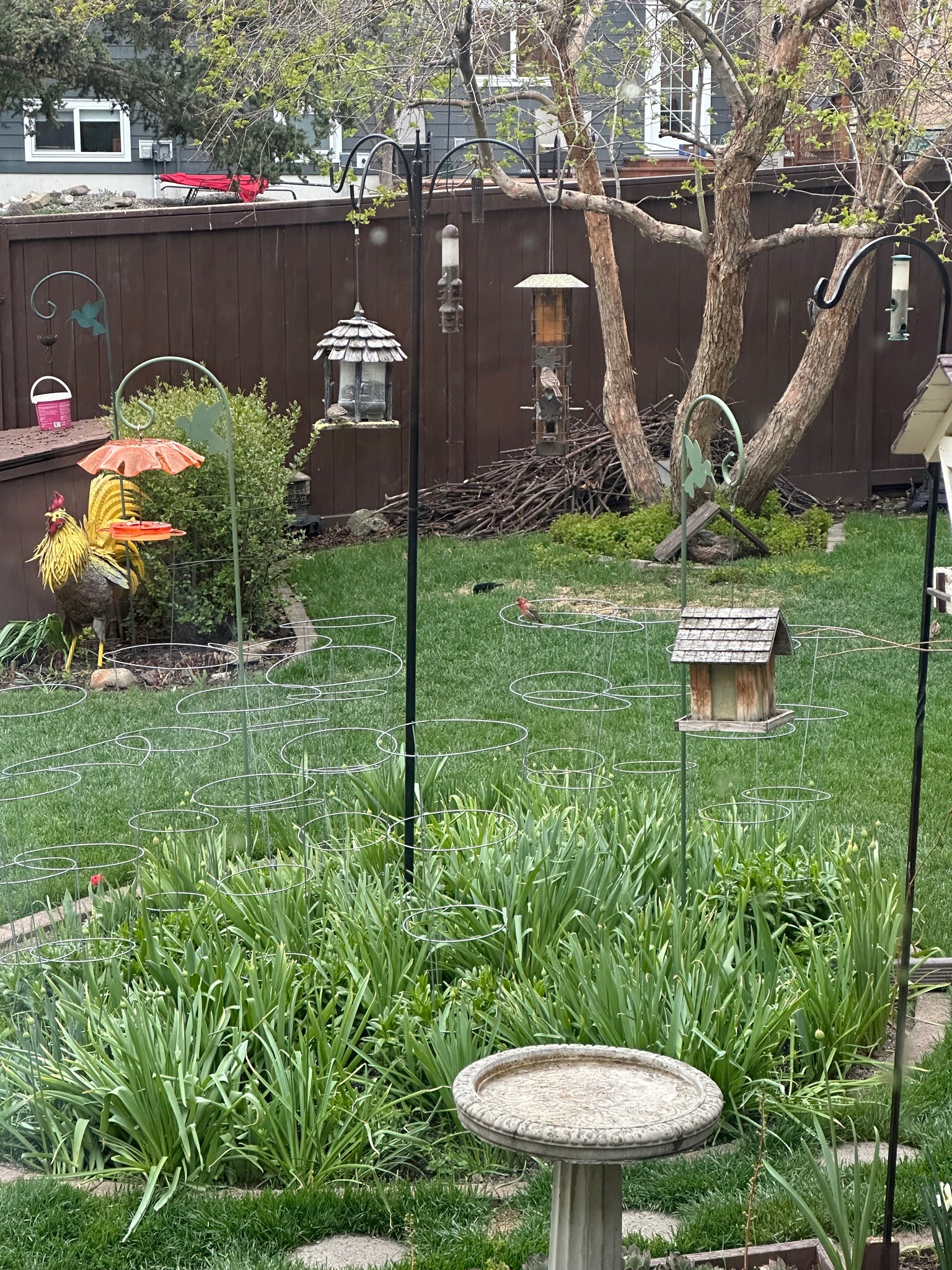
Order: Passeriformes; Family: Fringillidae
House Finch
Haemorhous mexicanus
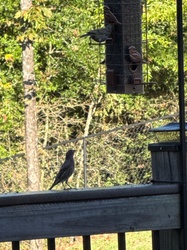
A small-bodied finch with a large beak and a long, slightly notched tail. They are social birds often found in noisy flocks and are frequent visitors to backyard feeders.
Explore House Finch in the encyclopedia →Identify your own birds.
Get a report just like this from any photo or call, free.
Plumage & appearance
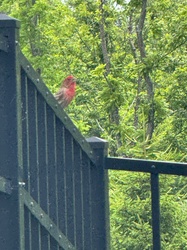
Adult males have a rosy-red face and upper breast, with a streaky brown back and belly. Females are plain grayish-brown with thick, blurry streaks on the underparts. Plumage color in males varies from pale yellow to deep red depending on diet.
Key field marks
Conical beak, blurry brown streaking on the belly, male's red forehead and breast, and a relatively long, square-tipped tail.
Size & weight
Length: 5.1-5.5 in (13-14 cm); Wingspan: 7.9-9.8 in (20-25 cm); Weight: 0.6-0.9 oz (16-27 g)
Voice — call & song
A lively, high-pitched warbling song ending with a husky 'zeee' note. Calls include a sharp 'cheep'.
Diet & foraging
Almost exclusively vegetarian, focusing on seeds, buds, and berries. They forage on the ground or in weed patches.
Habitat
Found in city parks, residential backyards, urban centers, farms, and forest edges.
Migration & movement
Resident to short-distance migrant; most northern populations remain year-round but some move south during harsh winters.
Nesting & breeding
Open cup nests made of twigs, grasses, and leaves, often placed in trees, hanging planters, or ledges. Clutches are typically 4-5 eggs.
Similar species
Purple Finch (more raspberry-red, less brown streaking on flanks) and Cassin's Finch (larger with a peaked head).
Ecological significance
Acts as a primary seed disperser for various plants and provides a food source for small hawks and local predators.
Conservation status
Least Concern (Population stable)
Observation tips
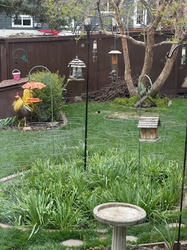
Easily found at bird feeders containing black oil sunflower seeds or nyjer. They are often perched high in trees or on power lines singing in early spring.
Interesting facts
The House Finch was originally native to the West but became established in the East after being released by pet shop owners in New York in 1940 who were illegally selling them as 'Hollywood Finches'.
More like this