Order: Passeriformes, Family: Fringillidae
Purple Finch
Haemorhous purpureus
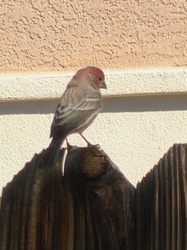
A stocky, medium-sized finch with a stout, conical bill adapted for cracking seeds. It has a slightly notched tail and often appears as if it has been dipped in raspberry juice.
Explore Purple Finch in the encyclopedia →Identify your own birds.
Get a report just like this from any photo or call, free.
Plumage & appearance
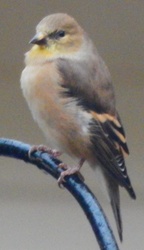
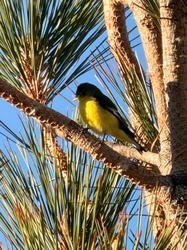
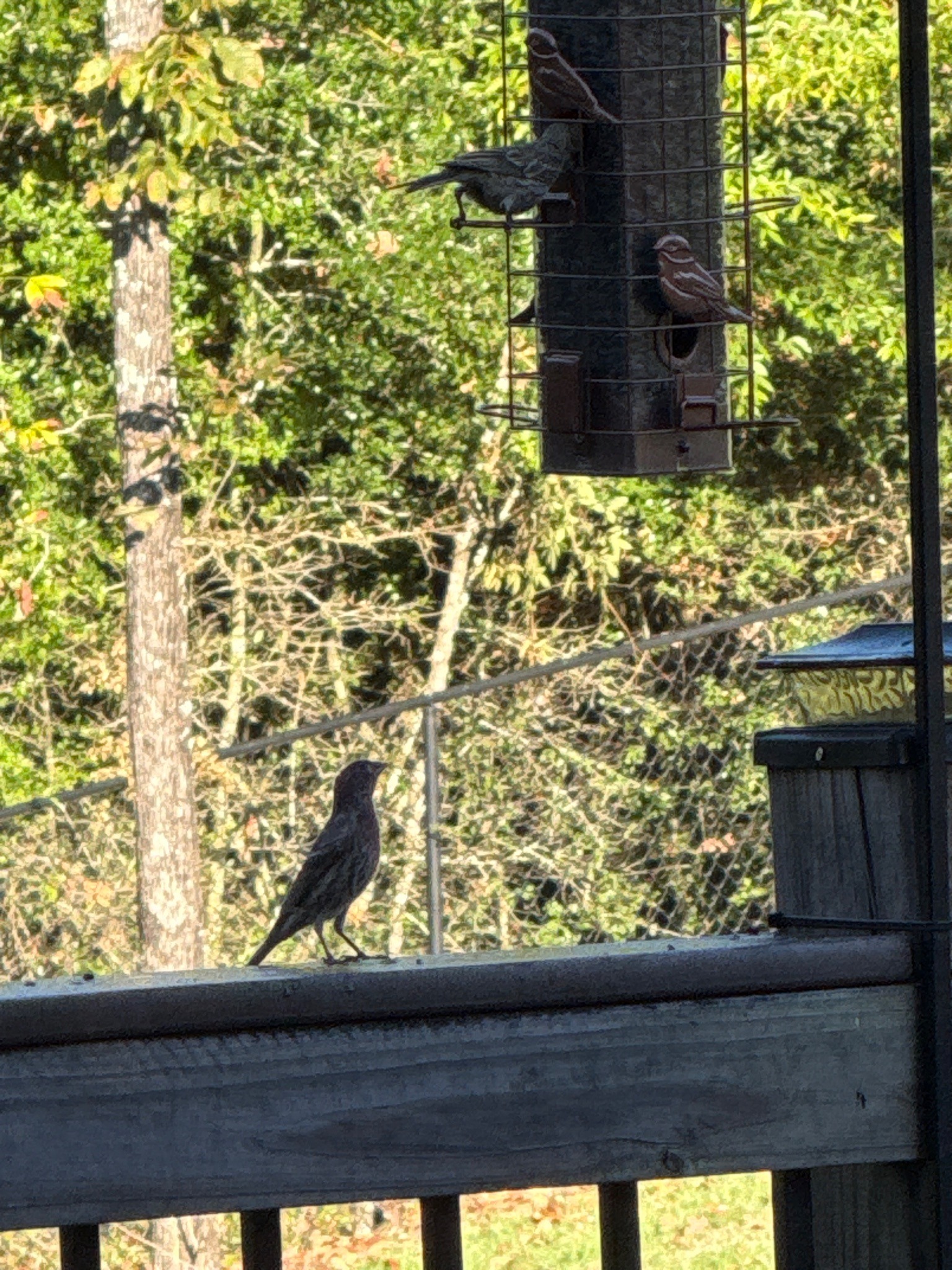
Adult males have a rosy-red head, breast, and back with brownish wings and tail. Females and immatures are duller, with a bold whitish eyebrow stripe, dark brown streaks below, and a distinct dark cheek patch bordered by white.
Key field marks
Rosy-red coloration (males), bold face pattern (females), stout conical bill, and slightly notched tail.
Size & weight
Length: 12-15 cm (4.7-5.9 in), Wingspan: 22-25 cm (8.7-9.8 in), Weight: 18-32 g (0.6-1.1 oz)
Voice — call & song
Call is a sharp, metallic 'tick' or a distinct 'pik'. The song is a rich, warbling series of musical notes delivered in a rapid, cheerful stream.
Diet & foraging
Primarily seeds, buds, and berries, supplemented by insects during the summer breeding season.
Habitat
Coniferous and mixed forests during breeding season; deciduous woodlands, brushy areas, and suburban yards in winter.
Migration & movement
Partial migrant. Northern populations migrate south for the winter, while western populations often move to lower elevations.
Nesting & breeding
Builds an open cup nest of twigs, rootlets, and grass lined with fine hair, typically placed high in a conifer. Clutch size is usually 3-5 pale greenish-blue eggs with brown spots.
Similar species
House Finch (males have browner/streaked flanks and less red on the crown; females lack the distinct bold whitish eyebrow of the Purple Finch) and Common Redpoll.
Ecological significance
Acts as an important seed disperser and plays a role in controlling insect populations during the breeding season.
Conservation status
Least Concern, though populations have experienced some declines due to competition with the introduced House Finch.
Observation tips
Look for them at backyard bird feeders offering sunflower or nyjer seeds, especially during winter migrations in wooded suburban areas.
Interesting facts
Ornithologist Roger Tory Peterson famously described the male Purple Finch as a 'sparrow dipped in raspberry juice'.
More like this