Order: Pelecaniformes, Family: Ardeidae
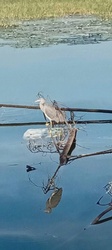
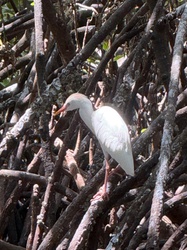
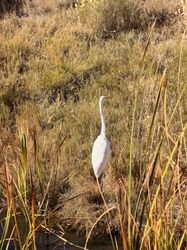
Striated Heron
Butorides striata
A small, compact heron with short legs and a thick neck, often found standing motionless near the water's edge waiting for prey.
Explore Striated Heron in the encyclopedia →Identify your own birds.
Get a report just like this from any photo or call, free.
Plumage & appearance
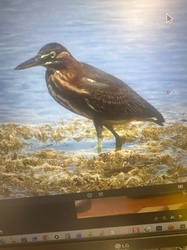
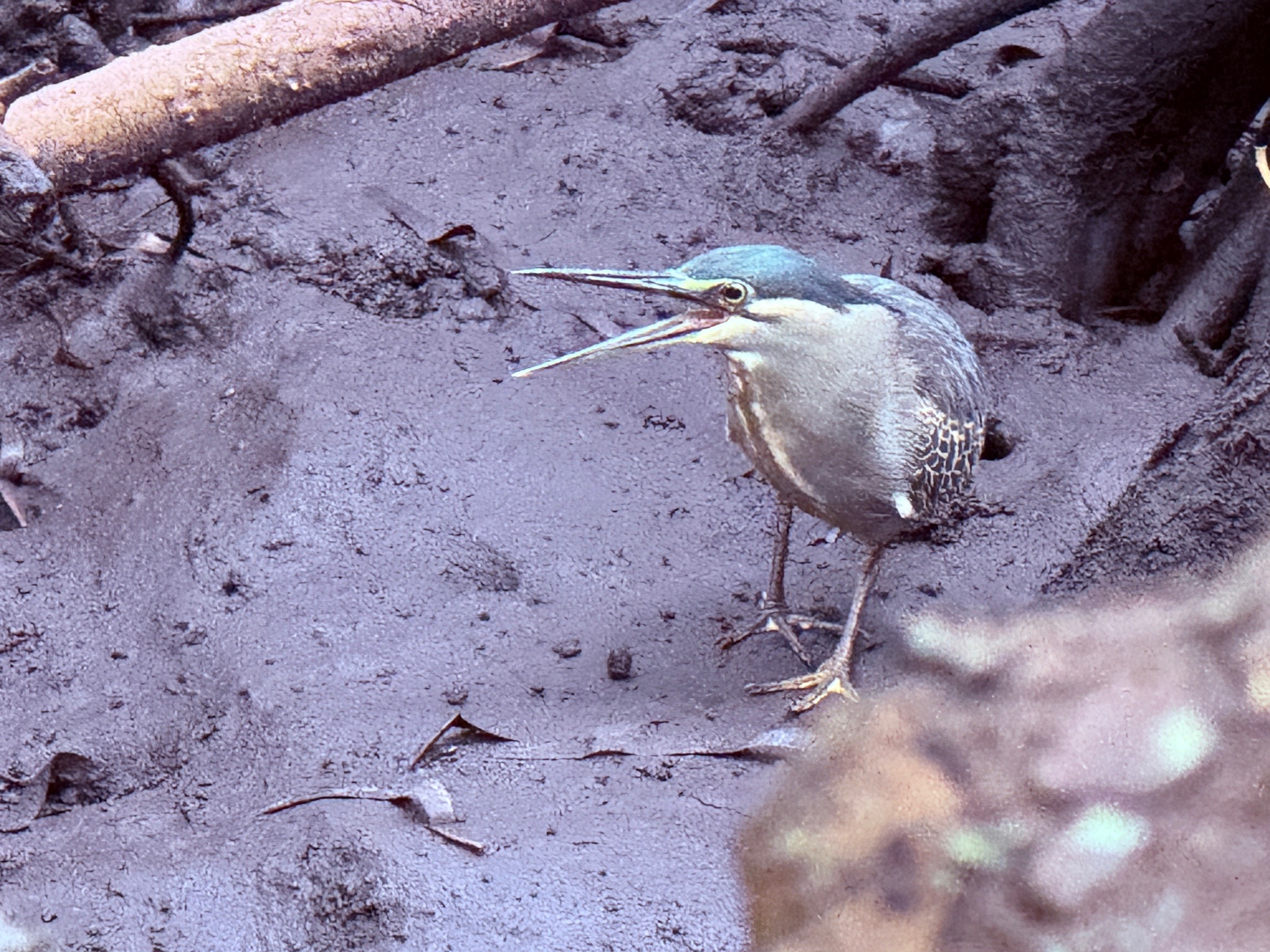
Adults have a dark grey-green cap, greyish-blue upperparts, whitish-grey underparts, and a chestnut-brown neck. Juveniles are browner with heavy streaking on the neck and underparts and buff spots on the wings.
Key field marks
Small size for a heron, dark cap, greyish body, short greenish-yellow legs, and a dark dagger-like bill.
Size & weight
Length: 35-45 cm (14-18 in), Wingspan: 55-60 cm (22-24 in), Weight: 130-250 g.
Voice — call & song
A sudden, sharp, explosive 'skeow' or 'kyow' call, especially when flushed or alarmed.
Diet & foraging
Primarily fish, crustaceans, and aquatic insects. Known to use tools such as bread crumbs or insects as bait to lure fish within striking distance.
Habitat
Mangrove swamps, estuaries, riverbanks, marshes, tidal flats, and occasionally rocky coastlines.
Migration & movement
Mostly sedentary and resident, though northern populations in Asia and parts of the Americas may undertake seasonal movements.
Nesting & breeding
Builds a fragile platform nest of sticks in mangroves, bushes, or trees near water. Clutch size is usually 2 to 5 pale greenish-blue eggs.
Similar species
Green Heron (Butorides virescens), which is very closely related and sometimes considered the same species (the Green-backed Heron complex), distinguished mainly by geographic range and slightly greener back tones.
Ecological significance
Acts as an important predator in wetland and coastal ecosystems, helping to regulate populations of small fish, amphibians, and aquatic invertebrates.
Conservation status
Least Concern, with a stable global population trend.
Observation tips
Look for them standing completely still in mangrove swamps, along muddy riverbanks, or near coastal rocks. Move slowly and quietly to avoid startling them.
Interesting facts
Striated Herons are one of the few bird species known to use tools, dropping bait on the water surface to attract fish.
More like this