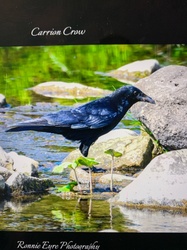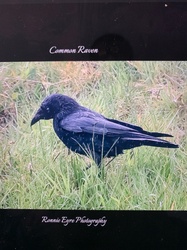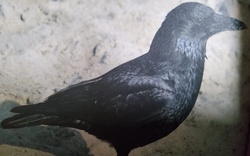
Order: Passeriformes, Family: Corvidae
Eurasian Jackdaw
Coloeus monedula
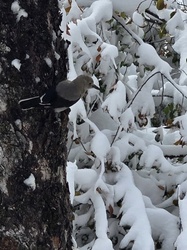
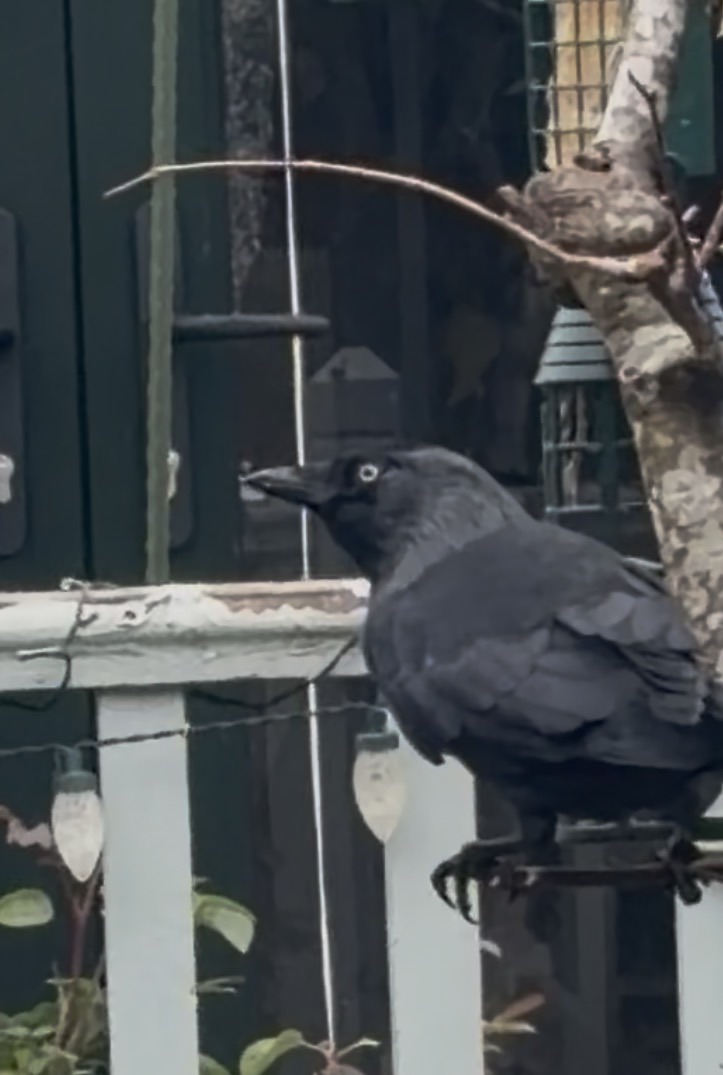
A small, stocky member of the crow family with a short bill and striking pale white or greyish-white eyes. Highly sociable, intelligent, and often seen in pairs or noisy flocks.
Explore Eurasian Jackdaw in the encyclopedia →Identify your own birds.
Get a report just like this from any photo or call, free.
Plumage & appearance
Black and dark grey plumage with a distinctive silvery-grey sheen on the back of the head and neck. The forehead and crown are glossy black, contrasting with the lighter nape. Juveniles are duller and sootier without the pale nape patch.
Key field marks
Small all-black corvid, pale silvery-grey nape and neck, relatively short bill, and bright white/greyish eyes.
Size & weight
Length: 30-34 cm, Wingspan: 64-73 cm, Weight: 130-250 g
Voice — call & song
A distinctive, metallic, chattering 'tchack-tchack' or 'jack-jack' call, giving the bird its name.
Diet & foraging
Omnivorous; feeds on insects, seeds, fruit, small rodents, eggs, and human food waste, foraging mostly on the ground.
Habitat
Open countryside, pastures, coastal cliffs, open woodlands, and urban areas with mature trees or old buildings suitable for cavities.
Migration & movement
Mostly resident or a short-distance migrant, with northern populations moving south for the winter.
Nesting & breeding
Nests colonially in cavities such as tree hollows, rocky crevices, chimneys, and ruined buildings. Forms lifelong monogamous bonds and lays 4-6 pale blue eggs speckled with brown.
Similar species
Carrion Crow or Rook, but distinguished easily by its smaller size, silvery-grey nape, and striking pale white eyes.
Ecological significance
Acts as a seed disperser and scavenger, helping control insect populations and clean up organic waste in its habitat.
Conservation status
IUCN Least Concern with a stable population trend.
Observation tips
Easily observed in urban parks, farmland, and coastal cliffs. Look for their characteristic white irises and listen for their sharp 'tchack' calls.
Interesting facts
Jackdaws have a complex social hierarchy and are known for their ability to recognize human faces and communicate using mutual gazing.
More like this