Order: Passeriformes, Family: Corvidae
Common Raven
Corvus corax
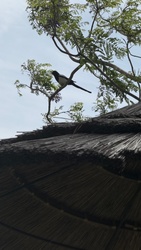
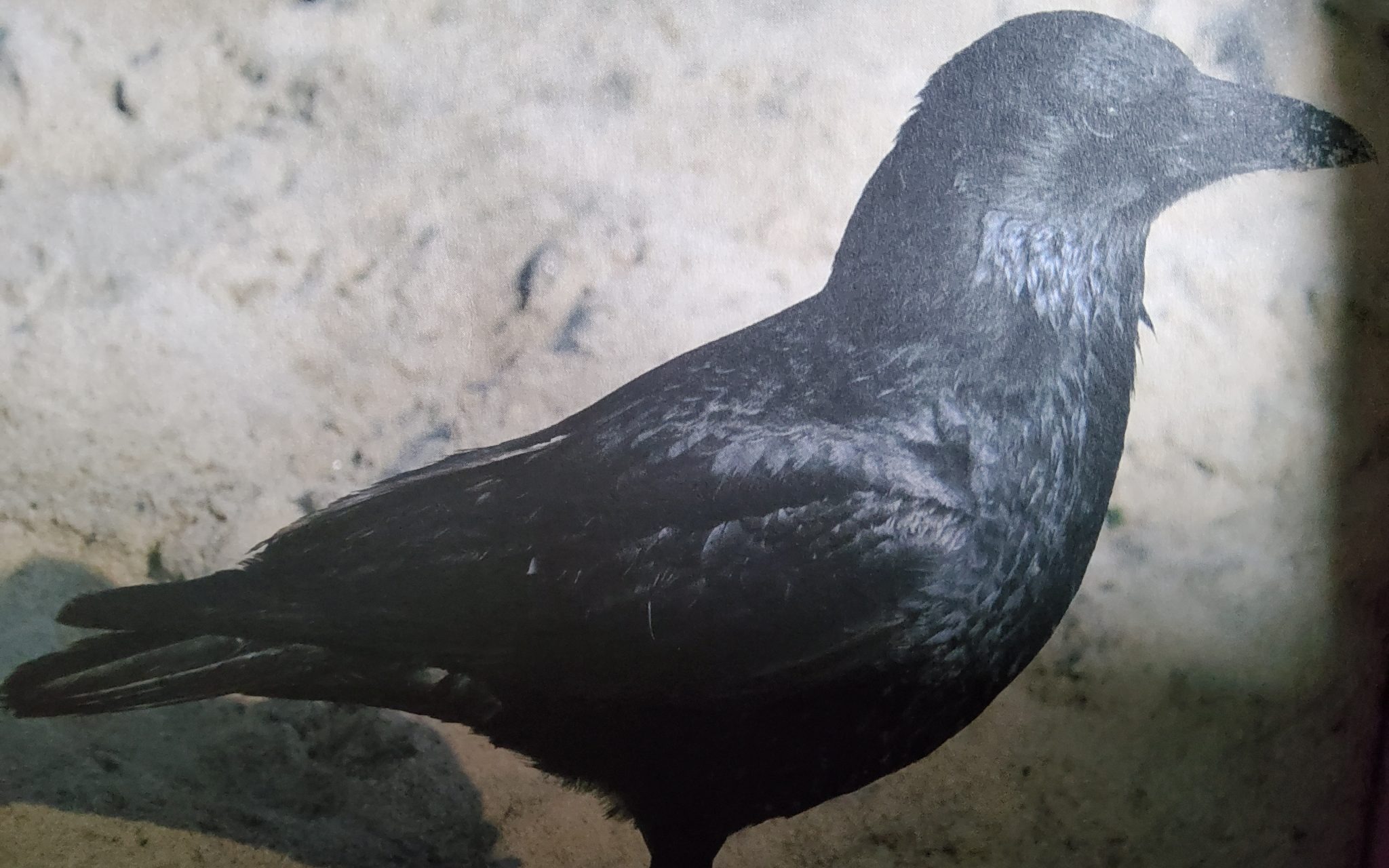
A large, intelligent, all-black passerine bird with a heavy, robust bill, shaggy throat feathers, and a wedge-shaped tail in flight. Highly adaptable and known for complex problem-solving and playful aerial acrobatics.
Explore Common Raven in the encyclopedia →Identify your own birds.
Get a report just like this from any photo or call, free.
Plumage & appearance
Entirely glossy black plumage with iridescent blue, purple, or greenish sheens in bright light. Throat feathers (hackles) are elongated and lanceolate. Sexes look alike, though males tend to be slightly larger. Juveniles have less glossy, more brownish-black plumage and a shorter bill.
Key field marks
Massive heavy bill, wedge-shaped tail in flight, shaggy throat hackles, and deep croaking vocalization.
Size & weight
Length: 54-67 cm (21-26 inches), Wingspan: 115-150 cm (45-59 inches), Weight: 690-1,630 g (1.5-3.6 lbs)
Voice — call & song
A wide variety of vocalizations, most characteristically a deep, resonant, echoing 'croak' or 'tok', alongside clicks, gurgles, and metallic sounds.
Diet & foraging
Omnivorous and opportunistic. Eats carrion, insects, small mammals, reptiles, seeds, fruit, bird eggs, and human refuse. Forages on the ground or scavenges.
Habitat
Extremely versatile, inhabiting open country, mountain ranges, forests, coastal cliffs, tundra, and arid deserts, as well as rural and suburban areas.
Migration & movement
Resident (non-migratory), though young birds may disperse short distances after fledging.
Nesting & breeding
Builds large stick nests on high cliffs, tall trees, or sometimes on man-made structures like utility poles and bridges. Clutch size is typically 3-7 eggs. Breeds from late winter to spring; parents are fiercely protective and form lifelong pair bonds.
Similar species
American Crow (much smaller, with a square tail, less heavy bill, and shorter throat feathers) and Chihuahuan Raven (smaller, with a white base to neck feathers hidden from view).
Ecological significance
Acts as an important scavenger that helps clean up carcasses, and plays a role in seed dispersal and predation control within its ecosystem.
Conservation status
Least Concern, with stable or increasing populations globally.
Observation tips
Look for them soaring high in thermals like raptors, listen for their deep, resonant croaking calls, or check open landscapes, cliffs, and roadsides where they scavenge.
Interesting facts
Ravens are among the smartest of all birds, capable of using tools, mimicking human speech, and engaging in complex social play and problem-solving.
More like this