Order: Passeriformes; Family: Corvidae
Large-billed Crow
Corvus macrorhynchos
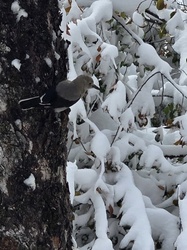
A large, robust, all-black crow with a heavy, thick beak and a distinctive vaulted or arched crown. It is highly intelligent and adaptable.
Explore Large-billed Crow in the encyclopedia →Identify your own birds.
Get a report just like this from any photo or call, free.
Plumage & appearance
Entirely black plumage with a glossy sheen that can appear purplish or greenish in good light. No significant sexual dimorphism; juveniles are duller black.
Key field marks
Large black body, massive bill with a curved culmen (top edge), and a steep, rounded forehead profile.
Size & weight
Length: 46–59 cm; Wingspan: 100–130 cm; Weight: 450–650 g.
Voice — call & song
Deep, resonant, and harsh 'kaaa-kaaa-kaaa' or 'kow-kow', generally lower in pitch than the House Crow.
Diet & foraging
Omnivorous and opportunistic; eats insects, small vertebrates, eggs, fruit, grain, carrion, and human food scraps.
Habitat
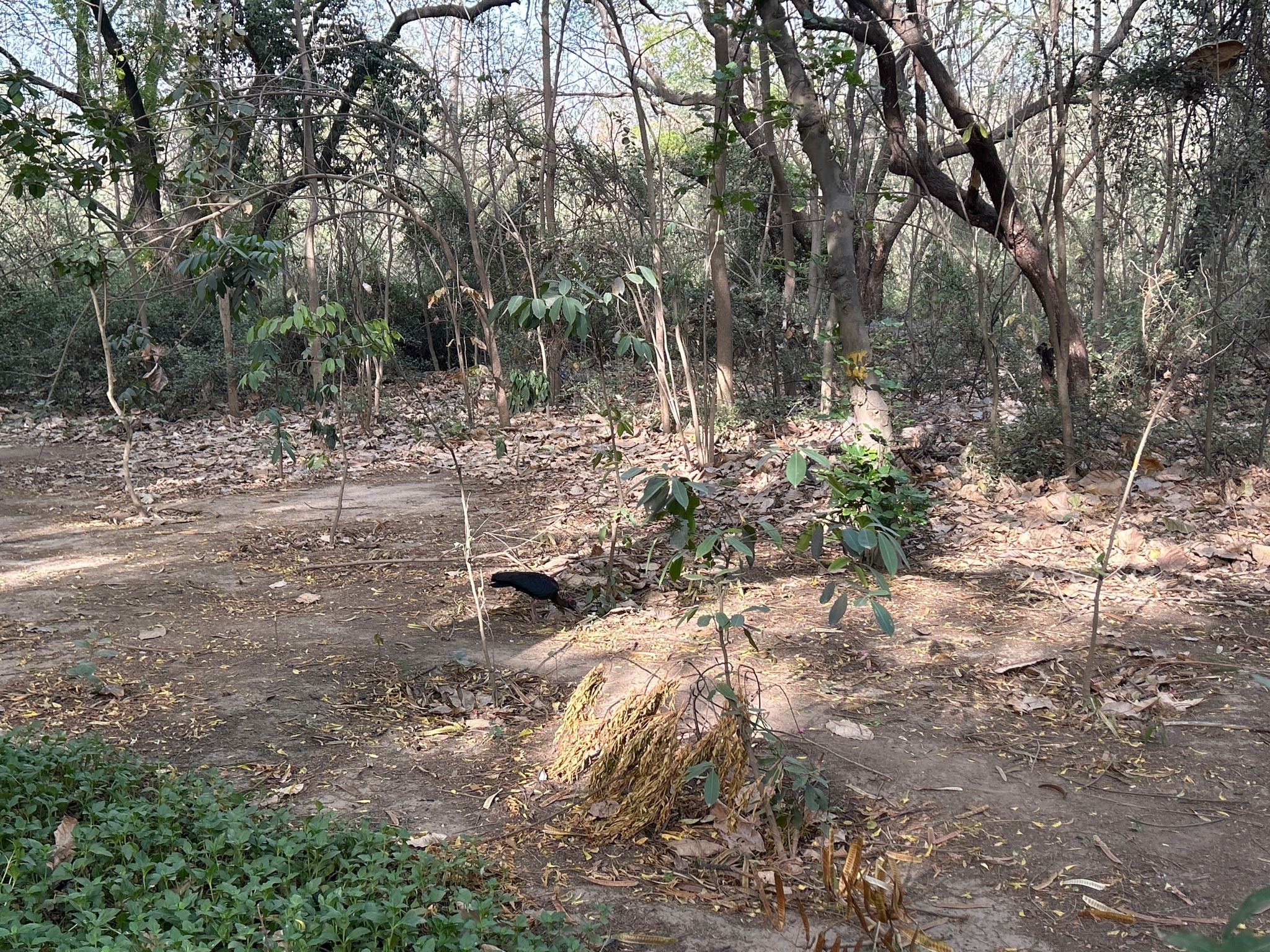
Versatile; found in woodlands, gardens, agricultural fields, coastal areas, and heavily populated urban environments.
Migration & movement
Mainly resident; some high-altitude populations may move to lower elevations during winter.
Nesting & breeding
Builds a platform nest of twigs in tall trees; usually 3-5 eggs are laid; both parents participate in defending the territory.
Similar species
House Crow (Corvus splendens), which is smaller with a gray neck/breast; Jungle Crow, often used as a synonym but refers to specifically forest-dwelling subspecies/related species.
Ecological significance
Acts as an important scavenger cleaning up carrion and waste, and also functions as a seed disperser.
Conservation status
Least Concern (IUCN); population trend is stable and even increasing in urban areas.
Observation tips
Easily found in various habitats from deep forests to busy city centers; listen for its low-pitched, harsh caw to locate it.
Interesting facts
They are known for their high intelligence, including the ability to solve complex problems and recognize individual human faces.
More like this