Order: Passeriformes; Family: Corvidae
Azure-winged Magpie
Cyanopica cyanus
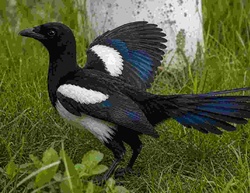
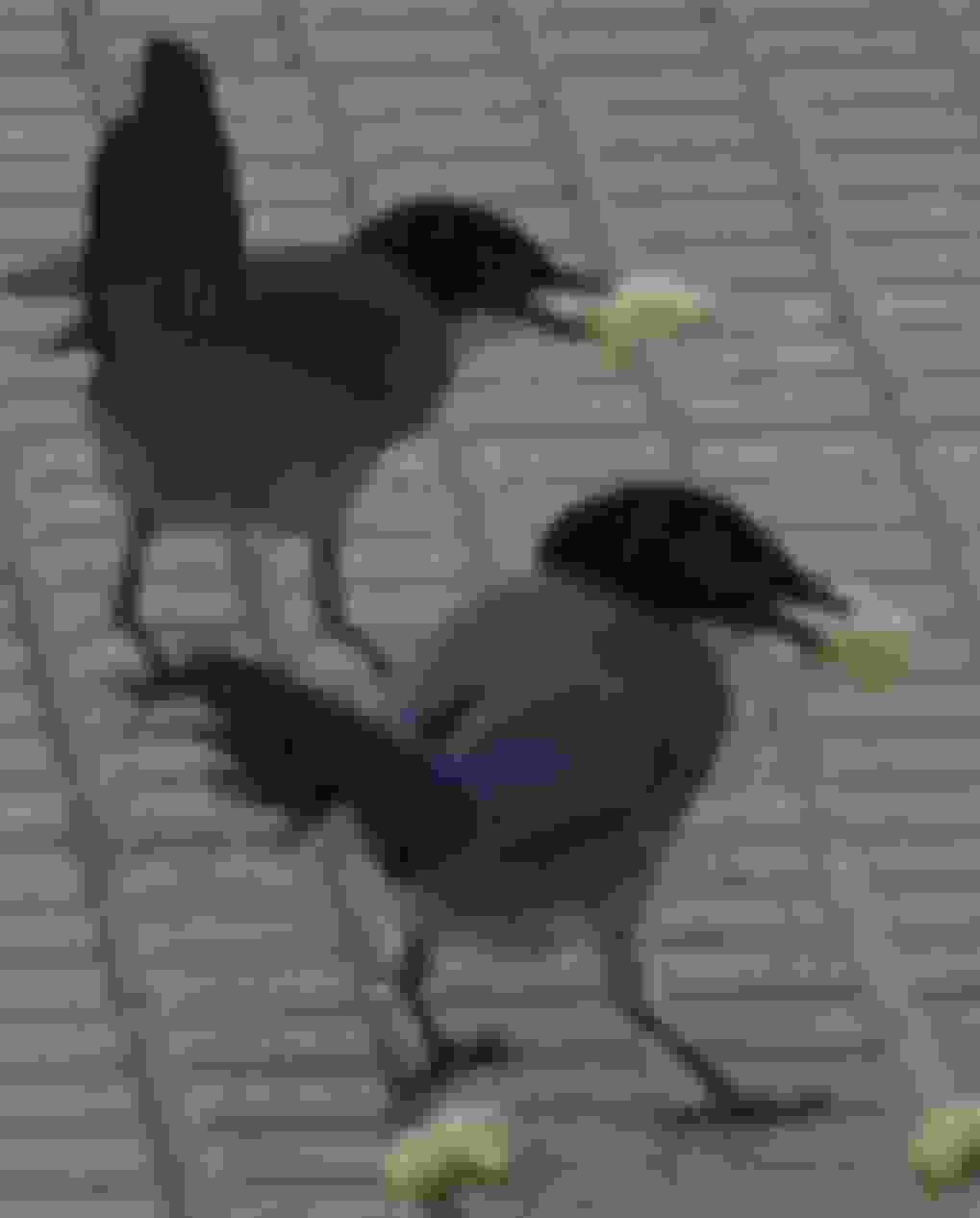
A social, intelligent corvid with a distinctive black cap and bright blue wings/tail. They are often seen in noisy flocks foraging on the ground or in trees.
Explore Azure-winged Magpie in the encyclopedia →Identify your own birds.
Get a report just like this from any photo or call, free.
Plumage & appearance
Adults have a glossy black cap, a pale greyish-fawn back and underparts, and striking azure blue wings and a long blue tail. Juveniles are duller with less vibrant blue and lacks the sharp glossy black cap.
Key field marks
Glossy black cap, blue wings, very long blue tail, pale greyish-buff body, and stocky corvid shape.
Size & weight
Length: 31-35 cm; Wingspan: 38-44 cm; Weight: 65-118 g
Voice — call & song
A harsh, ascending 'zhreee' or a raspy 'kwar-kwar' call, characteristic of many corvids but higher-pitched than crows.
Diet & foraging
Omnivorous; feeds on seeds, nuts, fruits, insects, small invertebrates, and human food scraps. Often forages in family groups on the ground.
Habitat
Open coniferous or deciduous forests, parks, gardens, and agricultural land, often near water.
Migration & movement
Resident; they typically stay in their breeding range year-round.
Nesting & breeding
Nests in colonies. Builds a cup-shaped nest of twigs reinforced with mud and lined with hair or moss. Usually 6-8 eggs are laid. Co-operative breeding is common.
Similar species
Iberian Magpie (Cyanopica cooki) is nearly identical but found only on the Iberian Peninsula; it lacks the white wing tips and has slightly different vocalizations.
Ecological significance
As omnivores, they help control insect populations and assist in seed dispersal. Their social behavior and alarm calls also benefit other species in their ecosystem.
Conservation status
Least Concern (IUCN); Stable population trend
Observation tips
Look for them in small, active groups in urban parks or coniferous forests. They are vocal and often fly in a follow-the-leader fashion between trees.
Interesting facts
The Azure-winged Magpie has a remarkably disjunct distribution, with one population in East Asia and a closely related species in Spain and Portugal, which was once thought to be an ancient introduction but is now known to be a distinct evolutionary lineage.
More like this