Order: Passeriformes, Family: Corvidae
Eurasian Magpie
Pica pica
A large, intelligent crow-like bird with a distinctive very long tail and bold black and white markings. Known for its resourcefulness and complex social behavior.
Explore Eurasian Magpie in the encyclopedia →Identify your own birds.
Get a report just like this from any photo or call, free.
Plumage & appearance
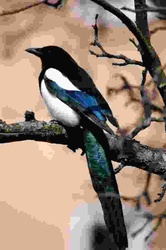
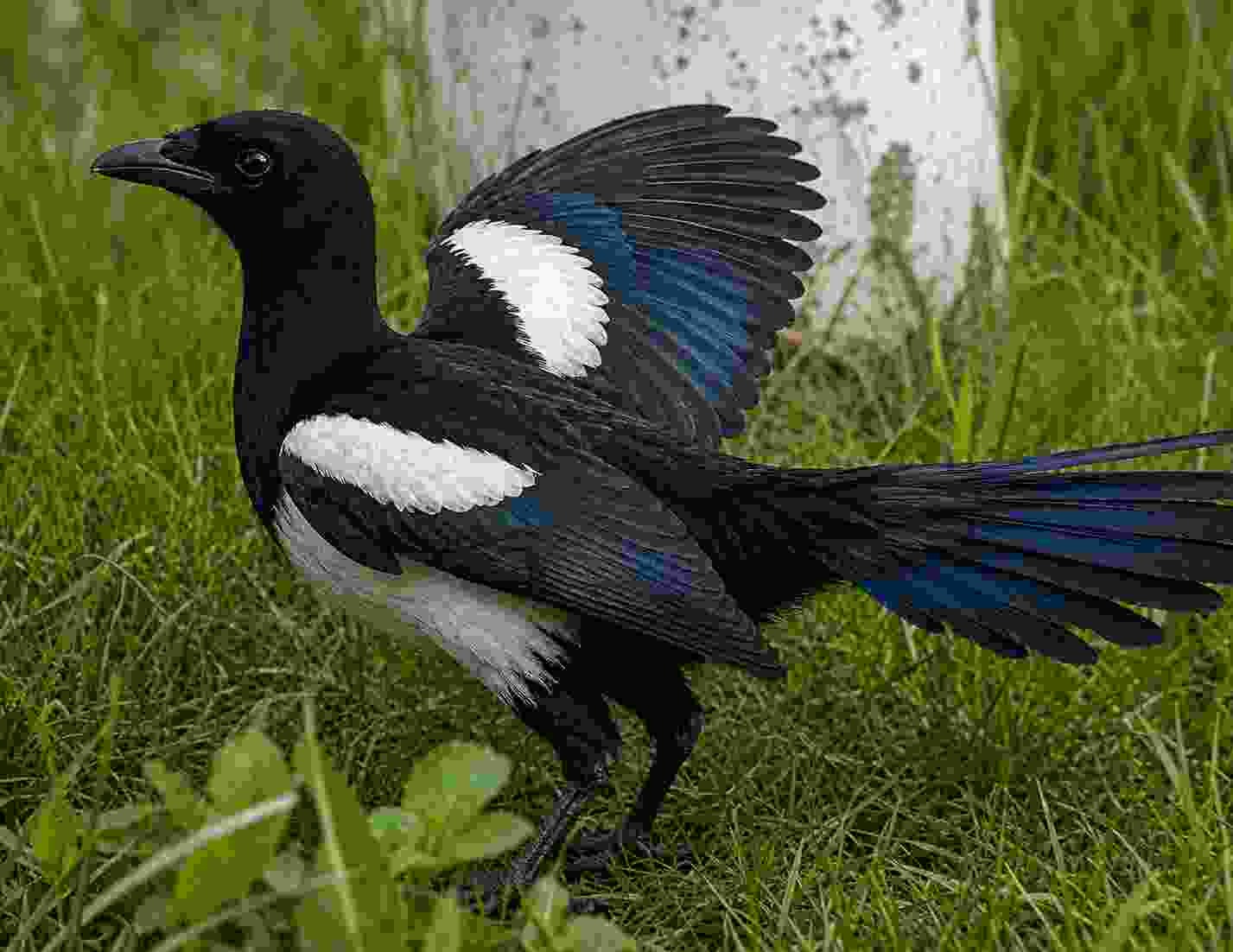
Striking black and white plumage with iridescent blue, green, and purple on the wings and tail. The head, breast, and back are black, while the belly and shoulder patches are pure white. Sexes are monomorphic (look similar).
Key field marks
Extremely long wedge-shaped tail, white wing patches (scapulars), and white belly against deep black body.
Size & weight
Length: 44-46 cm (including tail); Wingspan: 52-62 cm; Weight: 200-250 g.
Voice — call & song
A loud, harsh, rapid chattering 'chak-chak-chak-chak'. Also capable of quieter warbling and mimicking noises.
Diet & foraging
Omnivorous; eats insects, carrion, eggs, small mammals, seeds, fruits, and household scraps. Often hides food for later consumption.
Habitat
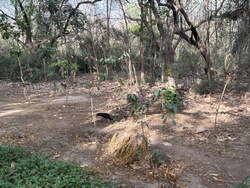
Open woodland, agricultural land, urban parks, gardens, and meadows with tall trees for nesting.
Migration & movement
Mainly residential; they rarely travel far from their birthplace throughout their lives.
Nesting & breeding
Builds large, domed nests made of sticks in the tops of tall trees or thorny bushes. Lays 5-8 eggs; breeding occurs from March to June.
Similar species
Black-billed Magpie (Pica hudsonia) of North America is nearly identical but found in a different geographic range. Distinguishable from other corvids by the long tail and white patches.
Ecological significance
Acts as an opportunistic scavenger and predator, helping to control insect and small mammal populations; also serves as an important 'sentinel' bird through alarm calling.
Conservation status
Least Concern (IUCN); population is generally stable and widespread.
Observation tips
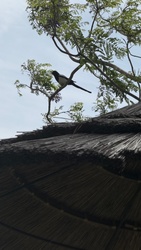
Look for them in open countryside with scattered trees, parks, and urban gardens. They are very vocal and easy to spot when flying across roads or perching on tall branches.
Interesting facts
In many cultures, magpies are the subject of folklore and the 'Mirror Test' has suggested they are among the few non-mammal species capable of self-recognition.
More like this