Order: Passeriformes; Family: Corvidae
Carrion Crow
Corvus corone
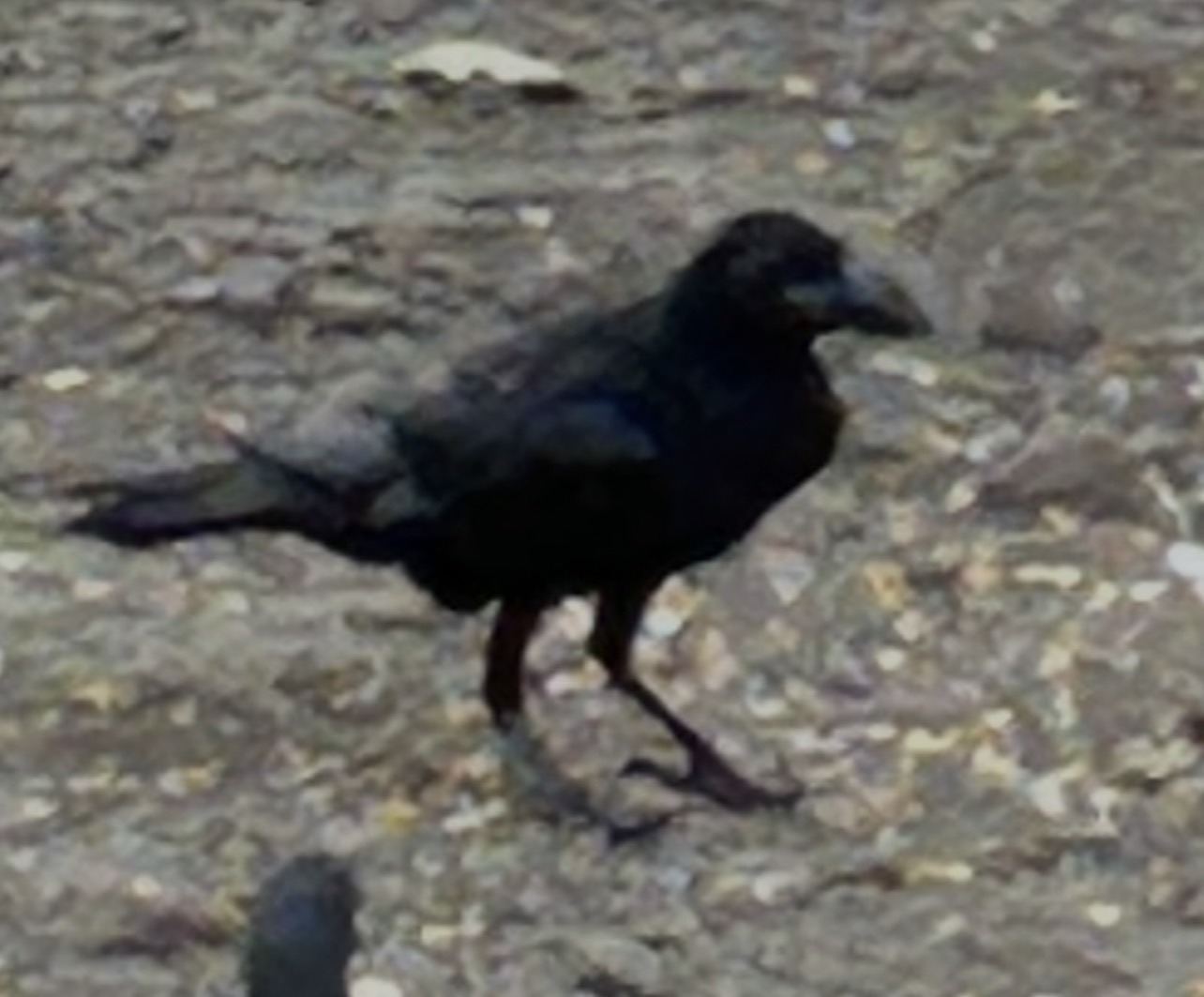
A large, all-black, highly intelligent bird known for its adaptability and social behavior. Often seen alone or in pairs rather than large flocks.
Explore Carrion Crow in the encyclopedia →Identify your own birds.
Get a report just like this from any photo or call, free.
Plumage & appearance
Entirely black plumage with a green or purple iridescent sheen in sunlight. Juveniles have duller, brownish-black feathers and blue eyes initially. Sexes are identical.
Key field marks
All-black body and beak, square-ended tail in flight, and a heavier, more curved bill compared to a Rook.
Size & weight
Length: 45-52 cm; Wingspan: 84-100 cm; Weight: 370-650 g
Voice — call & song
A loud, harsh, repetitive 'caw-caw-caw' usually delivered with a head-bobbing motion.
Diet & foraging
Omnivorous and opportunistic scanner; eats insects, worms, grain, small mammals, eggs, carrion, and human food scraps.
Habitat
Open countryside, gardens, parks, woodlands, and urban areas. Areas with scattered trees for nesting.
Migration & movement
Non-migratory; mostly resident throughout its range across the UK and Europe.
Nesting & breeding
Builds a bulky nest of sticks high in a tree or occasionally on cliffs. Lays 3-5 eggs; both parents help raise and defend the young.
Similar species
Rook (has a bare grey face patch and 'peaked' head), Common Raven (much larger with a wedge-shaped tail), Jackdaw (smaller with grey nape and pale eyes).
Ecological significance
Act as cleaners by scavenging carrion and control populations of small pests and insects. They also aid in seed dispersal.
Conservation status
Least Concern (IUCN); Population is stable and widespread.
Observation tips
Look for them in open fields, parks, and gardens. They are wary of humans but can be observed easily from a distance using binoculars.
Interesting facts
They are known to use tools and can recognize individual human faces. They sometimes drop hard-shelled nuts onto roads to let passing cars crack them open.
More like this