Order Anseriformes, Family Anatidae
Northern Pintail
Anas acuta
An elegant, slender dabbling duck characterized by its long neck, sleek profile, and elongated tail feathers in breeding males.
Explore Northern Pintail in the encyclopedia →Identify your own birds.
Get a report just like this from any photo or call, free.
Plumage & appearance
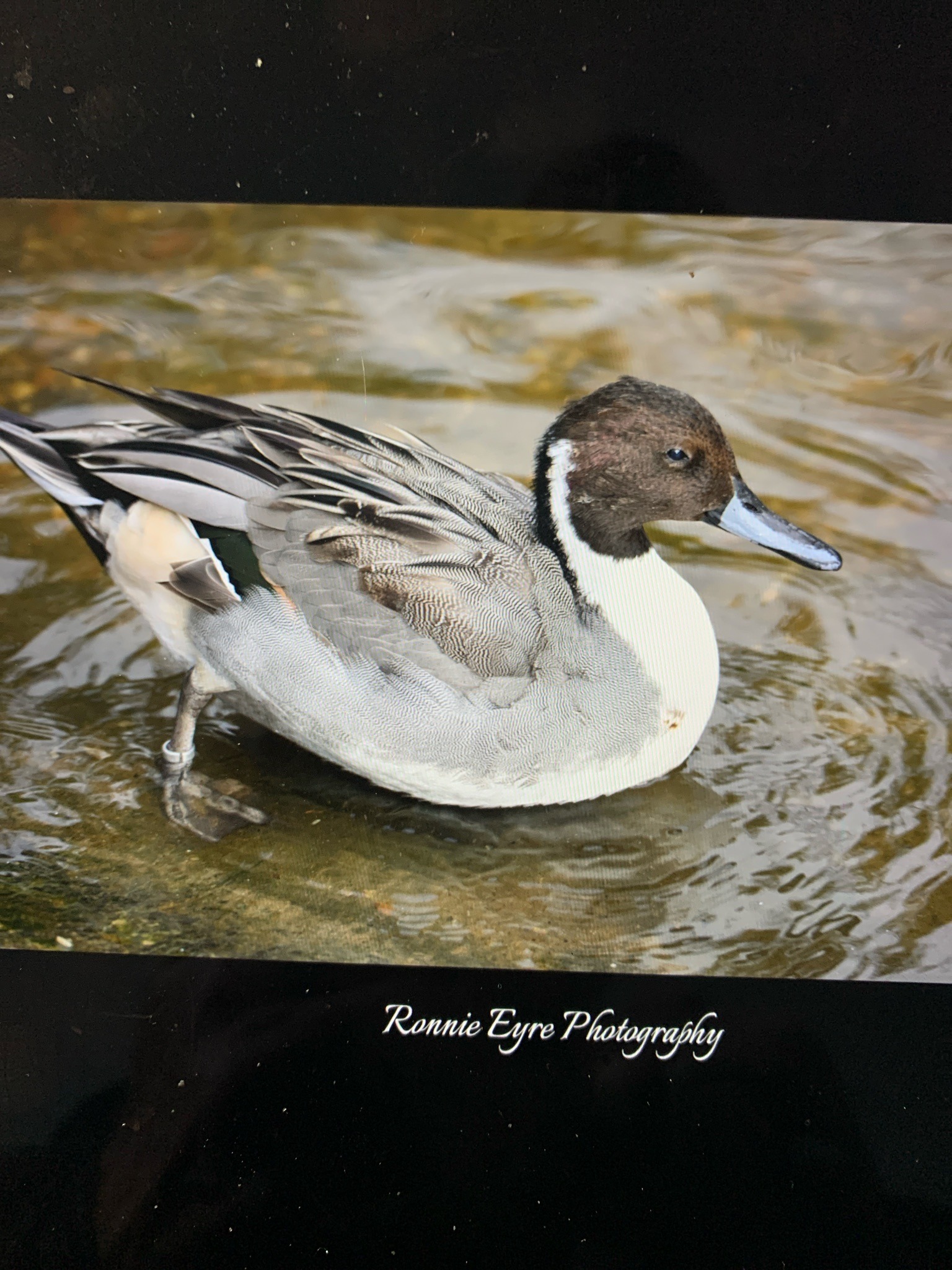
Adult male in breeding plumage has a chocolate-brown head, a white stripe extending up the neck from a brilliant white breast, gray flanks and back, and long, pointed central tail feathers. Females are mottled brown with a more subdued, shorter tail and blue-gray bill.
Key field marks
Slender build, long pointed tail (in males), white neck stripe extending from a white breast to a brown head, and a blue-gray bill with a dark line along the upper edge.
Size & weight
Length: 51-76 cm (20-30 in), Wingspan: 80-95 cm (31-37 in), Weight: 450-1360 g (1-3 lb)
Voice — call & song
Males emit a low, soft whistle or two-note flute-like trill. Females give a coarse, low quack similar to a Mallard.
Diet & foraging
Primarily feeds on seeds of grasses, sedges, and aquatic plants, as well as aquatic invertebrates, snails, and insects, often tipping up in shallow water to forage.
Habitat
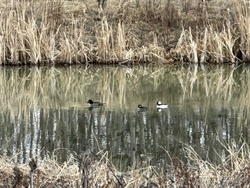
Open wetlands, shallow lakes, marshes, tundra pools, and flooded agricultural fields during migration and winter.
Migration & movement
Highly migratory; northern populations travel long distances south for the winter, often forming large flocks.
Nesting & breeding
Nests on the ground in a shallow scrape lined with plant material and down, hidden in tall grass or vegetation away from water. Clutch size is typically 7-9 eggs, incubated solely by the female.
Similar species
Mallard and American Wigeon. Distinguished from Mallards by the pintail's much longer neck, slender shape, and distinct head pattern. Distinguished from Wigeon by the elongated tail and grayish flanks.
Ecological significance
Acts as a seed disperser for wetland plants and helps regulate invertebrate populations. They also serve as an important prey base for various raptors and mammalian carnivores.
Conservation status
Least Concern, with populations generally stable though subject to fluctuations based on wetland conditions and hunting pressure.
Observation tips
Look for them in shallow wetlands, flooded agricultural fields, and estuaries. They are quite wary, so use binoculars or spotting scopes from a distance to avoid flushing them.
Interesting facts
Northern Pintails are among the fastest-flying ducks, capable of reaching speeds up to 65 mph (105 km/h) in level flight. They are also a favorite among waterfowl hunters due to their striking appearance and challenging flight maneuvers.
More like this