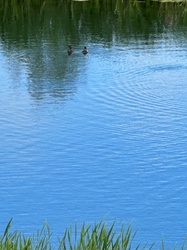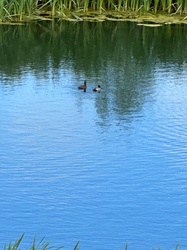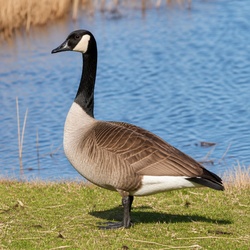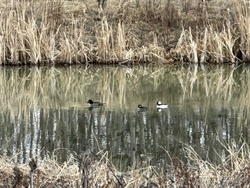
Order: Anseriformes, Family: Anatidae
Barnacle Goose
Branta leucopsis
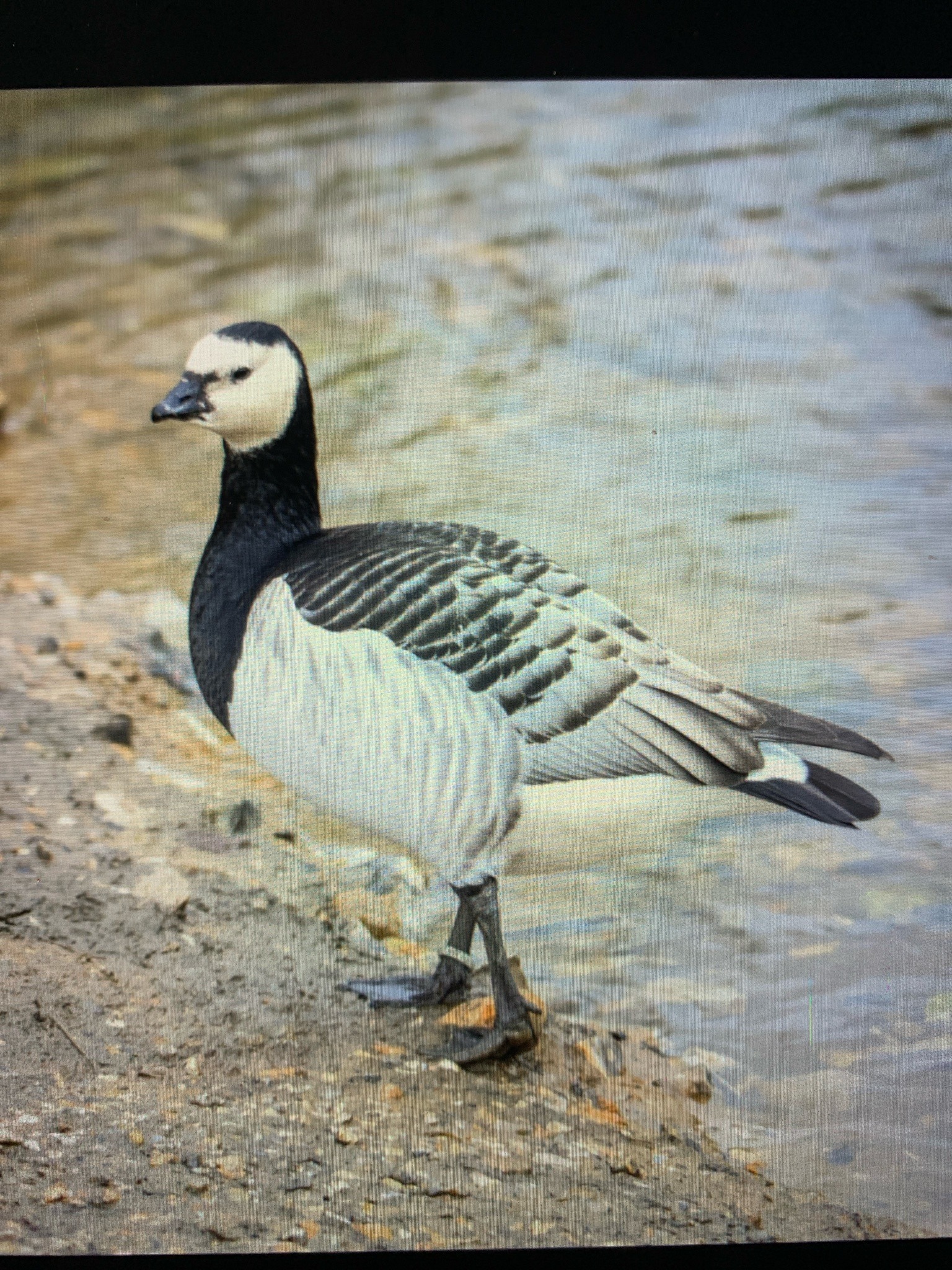
A medium-sized goose with a sharply contrasting black and white pattern on the head and neck, a black breast, pale grey-and-white barred upperparts, and a white belly.
Explore Barnacle Goose in the encyclopedia →Identify your own birds.
Get a report just like this from any photo or call, free.
Plumage & appearance
Adults have a striking white face contrasting with a black crown, neck, and chest. The upperparts are silvery-grey with distinct black and white barring, while the underparts are whitish with subtle grey flanks. Sexes are similar in appearance, though males tend to be slightly larger. Juveniles are duller with more brownish tones on the head and neck and less distinct barring.
Key field marks
White face contrasting sharply with a solid black neck and breast, barred silvery-grey back, and pale belly.
Size & weight
Length: 55-70 cm (22-28 in); Wingspan: 130-145 cm (51-57 in); Weight: 1.2-2.2 kg (2.6-4.9 lbs)
Voice — call & song
A high-pitched, yapping or barking call, often described as sounding similar to small dogs or the barking of a pack of hounds, especially in flight.
Diet & foraging
Herbivorous. Feeds primarily on grasses, leaves, shoots, roots, and seeds of various coastal and terrestrial plants, often foraging by grazing in flocks.
Habitat
Breeds on high arctic cliffs and rocky slopes near wetlands. Winters in coastal salt marshes, estuaries, wet pastures, and agricultural arable land.
Migration & movement
Migratory. Leaves arctic breeding grounds in September and October, returning northward in April and May. Some populations have established resident feral breeding groups in temperate Europe.
Nesting & breeding
Nests on high, inaccessible cliff ledges or steep rocky slopes to protect eggs from mammalian predators. Constructs a shallow depression lined with plant material and down feathers. Clutch size is typically 4 to 6 creamy-white eggs.
Similar species
Brant (Brent) Goose, which is darker overall without the extensive white face, and Cackling Goose or Canada Goose, which are larger and have distinct chin-straps rather than white faces.
Ecological significance
As grazers, Barnacle Geese help shape arctic tundra vegetation and coastal grassland ecosystems through feeding and nutrient distribution via droppings.
Conservation status
Least Concern, with an increasing and stable population trend.
Observation tips
Look for them in large, noisy flocks on coastal salt marshes, agricultural fields, and estuaries during winter in Western Europe. They are often approachable in reserves and parks.
Interesting facts
Historically, because of their sudden appearance in winter and the fact that no one had ever seen their arctic nests or eggs, medieval folklore believed that Barnacle Geese developed from barnacles growing on driftwood, which led to them being classified as fish rather than fowl and permitted to be eaten on fast days.
More like this