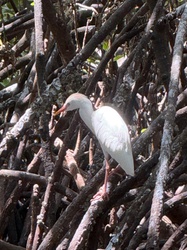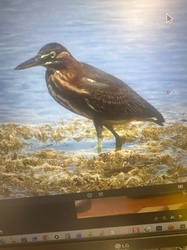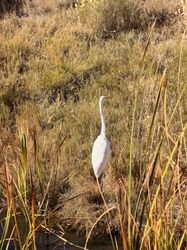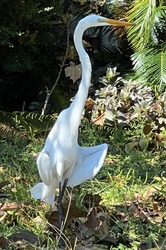
Order: Pelecaniformes, Family: Ardeidae
White-faced Heron
Egretta novaehollandiae
A medium-sized, slender heron with a characteristic white face and pale gray-blue body. It is often seen standing solitarily in wetlands, pastures, or occasionally roosting on rooftops.
Explore White-faced Heron in the encyclopedia →Identify your own birds.
Get a report just like this from any photo or call, free.
Plumage & appearance
Adults have bluish-gray plumage with a distinct white face covering the forehead, chin, and throat extending slightly up around the eye. The neck and breast are washed with brownish-gray and have elongated feathery plumes during the breeding season. Juveniles tend to have duller plumage with less extensive white on the head.
Key field marks
Medium-sized gray heron with striking white facial markings, long dark bill, and yellowish-green legs.
Size & weight
Length: 60-70 cm, Wingspan: 100-115 cm, Weight: 550-600 g.
Voice — call & song
Typically a harsh, raspy croak or squawk, usually emitted when alarmed or in flight.
Diet & foraging
Primarily carnivorous, feeding on fish, frogs, crustaceans, insects, and small reptiles. Forages by walking slowly in shallow water or stalking prey in grassy fields.
Habitat
Wetlands, mudflats, mangroves, flooded pastures, riverbanks, and coastal shallows. Readily adapts to human-altered environments like farmland and suburban parks.
Migration & movement
Mostly sedentary and resident, though some individuals engage in nomadic or dispersive movements following rainfall and wetland availability.
Nesting & breeding
Builds a loose stick platform nest in the fork of a tall tree, often near water. Lays a clutch of 3 to 5 pale blue-green eggs, incubated by both parents.
Similar species
Pacific Reef Heron (which is stockier and lacks the distinctive white face pattern) and the White-necked Heron (which is much larger with a completely white neck).
Ecological significance
Acts as an important apex predator within local wetland and aquatic food webs, helping to regulate populations of small fish, amphibians, and aquatic invertebrates.
Conservation status
Least Concern, with a stable and widespread population trend.
Observation tips
Look near shallow freshwater wetlands, estuaries, tidal mudflats, and even agricultural paddocks. They can sometimes be spotted perched high on elevated structures like trees or rooftops scanning for prey.
Interesting facts
Unlike many herons that nest exclusively in large colonies, the White-faced Heron often nests in solitary pairs. They are also known to occasionally use urban structures, such as roofs and chimneys, as high vantage points.
More like this