Order: Passeriformes, Family: Corvidae
Eurasian Magpie
Pica pica
A large, long-tailed corvid with unmistakable black-and-white coloration and a reputation for intelligence and curiosity.
Explore Eurasian Magpie in the encyclopedia →Identify your own birds.
Get a report just like this from any photo or call, free.
Plumage & appearance
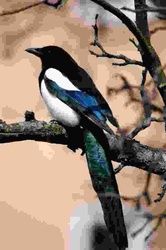
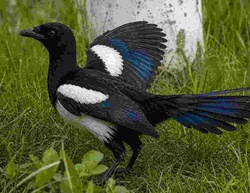
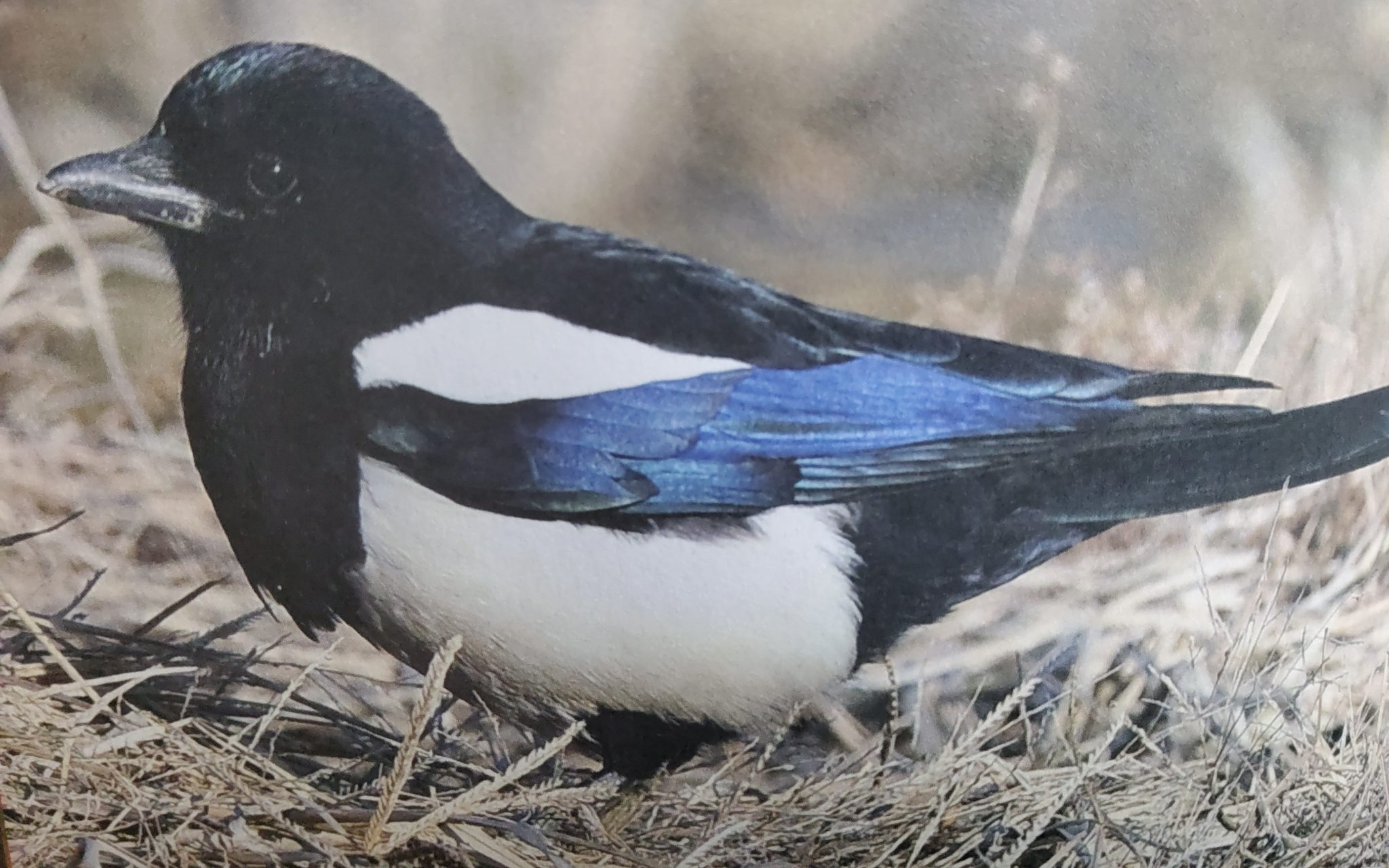
Adults have a striking black and white plumage with contrasting pure white belly and scapular patches. The black areas on the wings and tail exhibit iridescent green and blue-violet sheens in good light. Sexes are visually similar, though males are slightly larger.
Key field marks
Black head, breast, and back contrasting with brilliant white belly and scapulars; very long black tail with iridescent blue and green sheen; white wing patches prominent in flight.
Size & weight
Length: 44-51 cm including the long tail; Wingspan: 52-60 cm; Weight: 200-250 g
Voice — call & song
A harsh, rapid, rattling chatter ('chack-chack') given when alarmed or excited.
Diet & foraging
Omnivorous; feeds on insects, small mammals, eggs, nestlings, carrion, seeds, and fruit, foraging mainly on the ground.
Habitat
Open countryside with scattered trees, woodland edges, agricultural land, parks, and suburban gardens.
Migration & movement
Non-migratory resident, though juveniles may disperse short distances.
Nesting & breeding
Builds a large, distinctive domed stick nest high in trees, usually breeding from April onwards, laying 5-8 eggs.
Similar species
Black-billed Magpie (Pica hudsonia) of North America, which is very similar in appearance but genetically distinct with a slightly different vocalization and range.
Ecological significance
Acts as both predator and scavenger, helping to control invertebrate and small rodent populations while also consuming carrion.
Conservation status
Least Concern (LC) with stable population trends.
Observation tips
Easily spotted in open rural areas, farmlands, parks, and suburban gardens. They are quite conspicuous and often vocal.
Interesting facts
Magpies are among the most intelligent birds on Earth and are one of the few non-mammal species known to pass the mirror self-recognition test.
More like this