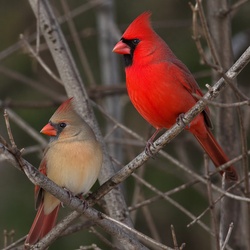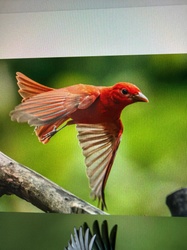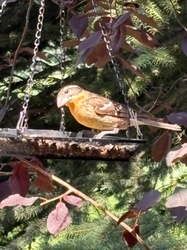
Order: Passeriformes, Family: Cardinalidae
Dickcissel
Spiza americana
A seed-eating grassland sparrow-like bird with a short, stout bill. It is frequently seen perched on tall vegetation or fence posts singing its repetitive song.
Explore Dickcissel in the encyclopedia →Identify your own birds.
Get a report just like this from any photo or call, free.
Plumage & appearance
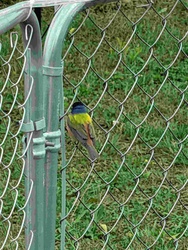
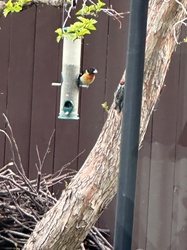
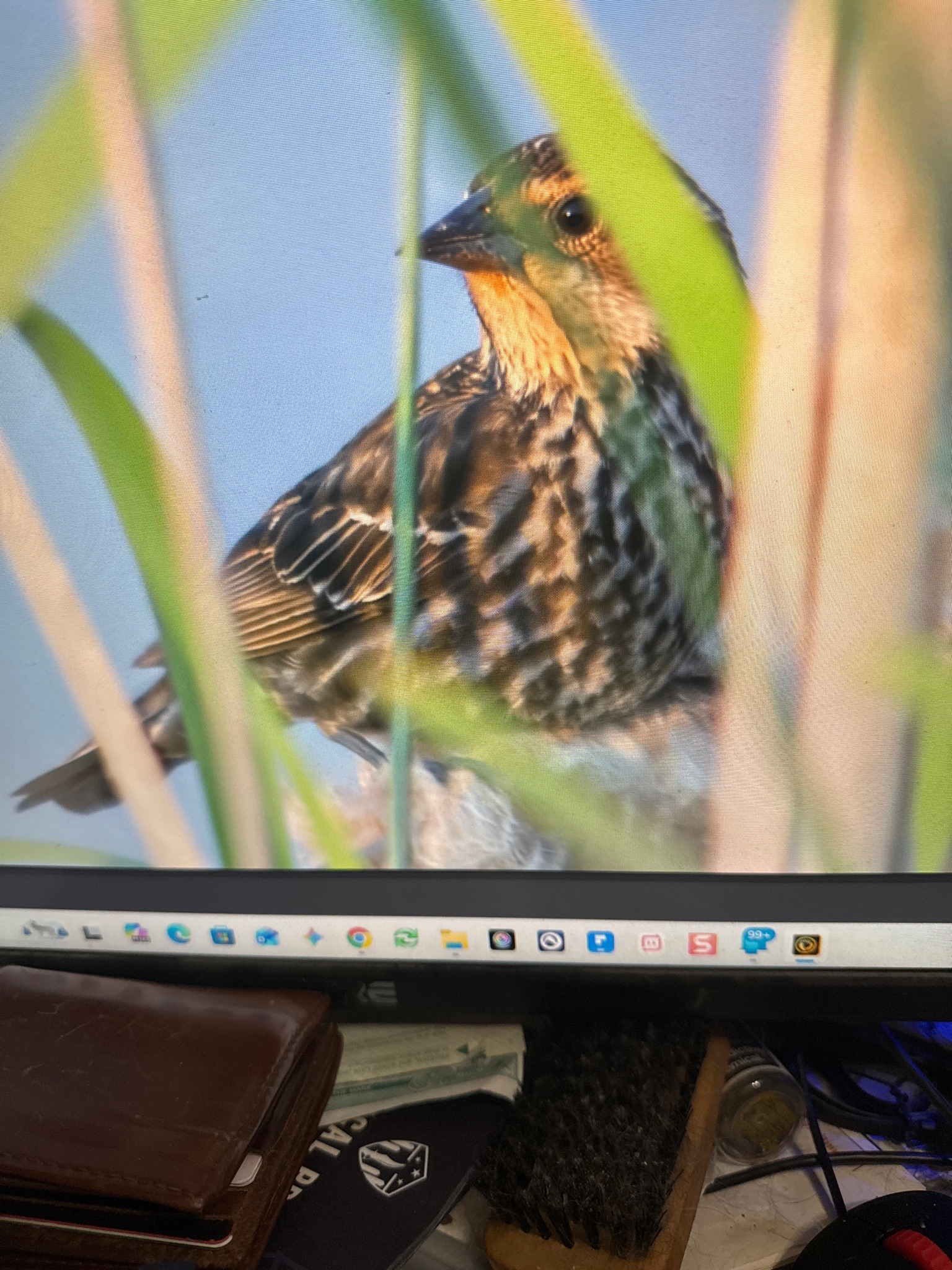
Adult males have a bright yellow supercilium, a distinct black throat patch (bib), a chestnut patch on the shoulder (lesser coverts), and a gray head. Females and immatures are much duller, lacking the black throat and vibrant yellow, showing a pale yellowish-buff throat with dark streaking on the breast and flanks.
Key field marks
Yellowish chest, heavy conical bill, chestnut shoulder patch, and distinct facial pattern with a yellow supercilium.
Size & weight
Length: 14-16 cm (5.5-6.3 in), Wingspan: 24-25 cm (9.4-9.8 in), Weight: 25-38 g (0.9-1.3 oz)
Voice — call & song
A sharp, buzzy 'dick-dick-cissel' song, repeated frequently from an exposed perch.
Diet & foraging
Primarily seeds of grasses and weeds, and insects during the breeding season.
Habitat
Grasslands, hayfields, agricultural areas with tall herbaceous vegetation, and prairies.
Migration & movement
Neotropical migrant, traveling in large flocks between North American breeding grounds and South American wintering areas.
Nesting & breeding
Constructs an open cup nest of grass and forbs, placed low in dense vegetation or on the ground. Lays 3-5 pale blue eggs.
Similar species
House Sparrow and female House Finch, but distinguished by the Dickcissel's yellow supercilium, chestnut wing patches, and distinct habitat preference.
Ecological significance
Acts as an important seed disperser and insect predator in grassland and agricultural ecosystems.
Conservation status
Least Concern, though populations have experienced localized declines due to habitat loss.
Observation tips
Look for singing males perched prominently on weed stems, fences, or utility wires in open grasslands and agricultural fields during the breeding season.
Interesting facts
Dickcissels are notorious for their nomadic and shifting breeding distribution, often appearing in massive numbers in an area one year and being entirely absent the next.
More like this