Order: Passeriformes; Family: Cardinalidae
Painted Bunting
Passerina ciris
Often called the most beautiful bird in North America, the Painted Bunting is a small, shy seed-eater that prefers thick cover.
Explore Painted Bunting in the encyclopedia →Identify your own birds.
Get a report just like this from any photo or call, free.
Plumage & appearance
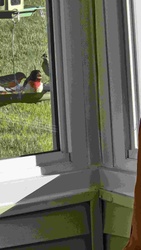
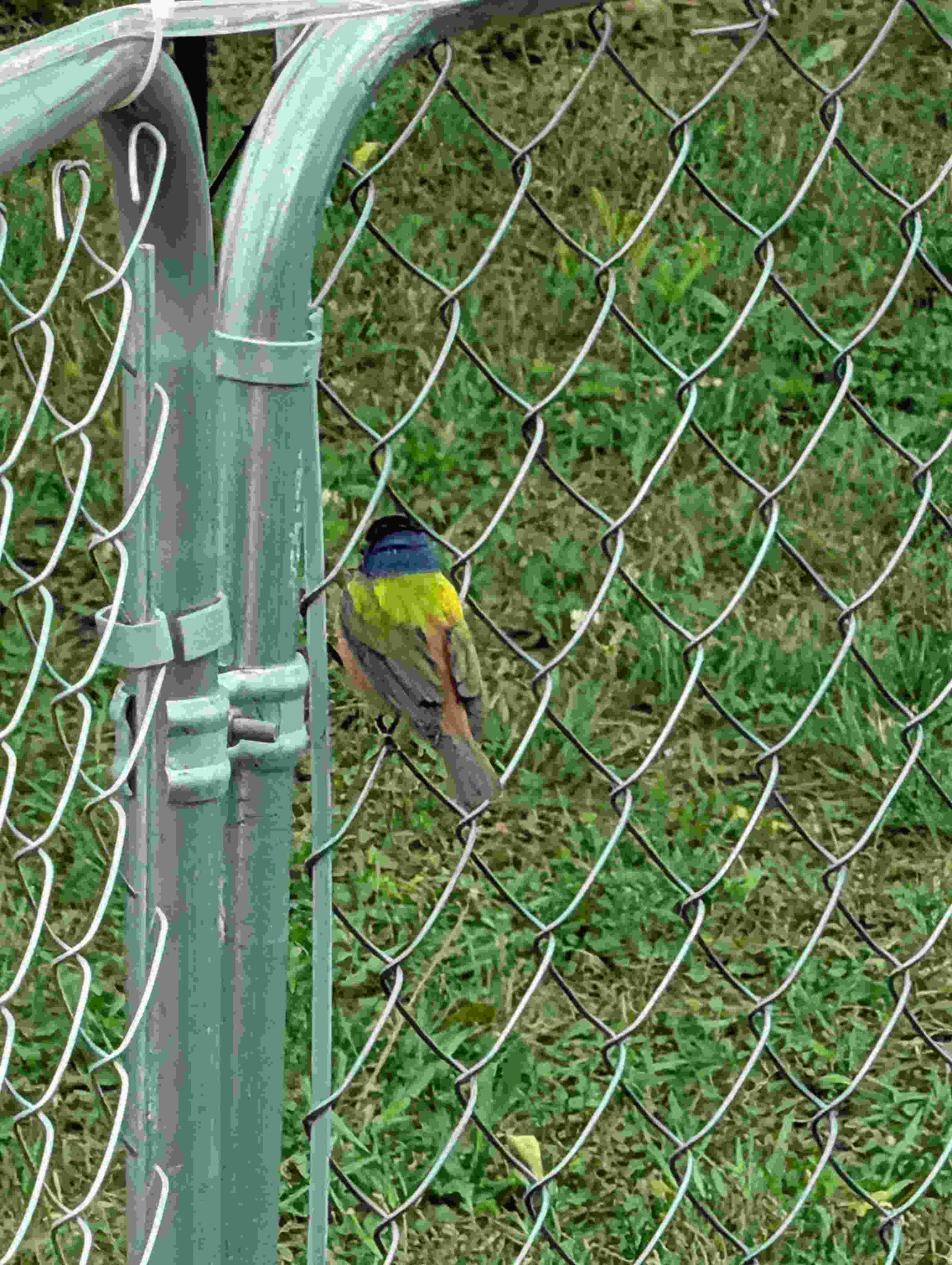
Adult males are spectacularly multicolored with blue heads, red underparts, and green backs. Adult females and juveniles are entirely bright green (unusual for songbirds). Second-year males may also appear green but can show patches of blue.
Key field marks
Males have a distinct blue head, red breast, and lime-green back. Females are exceptionally bright green compared to other sparrow-like birds.
Size & weight
Length: 4.7-5.5 in; Wingspan: 7.9-9.1 in; Weight: 13-19 g.
Voice — call & song
A musical, sweet, high-pitched warble; the call is a sharp 'chip'.
Diet & foraging
Primarily seeds during winter and insects (like grasshoppers and caterpillars) during the breeding season.
Habitat
Low-lying brush, forest edges, coastal scrub, and overgrown fields.
Migration & movement
Migratory; breeds in the U.S. and winters in Florida, Mexico, Central America, and the Caribbean.
Nesting & breeding
Open-cup nest built low in a shrub or tree. Clutch size is typically 3-4 eggs; females incubate alone.
Similar species
Indigo Bunting (males are all blue); Varied Bunting (males are darker purple/plum; females are drabber brownish-green).
Ecological significance
Contributes to seed dispersal and insect population control within its brushy habitats.
Conservation status
Near Threatened (IUCN); population is declining due to habitat loss and the illegal pet trade.
Observation tips
Listen for the sweet, warbling song during spring. They are secretive; look for them in dense shrubbery or at bird feeders offering white millet.
Interesting facts
In French, this bird is called 'nonpareil', meaning 'without equal', referring to its incredible coloration.
More like this