Order: Passeriformes, Family: Fringillidae
House Finch
Haemorhous mexicanus
A small, sturdy finch with a slightly notched tail and a conical, somewhat curved bill used for cracking seeds. Often found in social flocks around human habitation.
Explore House Finch in the encyclopedia →Identify your own birds.
Get a report just like this from any photo or call, free.
Plumage & appearance
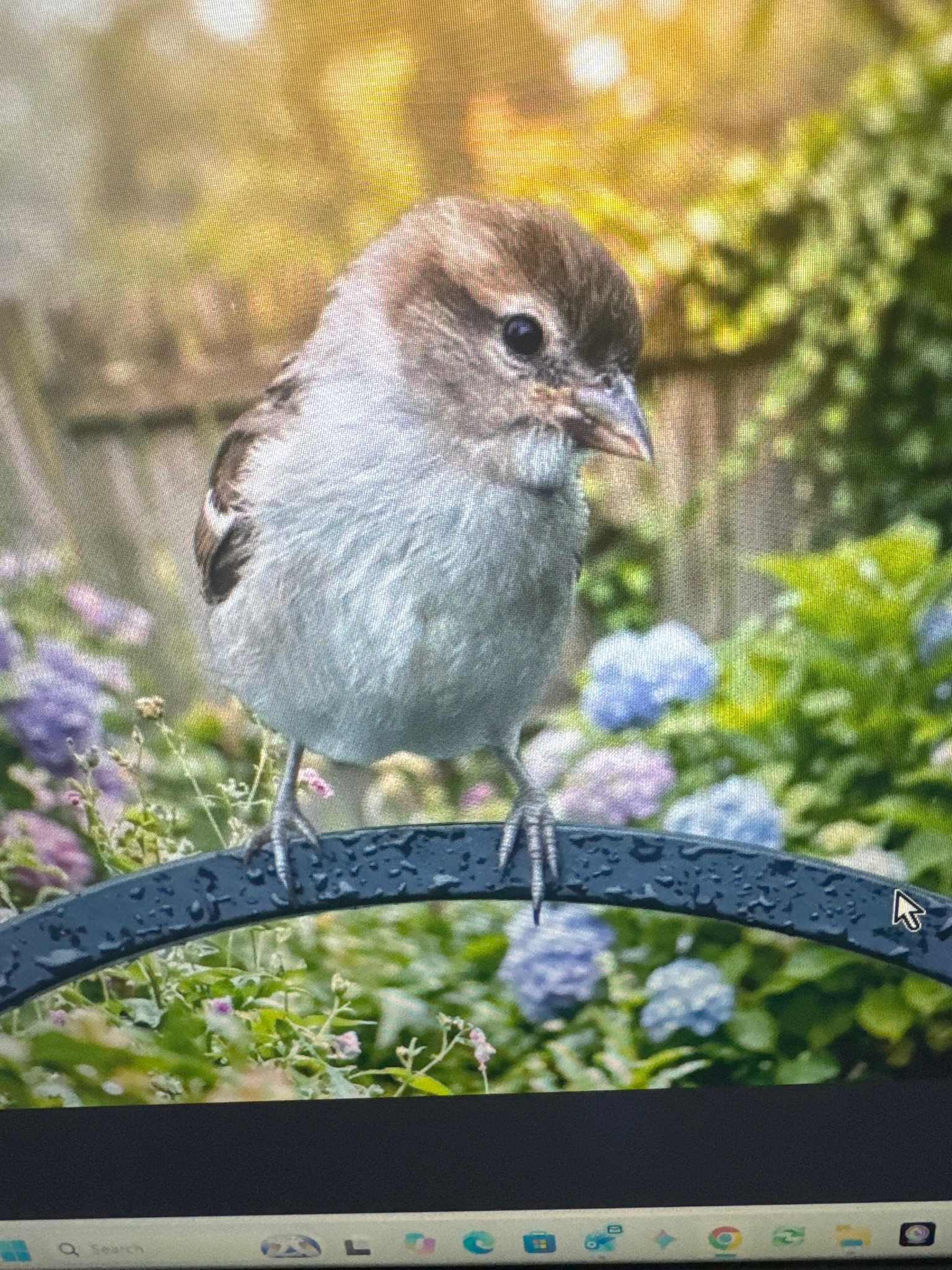
Adult males have red or orange-red coloration on the head, breast, and rump, with brownish-gray wings and tail, and streaked flanks. Females lack red entirely, showing grayish-brown upperparts and heavily streaked underparts with a plain face.
Key field marks
Conical bill, brown-streaked flanks, lack of wing bars, and the distinctive male red head and breast (or plain streaked face and underparts in females).
Size & weight
Length: 5.1-5.9 inches (13-15 cm), Wingspan: 8.7-9.8 inches (22-25 cm), Weight: 0.6-1.1 oz (16-31 g).
Voice — call & song
A cheerful, rapid, jumbled warbling song ending in a downward slur, often delivered from a prominent perch. Calls include a sharp 'chup'.
Diet & foraging
Primarily plant matter, including seeds, buds, and flowers. Feeds heavily on weed seeds and waste grains, often foraging on the ground or directly from plants.
Habitat
Urban and suburban areas, farms, forest edges, chaparral, and open desert. Highly adaptable to human-modified landscapes.
Migration & movement
Mostly permanent resident, though northernmost populations may make short southward movements in winter.
Nesting & breeding
Builds a cup nest made of twigs, grass, and rootlets in various locations including tree branches, building ledges, hanging planters, and vine tangles. Clutch size is typically 2 to 6 pale bluish-green eggs with fine dark spots.
Similar species
Purple Finch and Cassin's Finch. Distinguished by the House Finch's browner overall tone, lack of extensive bright red on the back, and heavily streaked lower belly.
Ecological significance
Acts as a seed disperser and is an important part of the food web for various avian and mammalian predators.
Conservation status
Least Concern, with a stable or increasing population trend.
Observation tips
Easily found at backyard bird feeders, especially those stocked with black-oil sunflower seeds. Listen for their prolonged, warbling song near parks and suburban gardens.
Interesting facts
House Finches were originally restricted to the American West, but after a group of illegally caged birds was released in New York City in 1940, they established an eastern population that has now colonized most of the continent.
More like this