Order Charadriiformes, Family Alcidae
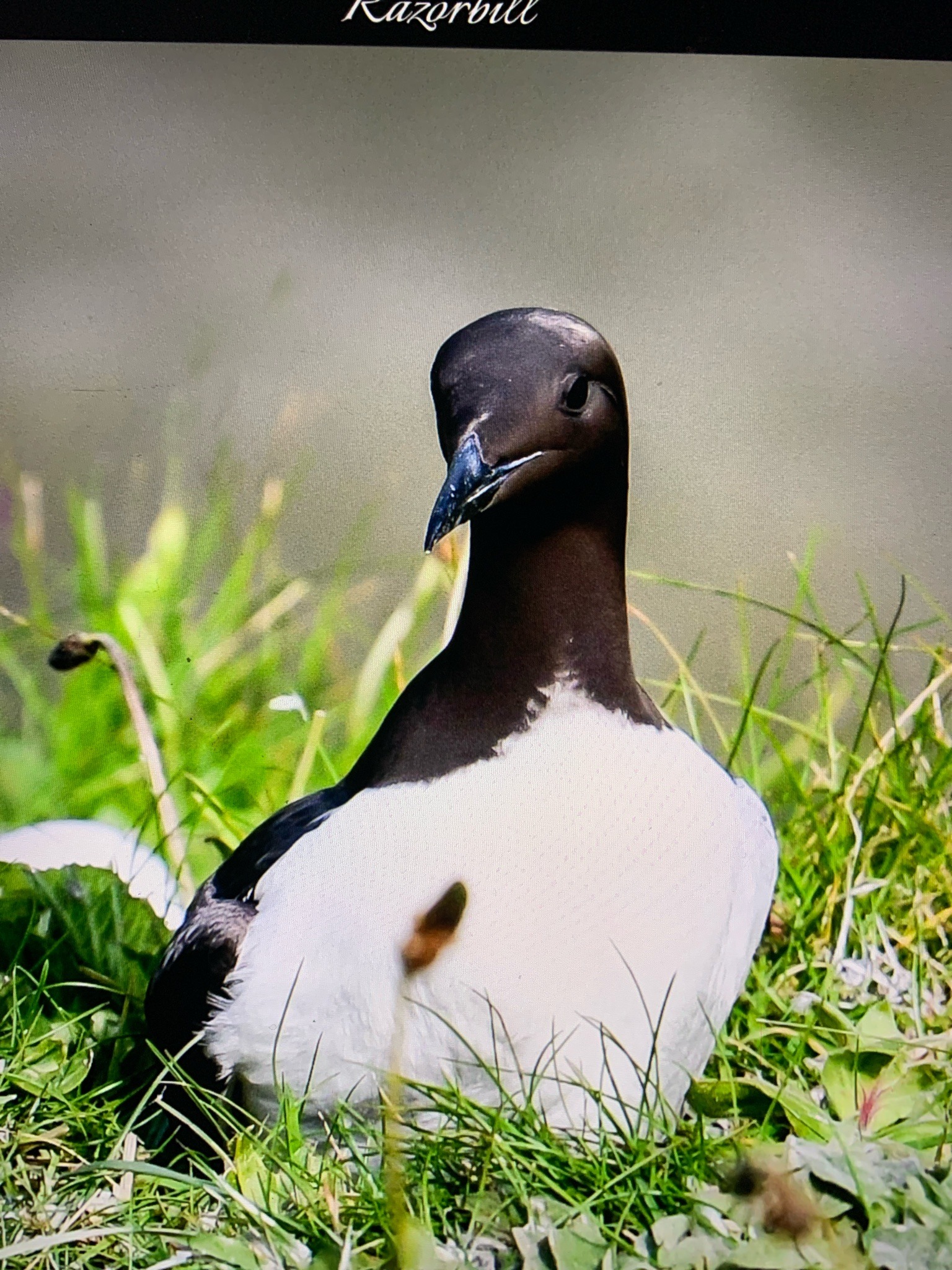
Razorbill
Alca torda
A medium-large pelagic seabird with a stout, deep, compressed bill marked with vertical white grooves. They are expert divers, using their wings to propel themselves underwater.
Explore Razorbill in the encyclopedia →Identify your own birds.
Get a report just like this from any photo or call, free.
Plumage & appearance
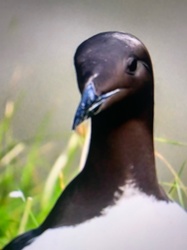
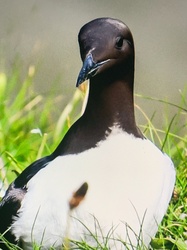
Adults have black head, neck, back, and upperwings with contrasting white underparts and a thin white line running from the base of the bill to the eye. In winter, the throat and cheeks become white. Juveniles resemble non-breeding adults but have a smaller, less distinctly marked bill.
Key field marks
Deep, blunt-ended bill with vertical white lines, dark overall upperparts, white underparts, and a sharp white facial stripe extending from bill to eye.
Size & weight
Length: 37-42 cm, Wingspan: 60-69 cm, Weight: 500-750 g
Voice — call & song
Usually silent at sea, but produces low, deep, growling and croaking notes at the breeding colony.
Diet & foraging
Mostly small schooling fish such as sand lances, herring, and capelin, as well as crustaceans and marine worms, caught by underwater pursuit diving.
Habitat
Pelagic marine environments during the non-breeding season; rocky cliffs, coastal islands, and boulder fields during the breeding season.
Migration & movement
Migratory; moves south from northern breeding grounds into open Atlantic waters for the winter.
Nesting & breeding
Nests in crevices, under boulders, or in small rock cavities on cliffs rather than open ledges. Lays a single egg directly on the ground. Both parents incubate and feed the chick.
Similar species
Common Murre, which is slightly larger with a pointier, yellowish bill; Thick-billed Murre, which has a shorter, thicker bill with a white line along the gape.
Ecological significance
Acts as an important marine predator controlling fish populations and serves as an indicator species for the health of marine ecosystems.
Conservation status
Near Threatened
Observation tips
Look for them on rocky coastal cliffs and islands during the breeding season, or scan choppy ocean waters from headlands during winter migration.
Interesting facts
Razorbills are the closest living relatives of the extinct Great Auk and form monogamous pairs that often reunite at the same nesting site year after year.
More like this