Order: Charadriiformes, Family: Alcidae
Razorbill
Alca torda
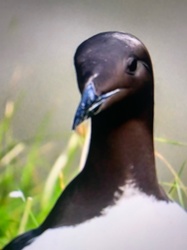
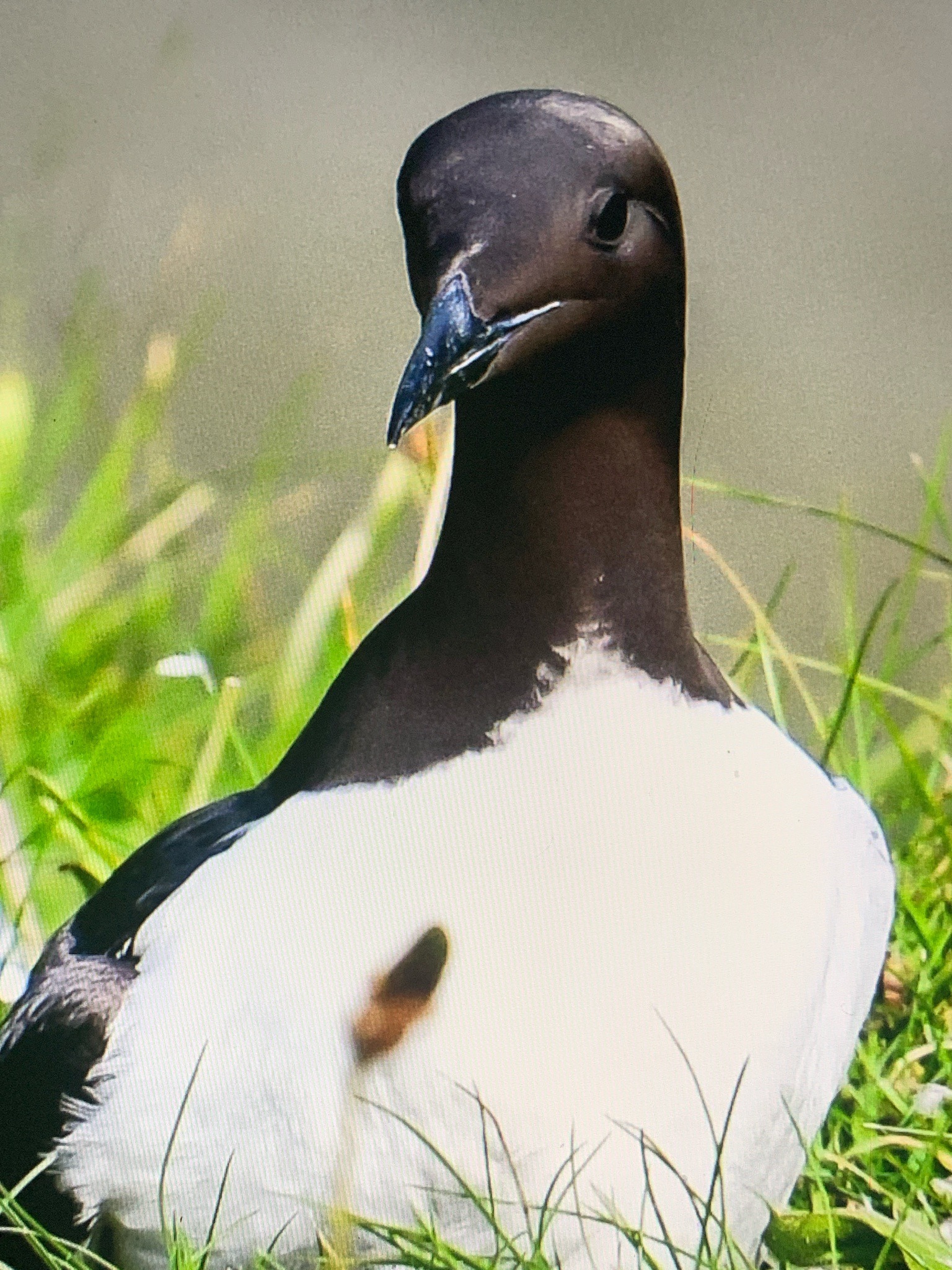
A medium-large pelagic seabird with a stout, compressed, grooved bill marked with a white vertical line. They have an upright posture on land similar to penguins.
Explore Razorbill in the encyclopedia →Identify your own birds.
Get a report just like this from any photo or call, free.
Plumage & appearance
Adults have black head, neck, back, and upperwings, with a sharply contrasting white underbelly and breast. A thin white line curves from the base of the heavy, blunt bill to the eye. In winter, the throat and sides of the head become white.
Key field marks
Heavy, compressed, grooved bill with a white vertical bar; dark head and back contrasting with white underparts; white line from bill to eye.
Size & weight
Length: 37-43 cm, Wingspan: 60-69 cm, Weight: 500-900 g
Voice — call & song
Low, purring growls and raspy croaks heard at the breeding colonies.
Diet & foraging
Primarily small fish such as sand lances, sprats, and herring, supplemented with crustaceans and marine worms.
Habitat
Open ocean waters for most of the year, coming to rocky coastal cliffs, ledges, and boulder fields only to breed.
Migration & movement
Migratory; moves south into open waters of the North Atlantic during winter, reaching as far as the western Mediterranean and New England.
Nesting & breeding
Lays a single large egg directly on a bare rock ledge or in a crevice on a cliff face, without building a traditional nest. Both parents incubate and feed the chick.
Similar species
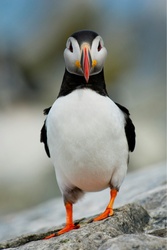
Common Murre (Uria aalge) and Thick-billed Murre, but distinguished by the Razorbill's heavier, blunt, grooved bill and the white line running to the eye.
Ecological significance
Acts as an important predator of small schooling fish and serves as an indicator species for the health of marine ecosystems.
Conservation status
Near Threatened with a decreasing population trend.
Observation tips
Visit rugged coastal cliffs and offshore islands during the breeding season with a good pair of binoculars or a spotting scope.
Interesting facts
Razorbills are excellent divers, using their wings to 'fly' underwater in pursuit of prey, and can dive to depths of 120 meters.
More like this