Order: Charadriiformes, Family: Alcidae
Common Murre
Uria aalge
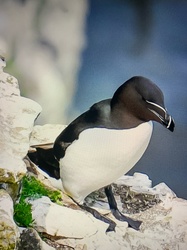
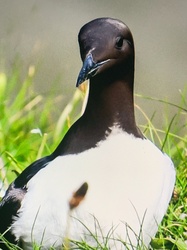
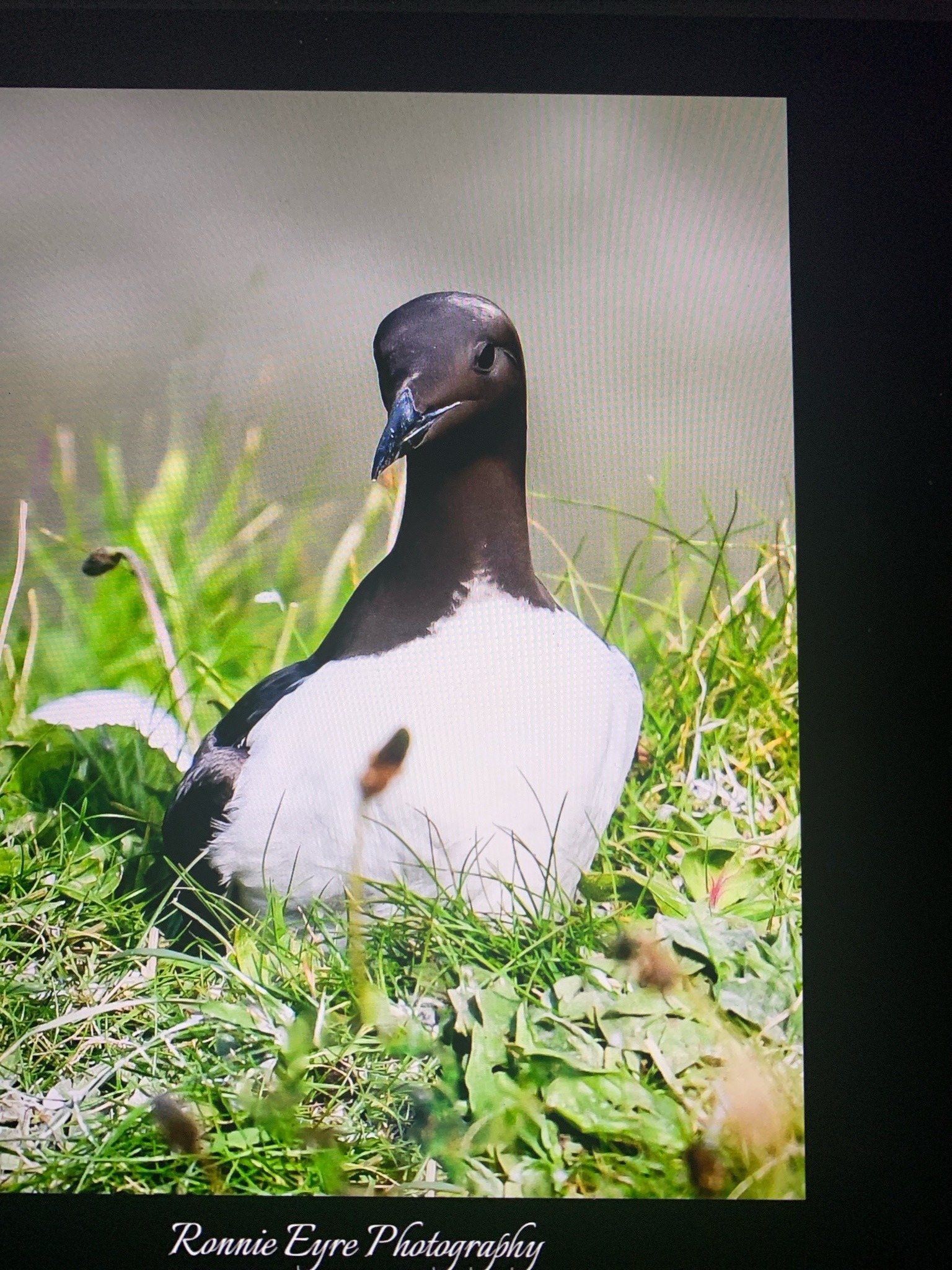
A large, upright-standing seabird resembling a penguin in posture, with a pointed bill, dark upperparts, and stark white underparts. They are exceptional divers but notoriously clumsy on land.
Explore Common Murre in the encyclopedia →Identify your own birds.
Get a report just like this from any photo or call, free.
Plumage & appearance
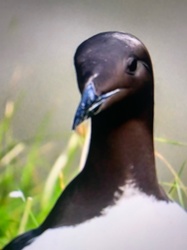
Dark chocolate-brown to black head, neck, and upperparts, with crisp white underparts. In winter, the throat and sides of the head below the eye become white. Some individuals (known as 'bridled') feature a white eye-ring extending backward as a white line. Sexes are visually similar.
Key field marks
Dark brown/black head and back, contrasting clean white belly, dagger-like pointed bill, and upright posture on ledges.
Size & weight
Length: 38-45 cm (15-18 in), Wingspan: 61-73 cm (24-29 in), Weight: 775-1250 g (1.7-2.8 lbs)
Voice — call & song
Generally silent at sea, but vocal at breeding colonies with a series of low, growling murrs, croaks, and clicking sounds.
Diet & foraging
Primarily small schooling fish such as capelin, sand lance, and herring, supplemented by squid, crustaceans, and marine worms, caught by underwater pursuit-diving.
Habitat
Open marine waters during the non-breeding season; steep coastal cliffs, rocky islands, and ledges during the breeding season.
Migration & movement
Partial migrant. Northern populations move further south in winter to avoid sea ice, while southern populations are largely sedentary.
Nesting & breeding
Does not build a physical nest; a single pyriform (pear-shaped) egg is laid directly on a bare rock ledge on a steep cliff. Both parents incubate and feed the chick.
Similar species
Thick-billed Murre, which has a thicker, shorter bill with a white line along the cutting edge. Razorbill, which has a heavier, blunt-ended bill marked with a vertical white stripe.
Ecological significance
Acts as an important marine predator, helping regulate fish populations and serving as a key bioindicator of marine ecosystem health.
Conservation status
Least Concern, though local populations can be severely impacted by oil spills, overfishing, and climate change.
Observation tips
Visit rugged coastal cliffs and sea stacks during the breeding season (May to July) where they gather in massive, dense colonies.
Interesting facts
The pear shape of the Common Murre's egg prevents it from rolling off narrow cliff ledges; if nudged, it spins in a tight circle rather than rolling straight down.
More like this