Order: Anseriformes, Family: Anatidae
Silver Teal
Spatula versicolor
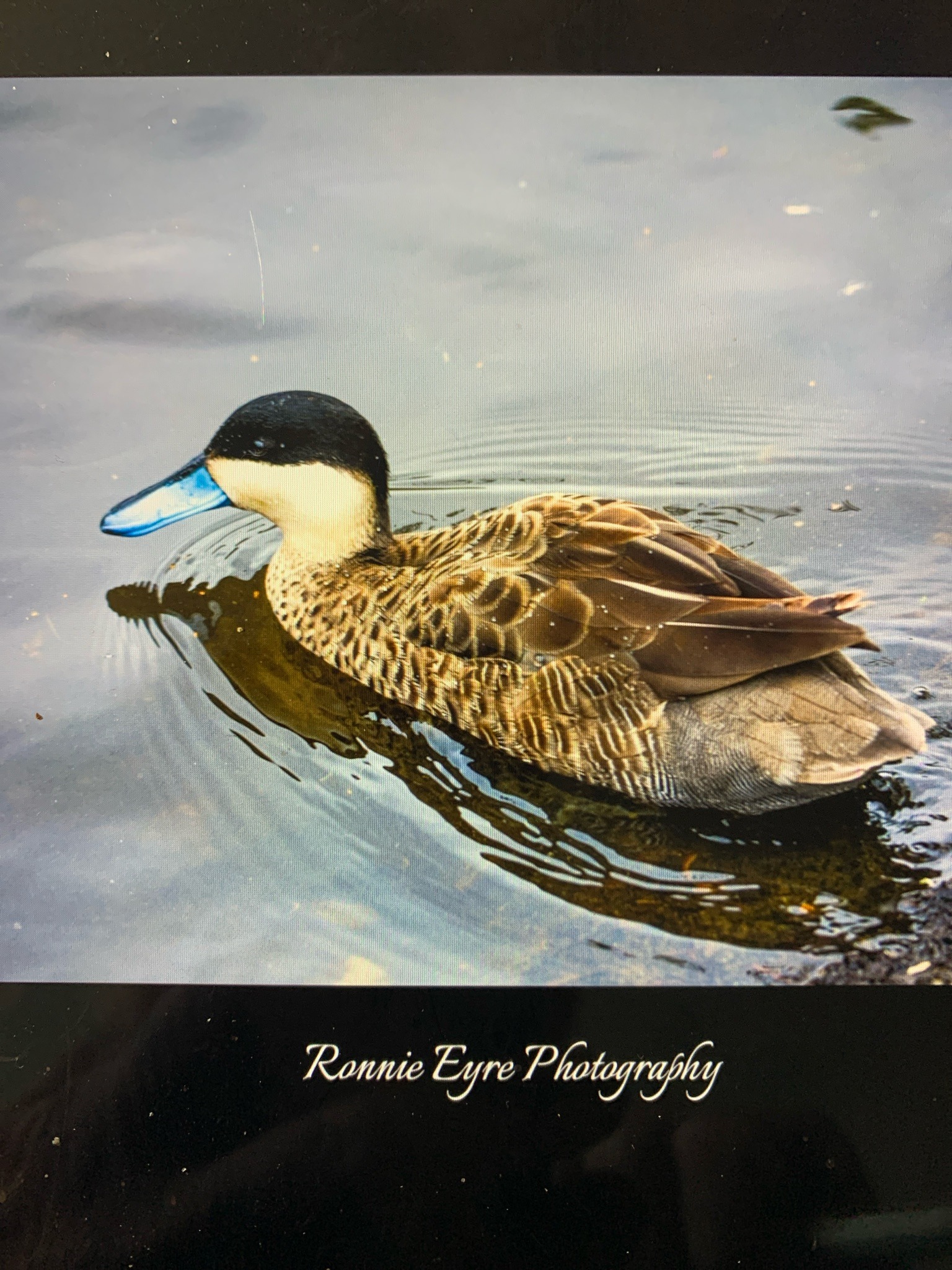
A small, colorful dabbling duck with a remarkably patterned head featuring a black cap and pale cheeks, and a bright blue bill tipped in yellow.
Explore Silver Teal in the encyclopedia →Identify your own birds.
Get a report just like this from any photo or call, free.
Plumage & appearance
Features a striking black cap extending below the eyes contrasting sharply with creamy-white cheeks and throat. The upper parts and flanks are finely barred with brown, grey, and buff, and it has a distinctive blue bill with a yellow tip. Sexes are similar, though females may be slightly duller.
Key field marks
Distinctive black crown contrasting sharply with white cheeks, and a bright blue bill with a yellow nail at the tip.
Size & weight
Length: 38-45 cm (15-18 inches); Weight: 350-550 grams (0.77-1.2 lbs).
Voice — call & song
Quiet whistles and soft, low quacks typical of small dabbling ducks.
Diet & foraging
Omnivorous, feeding on seeds, aquatic plants, roots, algae, and small aquatic invertebrates by dabbling and occasionally tipping up.
Habitat
Shallow freshwater lakes, marshes, flooded grasslands, and slow-moving rivers, usually with abundant emergent vegetation.
Migration & movement
Mostly resident, though some populations in the southern part of its range undertake partial seasonal movements northward during the harsher winter months.
Nesting & breeding
Nests on the ground hidden in dense vegetation near water. Lays a clutch of 5 to 8 creamy-white eggs, incubated solely by the female for about 24 to 26 days.
Similar species
Puna Teal (Spatula puna), which is found further north in the Andes and has a more extensive pale area on the face and a slightly different bill coloration.
Ecological significance
Acts as an important seed disperser for aquatic plants and helps regulate invertebrate and small aquatic organism populations.
Conservation status
Least Concern, with a stable global population.
Observation tips
Best observed in shallow freshwater wetlands, marshes, and lakes within South America, or in specialized waterfowl collections worldwide. Approach quietly as they can be easily spooked by sudden movements.
Interesting facts
Also known as the Versicolor Teal, this species is frequently kept in captivity by waterfowl enthusiasts due to its striking and unusual facial pattern.
More like this