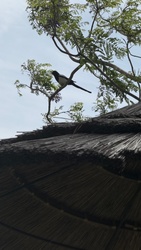
Order: Passeriformes, Family: Corvidae
Blue Jay
Cyanocitta cristata
A noisy, bold, and intelligent medium-sized songbird known for its striking blue coloration and prominent crest. Often seen visiting bird feeders in small flocks or family groups.
Explore Blue Jay in the encyclopedia →Identify your own birds.
Get a report just like this from any photo or call, free.
Plumage & appearance
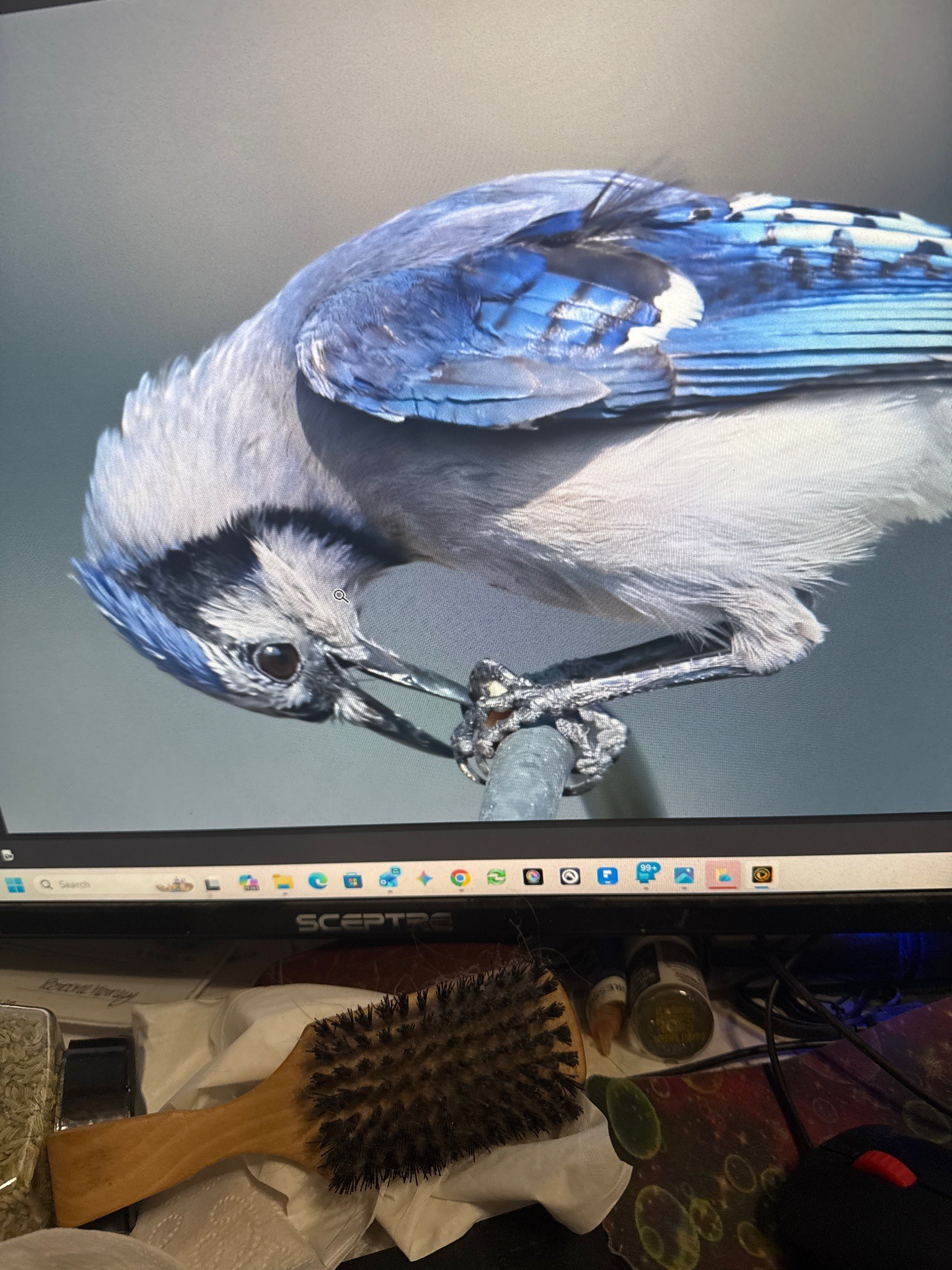
Displays a prominent blue crest, back, wings, and tail. Wings and tail are heavily barred with black, sky-blue, and white. Underparts are grayish-white, and a distinctive U-shaped black collar wraps around the neck and throat. Males and females look alike.
Key field marks
Distinctive blue crest, black neck collar, white facial markings, and strikingly barred black-and-white wings and tail.
Size & weight
Length: 22-30 cm (8.7-11.8 in), Wingspan: 34-43 cm (13-17 in), Weight: 70-100 g (2.5-3.5 oz)
Voice — call & song
Famous for its loud, trumpet-like 'jay-jay' alarm call. Also capable of producing a wide variety of softer calls, musical notes, and remarkably accurate mimics of hawk calls.
Diet & foraging
Omnivorous, feeding on nuts, seeds, fruits, insects, small vertebrates, and occasionally eggs and nestlings of other birds. Forages both on the ground and in trees.
Habitat
Deciduous and mixed forests, forest edges, suburban neighborhoods, parks, and agricultural areas with an abundance of oak and beech trees.
Migration & movement
Complex and irregular. Some populations are permanent residents, while others migrate south for the winter, though young birds seem more likely to migrate.
Nesting & breeding
Builds a large, cup-shaped nest of twigs, roots, bark strips, and mud in the fork of a deciduous or coniferous tree. Clutch size is typically 2 to 7 eggs, incubated primarily by the female for 16-18 days.
Similar species
Steller's Jay (found in western North America, features a darker body and crest), Western Scrub-Jay and Florida Scrub-Jay (lack crests and have different blue-and-gray patterns).
Ecological significance
Plays a vital role in forest regeneration by caching and dispersing seeds, particularly acorns and other hard mast, which often grow into new trees.
Conservation status
Least Concern, with a stable or increasing widespread population.
Observation tips
Easily attracted to backyard bird feeders offering peanuts, sunflower seeds, and suet. Their loud, harsh calls often alert observers to their presence long before they are seen.
Interesting facts
Blue Jays are known to crush acorns in their bills, and they can store up to several thousand acorns in hidden caches during a single autumn. They also sometimes practice 'anting,' rubbing ants over their feathers to absorb formic acid.
More like this