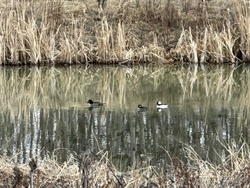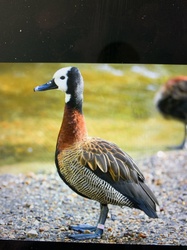
Order: Anseriformes, Family: Anatidae
Canada Goose
Branta canadensis
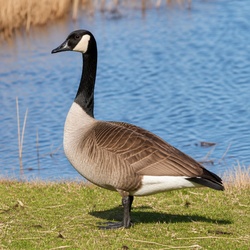
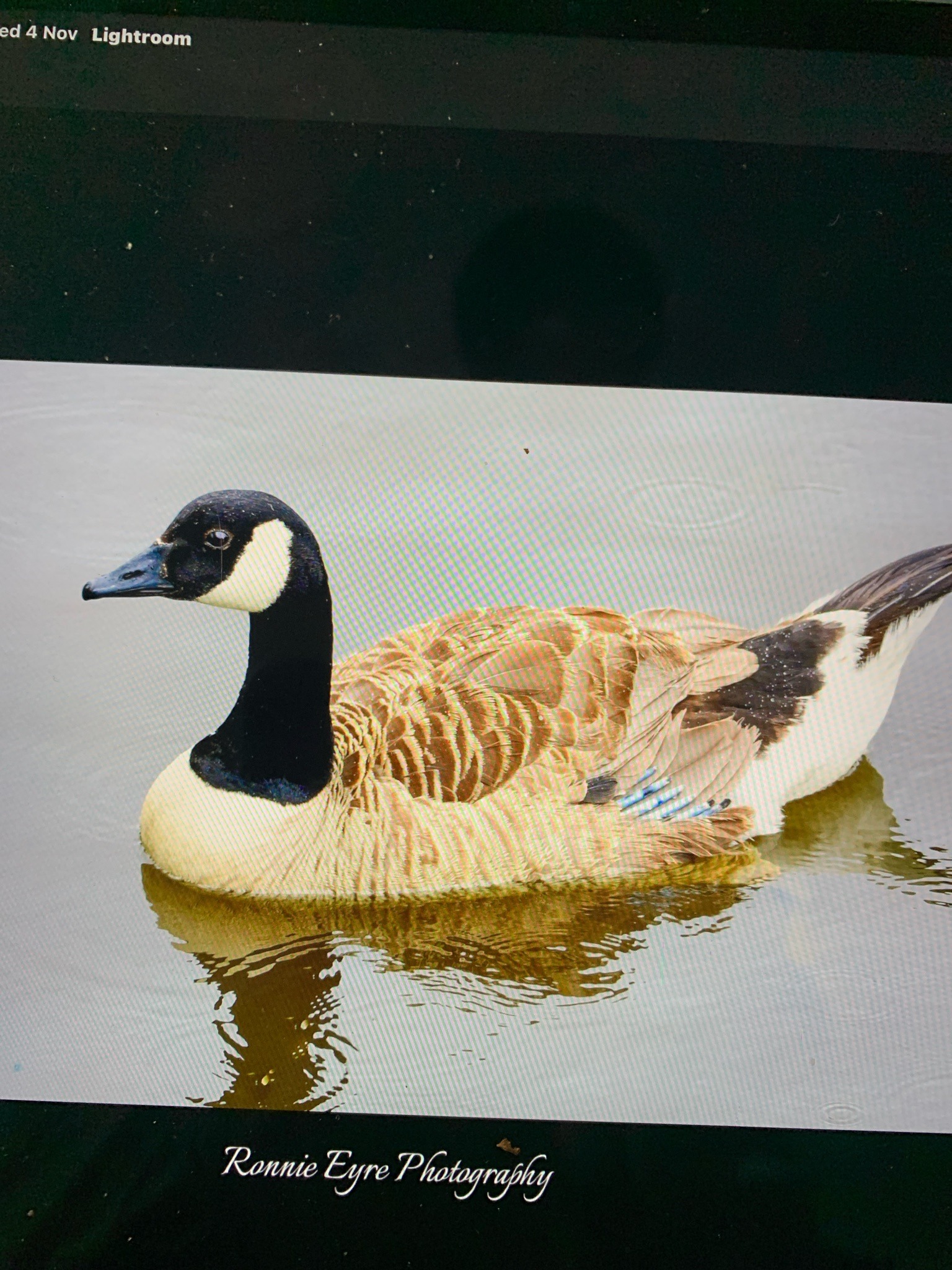
A large, easily recognizable waterfowl with a long black neck, distinctive white cheek patches, and a body of mottled brown and gray. Known for flying in iconic V-formations and emitting loud honking calls.
Explore Canada Goose in the encyclopedia →Identify your own birds.
Get a report just like this from any photo or call, free.
Plumage & appearance
Black head and neck with a prominent white 'chin strap' extending from behind the eye to the throat. Body plumage is predominantly grayish-brown with lighter-tipped feathers creating a barred effect, pale underparts, and white undertail coverts. Sexes are visually similar, though males tend to be slightly larger.
Key field marks
Black head and neck contrasting with a white cheek patch, grayish-brown body, white undertail coverts, and black tail.
Size & weight
Length: 75-110 cm (30-43 in), Wingspan: 127-185 cm (50-73 in), Weight: 3-6.5 kg (6.6-14.3 lbs)
Voice — call & song
A loud, resonant honking or bugling call, often described as a two-syllable 'ah-onk', frequently given in flight.
Diet & foraging
Primarily herbivorous, feeding on grasses, grains, roots, leaves, and aquatic plants. Forages by grazing on land or dabbling in shallow water.
Habitat
Found in a wide variety of wetland habitats, including lakes, rivers, marshes, bays, as well as man-made environments like lawns, parks, and agricultural fields.
Migration & movement
Varies by population; many northern populations are strongly migratory, flying south for the winter, while many urban and southern populations are year-round residents.
Nesting & breeding
Builds a bulky bowl-shaped nest on the ground, often near water on elevated spots like mounds or muskrat lodges, lined with plant material and down feathers. Clutch size is typically 4-7 creamy-white eggs, incubated by the female while the male aggressively defends the territory.
Similar species
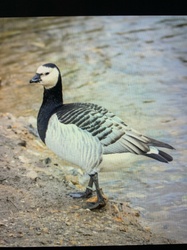
Cackling Goose (Branta hutchinsii) is very similar but noticeably smaller with a shorter neck and stubbier bill; Barnacle Goose has a white face and barred gray-and-white upperparts.
Ecological significance
Acts as an important herbivore controlling aquatic vegetation, disperses seeds through its droppings, and serves as a prey species for various mammalian and avian carnivores.
Conservation status
Least Concern, with stable or increasing populations globally.
Observation tips
Easily observed near almost any body of water, including urban parks, golf courses, lakes, and agricultural fields. Approach slowly to avoid startling them, especially during the nesting season.
Interesting facts
Canada Geese form strong, lifelong pair bonds and will fiercely defend their nests and goslings from intruders, including humans and much larger animals.
More like this